Home Subscribe
Jobs Cars Homes Shopping Travel Weddings Golf Best of Las Vegas Photo
.
Member Center

Recent Editions
SuMTWThFS
>> Complete Archive
>> Search the site
.
.
.
.
OPINION
.
.
.
.
.
.
.
Feb. 04, 2007
Copyright © Las Vegas Review-Journal


TOP PRIORITY: Getting rid of gridlock

Clark County lawmakers are on the spot to fund highways

By GLENN COOK
REVIEW-JOURNAL


Click image for enlargement.
Graphic by Mike Johnson.


Click image for enlargement.

The grabbing hands are everywhere in Carson City. Lobbyists for teachers, environmental groups, welfare recipients, college campuses, drug addicts, the homeless and a laundry list of bureaucracies are scouring the Capitol's couch cushions for loose change, so frenzied is the competition for nearly $1 billion in new general fund spending.

But when the 2007 Legislature convenes Monday morning, no one will be walking the halls to pitch the state's single most pressing funding need. No one will be on point, knocking on lawmakers' doors every day, to state the case for the defining issue of this session.

Advertisement


Advocates for this constituency will be stuck in traffic in the Las Vegas Valley, some 400 miles away.

The transportation infrastructure that feeds Las Vegas' tourist economy, the life blood of the state, is disgracefully outdated. Visitors who drive here from California endure hours of traffic delays to reach their hotels. The residents who live and work here spend more time in gridlock -- and less time with their families -- with each passing year. Long, frustrating drives limit our choices as to where we can live and work, who receives our business and with whom we socialize.

So the Nevada Department of Transportation has put forth a $4 billion, eight-year construction plan that would transform the Las Vegas Valley's major arterials -- with the caveat that the agency can't pay for most of it.

So many demands for so much money.

Legislators will hear all manner of assurances from agencies and special interests seeking ever more taxpayer "investments" that become compounding expenses. If only the state "invested" in full-day kindergarten for every 5-year-old, student achievement and high school graduation rates would improve. If only more programs were created to fight methamphetamine abuse, there would be less crime. If only ...

In fact, none of the spending increases lawmakers are likely to authorize this year will guarantee any of the returns their backers are promising. Full-day kindergarten, Medicaid expansion, drug awareness campaigns and green energy incentives are expensive, feel-good experiments.

Highway construction, on the other hand, is the only sure thing, the lone economic and quality-of-life slam dunk on the legislative agenda.

Yet the Legislature will begin work Monday with no solutions in play. Gov. Jim Gibbons has discarded more than a year of work from a state task force empaneled to review NDOT's plan and propose the means to pay for it. He wants a new study. And his budget for 2007-09 actually cuts highway funding by 1.8 percent from the previous biennium.

Like a traffic jam on U.S. Highway 95, the issue is stuck in first gear.

The problem

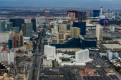
Southern Nevada's highway system is years behind those of other growing metropolitan centers. The valley, with a population fast approaching 2 million, currently has a single stretch of eight-lane highway, on Interstate 15 between the Spaghetti Bowl interchange and Spring Mountain Road. The rest of the area is dotted by jam-packed, six-lane and four-lane freeways that increasingly force frustrated motorists to take their chances on congested surface streets.

Add a quarter-million tourists and conventioneers and commercial traffic from Mexico, Canada, California, Utah and Arizona, and you've got gridlock throughout the valley's urban core.

"We tend to wait until a problem gets bad enough that it becomes a crisis before we deal with it," said Assembly Minority Leader Garn Mabey, R-Las Vegas. "We have to find a solution this year. We don't have a choice."

How did it get this bad? A combination of rising construction costs, dubious planning by the Nevada Department of Transportation and a poorly prioritized tax structure that can't make up the difference.

Asphalt, cement and steel prices have increased faster than the rate of inflation, turning upgrades that would have cost $400 million just a few years ago into $600 million projects. State highway construction is funded primarily through fuel and registration taxes, but the already-diminshed purchasing power of those levies recedes further with improving fuel economy and advancements that keep depreciating cars and trucks on the road longer.

The state's general fund, which pays for education, social services and public safety, has run a $625 million surplus over the past three years. But none of the sales, gaming and other taxes that created this surplus currently go to the highway fund. The highway task force rejected by Gibbons suggested diverting sales tax revenues from vehicle sales and repairs to pay for highway construction. Doing so would funnel more than $1.8 billion to the highway fund over the next eight years.

"All money is fungible," said state Sen. Bob Beers, R-Las Vegas. "We can say the red revenue stream goes into the red fund and the green revenue stream goes into the green fund, but in the end it's still one big pile of revenue. It's all just tax money."

But diverting general fund revenue would enrage the aforementioned grabbing hands.

Meanwhile, NDOT has applied a consistent approach over the years in managing its finite resources: Make Las Vegas motorists subsidize rural maintenance and capacity projects that keep the Reno area congestion-free at the expense of Southern Nevada highways.

The Galena Creek Bridge project is obvious evidence of this practice. While traffic on I-15 crawls past the Las Vegas Strip every day, NDOT is building an extravagant, $800 million highway from scratch in the mountains between Reno and Carson City. State transportation officials have described the boondoggle, which will carry less traffic than a typical Las Vegas surface street when complete, as an "economic development" project and a "political" decision.

What's really necessary?

NDOT's proposal calls for completing 10 highway "superprojects" by the end of 2015. However, the agency's contention that all 10 projects are "critical" is an exaggeration. NDOT Director Susan Martinovich says the 2015 date was selected based on what was possible, not what was truly necessary.

"We asked if we could get them done, given the time it takes to acquire right of way, complete environmental studies and break projects into phases of work," she said. "And the answer was, yes, we could get them all done by 2015 if we had all the money."

Don't confuse NDOT's funding shortfall with insolvency. If the 2007 Legislature does nothing to change the tax structure that supports highway construction, NDOT should still have about $7 billion to spend through 2015. Most of that money would cover already-approved projects and planned maintenance. The agency's "superproject" wish list would boost its budget for that period to $11 billion.

But NDOT could spread out that $4 billion shortfall -- and reduce the need for tax structure changes -- by pushing some of the projects back and seeking alternative funding sources for others.

A planned $470 million bypass highway around Boulder City, which won't be needed until the new Hoover Dam bypass bridge is finished in 2010, is a prime candidate for a public/private partnership or even a toll road. Martinovich said her agency is already examining alternative financing for the Boulder City project, and the Legislature is set to reconsider the state law that outlaws toll roads.

And three of the other nine superprojects, planned for the Reno area at a cost of nearly $900 million, simply won't be needed anytime soon. NDOT documents included in the highway task force's report clearly state the case against fast-tracking more "economic development" pork for slow-growing Washoe County, now home to less than 16 percent of the state's population. Traffic-flow maps show that if NDOT did nothing to start improvements on Interstate 80, U.S. Highway 395 and state Route 445 in Reno until 2012, driving conditions there still wouldn't be as bad as they were in Las Vegas two years ago.

The challenge

The state's education establishment will fight to the death to prevent the diversion of general fund revenue to the state highway trust. They want budget surpluses applied to full-day kindergarten instead of Las Vegas Valley highways. And there is no popular or political support for increasing fuel taxes.

Gibbons, meanwhile, has allocated only $170 million of a two-year general fund surplus that could top $400 million toward Las Vegas Valley highway projects. And he has made it clear he will veto any bill that seeks to increase taxes or fees. Can he complete a new study on how to build billions of dollars worth of highway improvements without tax increases, then sell it to a skeptical Legislature before the session adjourns in 120 business days? It would take a miracle.

Based on these realities, it's incumbent upon Southern Nevada's lawmakers to provide both the leadership and the legwork to resolve the highway expansion issue. Democrats and Republicans from the Las Vegas Valley must work together to find a resolution.

First and foremost, they must ignore the anti-car crowd within the Democratic Party. Las Vegas lawmakers such as Sen. Maggie Carlton, Assemblywoman Peggy Pierce (who supported the Sierra Club lawsuit that delayed the widening of U.S. 95 and added about $30 million to its cost) and Senate Minority Leader Dina Titus all subscribe to the idea that "we can't build our way out of congestion," and therefore we shouldn't try.

"At this point, I'm more worried about addressing needs than following particular philosophies," said Assembly Speaker Barbara Buckley, D-Las Vegas. "We'll come up with as many solutions as possible."

None of those solutions should involve an eight-year, $4 billion tax increase. If lawmakers utilized the entire budget surplus and diverted some general fund revenue to cover highway construction, they might be able to cover two-thirds of the funding shortfall.

And they could pay the rest of the balance by insisting that, for at least the next 10 years, NDOT projects are authorized and completed based on need. That would push the Reno projects to the back of the list.

Northern Nevadans would no doubt complain that because they pay millions of dollars in fuel and registration taxes, they should see some return regardless of the gridlock in Las Vegas. But such a practice would merely correct 20 years of inequity that has unfairly benefited Northern Nevada. Indeed, one of the main reasons Southern Nevada's major highways are so crowded and so outdated today is NDOT's historic habit of deferring to the Reno area's wants while making Las Vegans wait for needed improvements. Between 1991 and 1996, for example, Clark County received only 41 percent of the state's transportation dollars. Had the agency justly allocated its resources over the years, today's crisis might not be so daunting.

The Reno area, which has the infrastructure in place for another decade of free-flowing traffic, must wait for more gravy. Martinovich, a Carson City native and resident, says I-15 projects are NDOT's top priority for the near future.

"There has been a great deal of outreach with the Washoe County area about Clark County's needs," she said. "Those discussions have occurred."

During their election endorsement interviews with the Review-Journal editorial board last fall, many lawmakers from both parties expressed support for sending to voters a statewide ballot question in 2008. If we want relief from traffic jams, they cautioned, we'll have to raise the taxes ourselves -- even as lawmakers spend every last dime available to them on programs of less importance.

Southern Nevada's motorists can't wait that long, and lawmakers need to know as much. Take your legislator's telephone number with you on the drive to work and call them from your cell phone when you're stuck in freeway gridlock. E-mail them to more fully describe the horrors of your commute. And when the Senate and Assembly transportation committees meet over the next four months, make time to visit the Sawyer Building in downtown Las Vegas for a videoconferenced hearing so lawmakers can attach a face to your misery.

Tell the 2007 Legislature that upgrading the Las Vegas Valley's overwhelmed freeways will benefit every interest in Nevada. Tell them to make Southern Nevada highway construction their highest priority.

Glenn Cook is a Review-Journal editorial writer. E-mail him at gcook@reviewjournal.com.


Advertisement


Contact the R-J | Subscribe | Report a delivery problem | Put the paper on hold | Advertise with us
Report a news tip/press release | Send a letter to the editor | Print the announcement forms | Jobs at the R-J

Copyright © Las Vegas Review-Journal, 1997 -
Stephens Media   Privacy Statement