John W. Poston Sr.
Board member at first denied any connection with company
The presidential panel that reviews the federal program to issue $150,000 compensation checks to ailing nuclear weapons workers and their survivors lacks credibility because it is strained by conflicts of interest, a government watchdog group argues.
"It looks like the (Bush) administration is making self-serving appointments. They're looking at costs of the program and trying to find ways to contain it," Tom Carpenter, director of the Nuclear Oversight Program for the Government Accountability Project, said in an interview this month.
Advertisement
He said the Advisory Board on Radiation and Worker Health, which audits the program's science and makes recommendations to Health and Human Services Secretary Michael Leavitt, is torn between trying to be independent in its oversight yet loyal to past employers and associates at Department of Energy and contractor-operated nuclear facilities.
"They're not perceived to be neutral, and we need neutral bodies on this board. Why do they even have somebody on the board like that?" Carpenter said by telephone from the nonprofit public interest group's Seattle office.
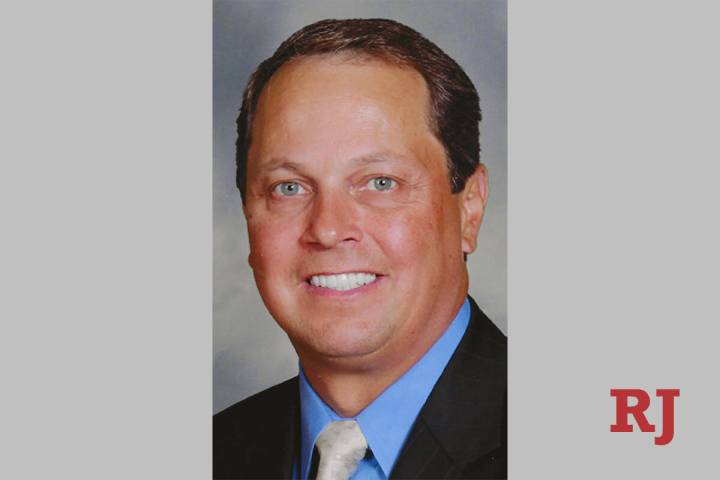
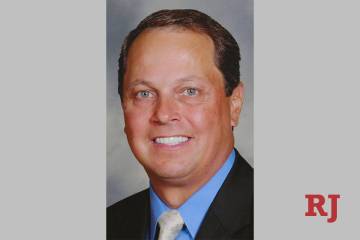
He was referring to John W. Poston Sr.
When Poston began serving on the 10-member board last year, he acknowledged that he might have a conflict of interest like most of the other board members.
But a waiver that allows him to be on the board doesn't explain in detail that his son, John W. Poston Jr., conducts dose reconstruction work for Foxfire Scientific Inc.
The company was founded by one of Poston Sr.'s colleagues at Texas A&M University. His daughter, Martha Poston-Brown, also once worked for it.
"When the White House called me and asked me to serve on this committee I said, 'No.' ... At that time my son and daughter did dose reconstruction," Poston said in a telephone interview Feb. 13 from Texas A&M, where he is professor of nuclear engineering.
Poston said he accepted the appointment to the board only after he had discussions with lawyers from the White House and the National Institute of Occupational Safety and Health. They assured him he could be on the board as long as he recuses himself from matters in which he has a potential conflict of interest.
According to his 2006 waiver, the potential exists for the board to consider matters affected by his previous work with two companies, BWXT and West Valley Nuclear Services, in addition to four national laboratories including Oak Ridge National Laboratory where he was on the payroll for 13 years.
Poston also was on the National Academies Committee on Transportation of Nuclear Waste to Yucca Mountain.
Foxfire is a subcontractor for Oak Ridge Associated Universities, a private firm that is not part of Oak Ridge National Laboratory in Tennessee.
The firm was hired by the National Institute of Occupational Safety and Health to reconstruct doses for nuclear worker compensation claims. The claims are filed under the same program that the presidential advisory board audits and votes on recommendations.
Former Nevada Test Site workers and survivors of former test site workers have criticized the compensation program for foot dragging on their claims and being rife with problems stemming from layers of bureaucracy they encounter and seemingly endless paperwork they must file.
They say their claims are denied in many cases despite assurances they would be given the benefit of the doubt.
They cite appointments like Poston's for allowing the program to proceed amid flaws in the test site's profile that they say underestimates the contamination that exists.
The program, they allege, also doesn't take into account all the accidents that occurred and working conditions that existed that caused workers to be exposed to radioactive and toxic materials when nuclear weapons tests were conducted during the Cold War at the test site, 65 miles northwest of Las Vegas.
"I understand the frustrations," Poston said, reflecting on his experience when the board met in Las Vegas in September. "In Nevada I got a good snootful. We heard a lot of comments. ... People do get frustrated, and they do accuse the government of foot dragging. But the process is in the law. We're trying to speed it up as much as possible."
Sen. Harry Reid, D-Nev., is trying to correct some of the problems with the program through legislation that would lessen the burden of proof on claimants by giving them a special exposure status.
Reid's bill, introduced Feb. 15, would expand Special Exposure Cohort status to include everyone who worked at the test site between 1951 and 1993, regardless of how many days or hours they were present.
If they suffer from certain illnesses, they won't have to jump through the hoops of reconstructing radiation exposures that they blame on deadly cancer.
The bill was spurred by a petition signed by former workers Paul Stednick and Peter White, and Lori Hunton, the daughter of a former worker.
The petition seeks coverage for workers and former workers who were present for drill backs, re-entry and cleanup work of underground nuclear tests; who were present during the nuclear rocket testing program; or worked at the classified installation known as Area 51 or other classified program areas.
"There are definitely problems with the way Nevada Test Site workers are being handled by NIOSH," Reid spokesman Jon Summers said, referring to the National Institute of Occupational Safety and Health.
That is why Reid is working to expand special exposure coverage "and to also take this out of NIOSH's hands," Summers said.
Summers said Reid is aware of the conflict-of-interest association with Poston and other board members and has talked about it to officials with the Centers for Disease Control and Prevention and NIOSH.
Out of 10 active members on the board last year, only one, Genevieve Roessler, did not need a waiver for the conflict of interest disclosure statement.
Poston's was the only one for which he is required to recuse himself "from any matter in which his relatives had any role," Poston's waiver states in part.
"That said, there is also a small set of people with qualifications to be a board member, which is why board members' conflicts of interest are evaluated," Summers said.
This year, two more board members were appointed after nominations by senators, but their conflict of interest disclosure statements had not been posted on the board's Web site as of last week.
Like most other board members, the conflict-of-interest waiver for Poston Sr. allows him to participate in deliberations and recommendations of the board, "because the need for his services outweighs the potential for conflict of interest."
In an interview Feb. 13, Poston Sr. denied that he had an affiliation with Foxfire "financially or otherwise."
"None at all," he said.
Nevertheless, during a congressional hearing in November titled "Energy Employees Occupational Illness Compensation Program: Are we fulfilling the promise we made to these Cold War veterans when we created this program?" a House subcommittee chaired by former Rep. John Hostettler, R-Ind., noted that one of President Bush's newly appointed board members "had major conflicts of interest issues" because a company contracted to do dose reconstruction work for NIOSH included his family members.
Poston said he was not aware of the hearing until it was brought to his attention by the Review-Journal.
The hearing record contains an Oak Ridge Associated Universities' Dose Reconstruction Team Nondisclosure of Proprietary Information Agreement form that reads: "I, John W. Poston Sr., an employee of Foxfire Scientific Inc. ..."
His name and the company's name are in handwritten print, and the form is signed by Poston on Sept. 20, 2004.
By signing the document, he promised to treat proprietary and business sensitive information "in a confidential manner for a period of six years after disclosure."
Seven months before then, on March 10, 2004, Poston had received an e-mail from James W. Neton, technical program manager for NIOSH's Office of Compensation Analysis and Support, soliciting his membership on the board.
The e-mail confirms that officials for the program the board reviews played a role in selecting the supposedly independent board members.
Asked to explain why he had told the Review-Journal that he had no affiliation with Foxfire, Poston Sr. acknowledged that indeed he had.
He said in a two-page e-mail on Feb. 14 that he had agreed to be a senior reviewer for Foxfire "to provide a quality assurance check on the dose reconstructions they were going to prepare."
"I sat through two days of training of the dose reconstructions taught by folks representing ORAU (Oak Ridge Associated Universities). For this activity I was allowed to bill for my time. In addition, I was required to submit a non-disclosure of proprietary information agreement. Since I was being paid by Foxfire and not ORAU, I was instructed to put their name on the 'employee line' instead of the name of my own business," Poston wrote in the e-mail.
In the e-mail's second sentence, Poston remarks about excerpts from the November hearing.
"This may sound strange, but it explains a great deal that I did not completely understand," he wrote.
"I guess that I was somewhat naive in that I never considered myself as an employee of Foxfire even though I clearly wrote the company name in the appropriate block," Poston's e-mail later states. "Rather than having them (Foxfire) subcontract with me directly, the arrangement could be made faster and easier by representing me as an employee of the company. But, I can see how this has led to a great deal of confusion and misunderstanding."
John Funk, a former test site worker whose compensation claim has been denied, said he is bothered by Poston's position on the board.
Funk said he wonders "what would happen to anybody else if they misrepresented themselves in gaining access to federally protected documents."
"The whole conflict of interest disclosure is a joke," said Funk, a carpenter who installed bulkheads in nuclear weapons test tunnels.
Funk suffers from myeloproliferative, a chronic bone marrow disorder.
Funk also suffers from two other cancers covered by the program, but dose reconstructions by Oak Ridge Associated Universities found that it was more than likely his cancers were not caused by exposure to radiation at the test site.
"We have people here with gross conflicts of interest. Everybody knows it. NIOSH knows it. How far is this dog-and-pony show going to go before our delegation steps in and does something about it?" Funk asked.
Calls by the Review-Journal to Foxfire Scientific Inc.'s chief executive officer, Ian Hamilton, and the company's chief operating officer, Matthew Arno, in Bryan, Texas, were not returned.
Foxfire has been paid an average of $100,000 per month for the last six months to conduct dose reconstructions for the compensation program through its subcontract with Oak Ridge Associated Universities, according to Lewis Wade, senior science adviser to the NIOSH director.
CONFLICT-OF-INTEREST WAIVERS
Besides John W. Poston Sr., the other members of the Advisory Board on Radiation and Worker Health who were issued conflict-of-interest waivers last year requiring recusal from review of site profile, dose reconstruction and special exposure petition matters are:
Paul L. Ziemer, for the X-10 facility at Oak Ridge National Laboratory.
Bradley P. Clawson, for Idaho National Laboratory.
Michael H. Gibson, for the Mound facility in Ohio.
Mark Griffon, for worker claims petitions at the gaseous diffusion plants in Paducah, Ky., Oak Ridge, Tenn., and Portsmouth, Ohio; the Mound and Fernald facilities in Ohio, the Y-12 and X-10 facilities in Oak Ridge, Tenn., and the Nevada Test Site.
Dr. James E. Lockey for the Fernald, Ohio, settlement fund and evaluations of Portsmouth, Ohio, workers.
Dr. James M. Melius, for constituents of the Laborers Health & Safety Fund of North America, the New York State Laborers’ Political Action Committee and potential claimants from the Safety Trust Fund/Laborers Employers Cooperation and Education Trust Fund.
Wanda I. Munn, for the Westinghouse Hanford Co.
Robert W. Presley, for the Y-12, X-10 and K-25 facilities at Oak Ridge, Tenn.