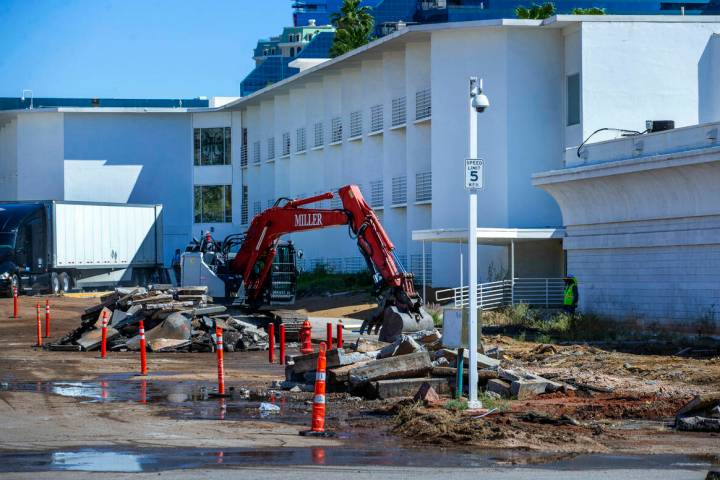
Tropicana owner Bally’s Corp. filed for a commercial demolition permit with Clark County as preparations continue to build a ballpark for the Oakland Athletics.




Tropicana owner Bally’s Corp. filed for a commercial demolition permit with Clark County as preparations continue to build a ballpark for the Oakland Athletics.

Two Henderson parents have been arrested on suspicion on child abuse after police found an 11-year-old inside a large metal enclosure inside a residence.

At 84, Smokey Robinson is still fit and a master of his performances.

The city’s mobsters roots run deep. Here are a list of mob-connected homes that has sold in recent years, including one formerly owned by Frank “Lefty” Rosenthal.

Goaltender Logan Thompson shined in net as the Golden Knights defeated the Dallas Stars on Wednesday to take a 2-0 lead in their first-round playoff series.

Tabatha Tozzi died on April 24, 2023. Police say Tozzi’s then-boyfriend, Oswaldo Natanahel Perez-Sanchez, shot her in the head. He hasn’t yet been caught.
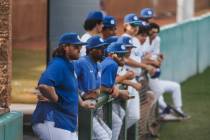
Bishop Gorman announced Wednesday that its baseball team was forfeiting games over paperwork related to the eligibility of a transfer student.

A new poll looks at whether voters would support a potential law that made all workplaces in Nevada, including casinos, completely smoke free while indoors. Unions also weigh in.

A ’70s theme for the evening celebration proved fitting, given that the library first opened in a tiny storefront in 1973.
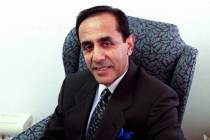
University Medical Center defends the $115,200-a-year contract of an influential doctor, but the public hospital can’t document cases he has reviewed.

Tom Telesco begins his first draft in charge of the Raiders on Thursday. Turning the team around starts with getting better results with the team’s selections.

Alex Honnold joined Democratic Rep. Susie Lee in a panel discussion with outdoor recreation small businesses to talk about ways to support outdoor recreation.

Nevada’s history is full of temblors. On average, about 10 earthquakes a day occur in the Silver State.

DeAjai Guaydacan was arrested in Spanish Fork, Utah, and booked into the local county jail on suspicion of open murder pending extradition to Las Vegas.

Influencers are everywhere in 2024. No matter what industry you find yourself in or which ad you see on TV, you will always encounter someone promoting something about it or in it. Influencers are huge on social media, especially Instagram. But what exactly is an influencer? Is an influencer just another person fake promoting a […]





After just over a year, former Raiders tight end Darren Waller and Aces guard Kelsey Plum have called it quits on their marriage.

The 100,000-square-foot center, replacing an aging office complex, will include restaurants, culinary kiosks and a covered alfresco dining lounge.
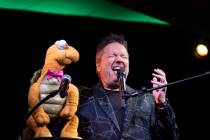
Terry Fator is using new architecture at The Strat Showroom to his advantage. That venue is part of the resort’s $125 million overhaul under owner Golden Gaming.

A motorcyclist was killed after a crash with a pickup truck in North Las Vegas.