Defense attorneys raise questions about jailhouse recordings of attorney-client conversations



Defense attorneys for a bank robbery defendant continue to raise questions about jailhouse recordings of attorney-client privileged conversations that were inadvertently handed over to a federal prosecutor.
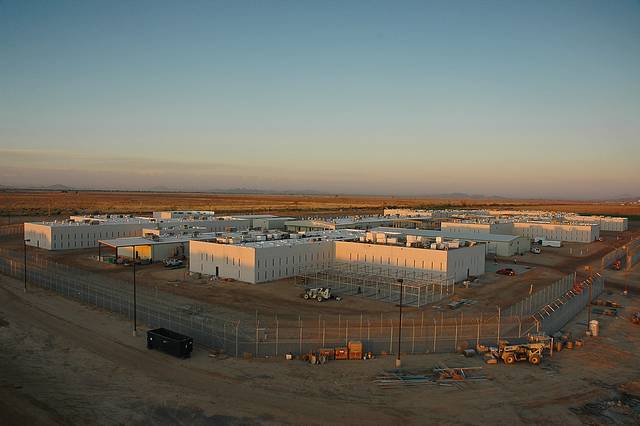
In court papers filed last week, defense attorneys for Robert Kincade asked the court to force the government to answer questions about what the FBI and Corrections Corporation of America, which runs federal detention centers, have done with the recordings of the privileged calls.
It’s a development in a case that has led to the defense raising concerns about Kincade’s right to a fair trial.
“Again, the prejudice (caused) by the government’s unilateral conduct is ongoing and unchecked, making it difficult for Kincade and counsel to prepare for his defense,” defense attorney Kathleen Bliss wrote in the motion.
The motion also requests early disclosure of grand jury transcripts of the testimony of FBI agent Henry Schlumpf, who had requested an “open-ended subpoena” that ultimately obtained the recordings from the Nevada Southern Detention Center in Pahrump.
Citing the FBI agent’s testimony from a Nov. 23 hearing, the motion says he knew he had received recorded attorney-client privileged telephone calls and sent them all to the U.S. Attorney’s Office without notifying the prosecutor assigned to the case. Schlumpf also testified that he didn’t listen to the communications once he identified them as privileged, the motion says.
In the filing, Kincade’s defense team maintains that prosecutors didn’t acknowledge or respond to a Nov. 23 email asking for information about the circumstances surrounding the jailhouse call recordings. Those unanswered questions include when they learned they had the calls; what they did with the calls, other than forward them to Kincade’s legal counsel; and what the FBI and Corrections Corporation of America have done with the recordings.
The motion seeks a court order that would force the federal government to answer those questions through a status report. The motion also ties the request for the FBI agent’s grand jury testimony to his role in obtaining the 13 phone calls, which happened before the FBI agent interviewed co-defendant Jose Roglio Florez in August.
“It begs the question: the only true, effective test of Schlumpf’s testimony – and guarantee of Kincade’s right to confront this witness – is for Kincade to understand the full contours of Schlumpf’s management of this case and how he has directed it in light of the bold fact that Schlumpf, and the prosecution, has had privileged telephone calls,” the motion says. “As such, it is critical that Kincade obtain the prior, secret and unchallenged testimony of Schlumpf made after Schlumpf had obtained ‘any and all’ telephone calls and correspondence by open-ended subpoenas.”
Prosecutors haven’t yet responded to the motion, though Assistant U.S. Attorney Alexandra Michael previously has said in court papers that the attorney-client conversations were among recordings of Kincade that she had subpoenaed from the detention center. She has said she turned over copies of all the recordings to the defense and didn’t listen to them.
A log of 13 phone calls between Kincade and his attorney shows they happened between Feb. 11 and Sept. 21, with the shorter ones lasting almost a minute and the longest call lasting 15 minutes and 17 seconds. Kincade also filed a compact disc of the recordings under seal and asks the court to refrain from listening unless there are doubts that the conversations were privileged.
A spokeswoman for the Corrections Corporation of America-run detention center, Kayla Gieni, said she couldn’t comment on specific cases but said it’s the detainee’s responsibility to fill out a form with the attorney’s information so those calls are not recorded.
Contact Ben Botkin at bbotkin@reviewjournal.com or 702-384-8710. Follow @BenBotkin1 on Twitter.
RELATED
Prosecutor admits obtaining jailhouse recordings of lawyer-client conversations
Defense lawyer raises new questions about secretly recorded jailhouse calls