Mom inspired by East African girls’ plight to start nonprofit
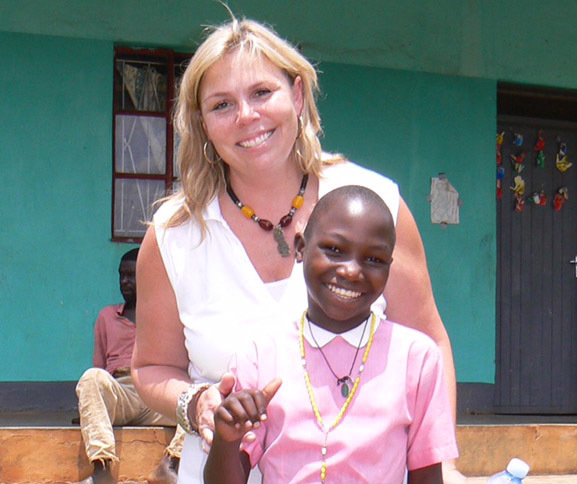
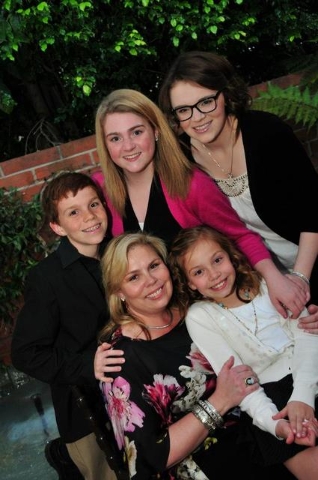




Cristen Jacobsen of Summerlin is a mother of four, but she may well be a mother to 270. That’s how many orphaned girls live at the St. Elizabeth Girl’s Academy of Uganda, East Africa, an orphanage and school that rescues street children up to 21 years old.
Jacobsen helps support the school through her nonprofit Hope for Hearts, which she co-founded in 2007. She was moved to do so soon after meeting the Rev. Mugagga Lule, the nonprofit’s co-founder and president of St. Elizabeth Girl’s Academy.
“It’s so inexpensive to (support) the school,” she said, adding that it costs no more than what one spends on a latte each day. “That latte provides school for one girl for a week.”
Jacobsen has always found time for charity work. Her family’s foundation is involved with various organizations across America, supporting children’s charities locally, nationally and internationally, including the Nevada Chapter of the Juvenile Diabetes Research Foundation, Children’s Hospital Los Angeles and Lucile Packard Children’s Hospital Stanford in Palo Alto, Calif. Jacobsen worked in advertising and marketing with high-profile companies such as Coca-Cola and R & R Partners. She met Lule and learned of the conditions faced by girls in Uganda who had been orphaned by AIDS.
The Ugandan school teaches the girls skills such as embroidery, bead making, food preparation and sewing so they can earn an income.
“It’s about teaching the girls to fish and not just giving them a fish, to use that old saying,” Jacobsen said. “It’s about opportunities for the future, a hand up. … That’s what drew me to this program as well as how smart Father Mugagga was with his funds.”
At the time she set up Hope for Hearts, her four children were young, the oldest in first grade. As they grew, Jacobsen involved them in her cause. The children held bake sales, doughnut sales and had a lemonade stand.
“My 12-year-old still does that and donates all the funds to the school,” she said. “I think it’s important for our children to realize how fortunate we are here in America and give back, to think about other people beyond themselves.”
After the unsettled state of the African nation canceled her travel plans more than once, Jacobsen had the opportunity to spend a week in Uganda in 2011 to see the school. She witnessed the girls being so joyful that they’d break out in dances.
She also visited areas beyond the school, where Ugandans wore vacant stares, just going through the motions as they tried to survive.
“They had no hope for the future,” she said. “It’ll change your life to go to Africa and see (the conditions there).”
Jacobsen’s efforts to bring awareness to the cause have seen donations blossom to more than $70,000 being raised in the past two years. Donations have funded uses such as a new roof for the academy and food and clothing for the residents.
Her efforts have been so successful that she and Lule have started a fundraising campaign for a new campus; currently the school/orphanage houses an average of 200 girls but could accommodate up to 1,000 with new facilities.
“I think a mother’s instinct is to see that everyone is provided for,” Lule said. “They don’t want to see any child suffer or go without. When they see children who go without the basics, especially with little children, their first reaction is, ‘What would I do if this were my child?’ So, they can put themselves in those shoes and see a suffering child as their own.”
Lule said Jacobsen’s background in marketing and advertising was especially helpful and forwarded the cause more than he could do on his own.
Another goal for the Ugandan school is to purchase 40 acres to set up an animal husbandry teaching operation that will not only teach the skill but be profitable and pump money back into the school.
Jacobsen recalled visiting a 19-year-old graduate of Lule’s school. The girl worked as a seamstress and was able to make enough to rent a one-room home. She had rescued her four younger siblings to live with her and also paid for them to go to school. Some days, she was not able to put food on the table. Jacobsen asked the teen how difficult it was to make that decision, to spend the money on school instead of feeding the children.
“She said, ‘It’s not hard at all,’ ” said Jacobsen, “because they won’t get anywhere without school.’ ”
Handmade necklaces with beads created from recycled paper are sold through the Hope for Hearts website to help support the school. There are several designs ranging from $15 to $25 each.
For more information or to purchase a necklace, visit hope4hearts.org.
To reach Summerlin Area View reporter Jan Hogan, email jhogan@viewnews.com or call 702-387-2949.