RICH LOWRY: Trump is right on gas-powered cars
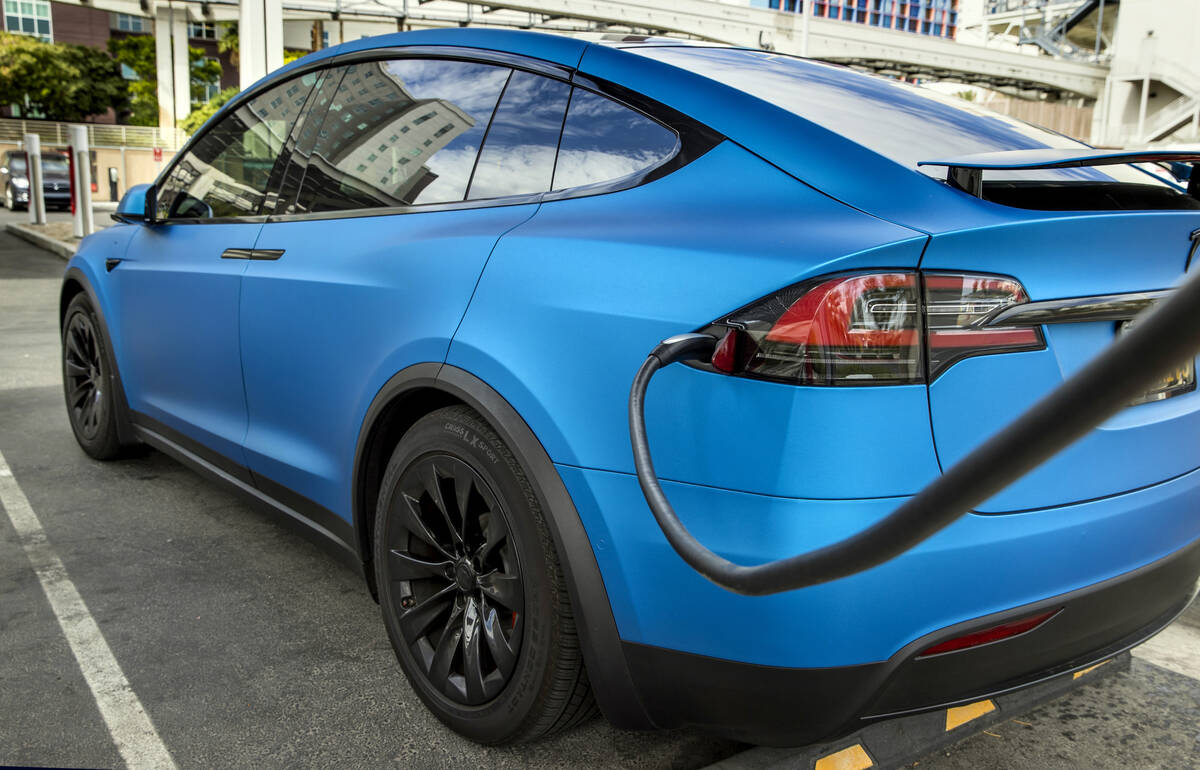


President Donald Trump likes to tout his accomplishments, and saving the gasoline-powered car should be high on the list.
The president is ending a lunatic government campaign against the internal combustion engine, one of the defining mechanisms of our age. This uneconomical push for electric vehicles ignored consumer preferences and relied on high-handed executive overreach.
The New York Times said Trump has thrown “the weight of the federal government behind vehicles that burn gasoline,” although all he has done is lift the federal thumb from the scale in favor of EVs. The One Big Beautiful Bill Act axed a tax credit for electric vehicles and killed fines for automakers violating fuel-efficiency rules. Now, Trump is rolling back the so-called Corporate Average Fuel Economy standards themselves.
President Joe Biden sought to use the standards — originally imposed in the 1970s as a way to make the automotive fleet more efficient and reduce our dependence on foreign oil — as the truncheon to beat automakers and consumers into making and buying electric vehicles, no matter what.
CAFE standards, which are a fleetwide average, had been relatively stable for a long time. They jumped under Barack Obama, and then Biden made them into a five-year plan-style imposition. The mandated miles-per-gallon was going to hit 65.1 for passenger cars and 45.2 for light trucks by 2031. At that point, why not make the standard 75 mpg or 100?
The Biden administration denied it was banning gas-powered cars, but the point was to phase them out. Electric cars were supposed to be 67 percent of the market by 2032. This was otherworldly. Electric vehicle sales hit 10.5 percent of all vehicles sold in the third quarter of 2025. That was a record, but 90 percent of the vehicles were something else, and the surge was driven by buyers moving to take advantage of the expiring tax credit. EV sales are now expected to drop off again.
Toward the end of the Biden administration, thousands of car dealerships wrote to Biden warning that EVs are “not selling nearly as fast as they are arriving at our dealerships — even with deep price cuts, manufacturer incentives and generous government incentives.” In short, it was becoming ever more apparent that “this attempted electric vehicle mandate is unrealistic based on current and forecasted customer demand.”
As independent journalist Robert Zubrin has pointed out, electric vehicles are a niche product. They are overwhelmingly bought by affluent white men who live in progressive areas. For the legacy auto companies, EVs have tended to be an albatross. Ford has been losing an estimated $60,000 on every electric vehicle it sells. Its EV division lost $4.7 billion in 2023 and $5.1 billion in 2024.
Congress never intended the executive branch to use CAFE standards to try to hustle the traditional car out of existence. The regulations have had perverse effects, such as making it harder for automakers to produce small, cost-effective vehicles. It’s easier to meet the standards for bigger vehicles, so they’ve played a role in the ever-shrinking market for the sedan and the ubiquity of SUVs.
The Trump rollback is another sign that climate panic is receding. There may come a time when EVs are affordable and consumers embrace them en masse, but the Trump approach will allow the market — not regulatory ukase — to determine when that comes about.
Rich Lowry is on X @RichLowry.