Obama must change course

Thirty-two months. That's how long it's been since President Obama signed into law the 2009 American Reinvestment and Recovery Act, more commonly known as the stimulus.
The president's first legislative victory was accomplished just a few short weeks after his inauguration, and he could scarcely contain his excitement. He claimed the new law would "save or create 3.5 million jobs," and that it was only the start of the larger project of renewing America. "We have begun the essential work of keeping the American dream alive in our time," the president declared.
Thirty-two months later, it's clear the original projections of what the stimulus would achieve, at a cost of nearly $800 billion in taxpayer funds, were wildly optimistic. The latest unemployment rate of 9.1 percent is evidence enough of that disappointing fact.
This is not to score points against the president. I have no doubt he honestly believed the economic stimulus bill would jolt the economy out of its doldrums. I have no doubt he's as disappointed as the rest of us at where we are today.
But that disappointment doesn't excuse his unwillingness to adjust his approach in the face of failure. His push for the American Jobs Act, another round of stimulus that earned a tepid reception from both Republicans and Democrats in Congress, suggests President Obama is having difficulty changing course in light of new information.
Before we launch more of the same, here's a suggestion: The president should pay close attention to what some of the nation's top business leaders have to say about how to boost hiring and get the economy moving again. Leaders of companies that are thriving might offer compelling new insights into what ails our economy -- and suggestions for how we might begin climbing out of the hole.
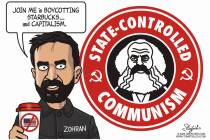
Take Howard Schultz, CEO of Starbucks, who offered sharp but constructive criticism of the dysfunction in Washington spending and policymaking. In a Sept. 5 interview, Schultz emphasized that one of the chief problems facing the United States is the federal budget deficit, which he linked to persistent unemployment and the "fracturing of consumer confidence." Schultz urged Washington officials to get a handle on spending and debt.
Then Obama should talk to CEOs of installment lending companies, which are still lending to Joe Six Pack to get his transmission fixed -- unlike the president's friends in banking.
Or the president might listen to Muhtar Kent, the head of Coca-Cola. He noted in a recent interview that it's become easier for his company to do business in China and Brazil than in the United States, where political gridlock and anti-business tax policy serve to hold back investment. It's striking that a leading executive finds it easier to conduct business in developing nations than in what should be the most dynamic capitalist nation in the world. Washington should see this as a signal that it's time for pro-business, pro-investment tax reform.
Or the president might talk to independent oil and gas industry CEOs. Then look to North Dakota to back up what they tell him. He will find 18,000 unfilled jobs in North Dakota and unemployment under 3 percent. Then turn to the major railroad CEOs. He will find they have invested their own companies' money in infrastructure and created thousands of jobs.
Or the president might talk with John Riccitiello, CEO of the video game giant Electronic Arts, who points to disruptions in the technology sector to illustrate how Washington should embrace change instead of run from it.
If President Obama is truly committed to keeping the American dream alive, perhaps it's time he expand his circle of business advisers beyond billionaire investors, bailed-out bankers and the heads of subsidized solar manufacturing companies. Fresh insights from a new set of advisers might offer a different perspective on what we need to get the economy moving again. Given the results we've seen so far, it's certainly worth trying.
J.C. Watts (JCWatts01@jcwatts.com) is chairman of J.C. Watts Companies, a business consulting group. He is former chairman of the Republican Conference of the U.S. House, where he served as an Oklahoma representative from 1995 to 2002. He writes twice monthly for the Review-Journal.