



Interior secretary makes conservation a top priority on BLM lands


Interior Secretary Ken Salazar made a brief but important stop in Las Vegas on Monday.
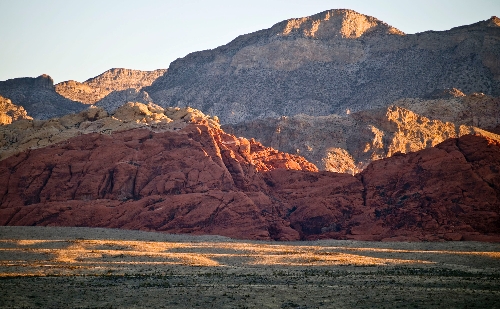
He didn't have time to admire the majestic sandstone cliffs of Red Rock Canyon, or catch a glimpse of the prehistoric rock-art etchings of Sloan Canyon, or even hike through the remoteness of Gold Butte, an unprotected wildland, 60 miles northeast of the Las Vegas Valley.
But he ensured the continued protection of those and other public lands in the West during a 20-minute stop at the National Landscape Conservation System Summit before he headed back to Washington, D.C., following a weekend in Colorado and New Mexico.
Salazar signed a memorandum that makes conservation a top priority on almost 28 million acres managed by the Bureau of Land Management. The bureau also promotes grazing, energy development and tourism.
The memorandum clarifies the decade-long effort to protect and restore nationally significant landscapes. In 2000, the Clinton administration carved the system of conservation areas, parks and historic landscapes out of the 250 million acres of BLM lands. Congress formally approved the landscape system last year.
"I think that when history looks back at our time in conservation, it will look back at that realization and will say it was one of the great steps of conservation at the beginning of the 21st century," Salazar told the gathering of 330 BLM officials and members of public support groups at the JW Marriott.
The memorandum also elevates the director of the National Landscape Conservation System, a post currently held by Carl Rountree, to an assistant secretary of the Bureau of Land Management.
Environmental groups had been seeking the secretarial order to further protect the conservation lands.
The policy direction means conservation of the 186 units that make up the national conservation lands -- including 16 national monuments, 220 wilderness areas and 16 scenic and historic trails -- will always be preserved despite the push for renewable energy projects such as wind and solar projects and other public uses of the federal lands.
"It recognizes that conservation is a component of multiple use," said BLM Director Bob Abbey. "Just because we are proponents of renewable energy doesn't mean that every project that comes before us will be approved.
"It's not about one or the other. It's about finding appropriate areas. I think it's about balance."
Abbey said he views the national conservation lands as a huge outdoor laboratory where scientists can learn how to make green energy coexist with the natural landscape and solve problems such as the threat of wildland fires posed by the invasion of cheat grass and other non-native plant species.
At the two-day conference, which continues today, land managers and public partners huddled to set priorities for emerging science and management issues on public lands and to discuss the relationships of uses such as outdoor recreation, grazing and energy development.
The Associated Press contributed to this report. Contact reporter Keith Rogers at krogers@reviewjournal.com or 702-383-0308.


