



Book chronicles rise of IGT founder Redd
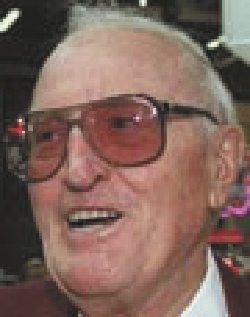
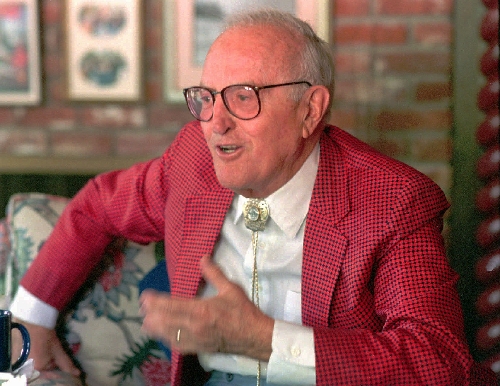
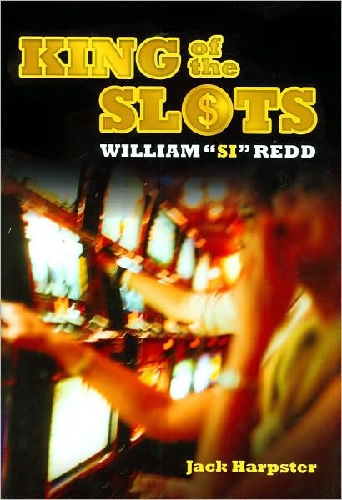


In "King of the Slots: William 'Si' Redd," former Las Vegas Review-Journal executive Jack Harpster chronicles how the son of a sharecropper pulled himself from abject poverty using keen business sense and plain hard work to become a multimillionaire and founder of slot giant International Game Technology.
When Redd died in 2003 at the age of 91, Reno-based IGT ranked as the world's largest slot manufacturer. The company was reported to have built an estimated two-thirds of all slot machines on U.S. casino floors at the time of Redd's death.
The meticulously researched biography pieces together Redd's early life as a third-generation Mississippian who entered the business world at the age of 7 but didn't enter the slot-machine business that defined his legacy until he was in his 50s.
William Silas "Si" Redd, who was born in central Mississippi in 1911, started selling petroleum jelly and magazines to farmhouses within a 10-mile radius of Philadelphia, Miss.
By the mid-1930s, Redd entered the penny pinball route business and then the jukebox route business with 1,000 machines in rural Mississippi, netting an estimated $50,000 per year.
Redd rose from that low-tech beginning by using "Apollo moon landing-era technology" to popularize video poker and Megabucks progressive jackpots, becoming a member of the Gaming Hall of Fame and the Nevada Business Hall of Fame in the process.
" 'Si' Redd might have had more impact on gaming than just about anybody in the last 30 years," University of Nevada, Las Vegas professor Bill Thompson said in 2003 at the time of Redd's death. "He was a guy who tinkered, a poor boy who had ideas and hustled, and he was the force behind the development of the video poker machine."
"King of the Slots" moves between a standard biography and an unflinching business book that takes on Redd's business failings.
Harpster calls Redd a "hillbilly from Mississippi" while repeatedly reminding the reader that Redd was "a business genius, but primarily in sales, marketing, and customer service matters. He never completely understood the complex financial aspects of big business."
Redd's gaming career took off after he left his career as a Boston-based jukebox distributor and moved to Las Vegas in 1967 and founded Bally Distributing Co. Redd's company was bought by Bally's Manufacturing in the mid-1970s, and in 1978, Redd left to form a new venture called Sircoma, now known as IGT.
The book also looks at his other gaming-related ventures, including the failed Pride of Mississippi offshore casino that cost Redd millions of dollars.
The book discusses Redd's other major impact on Nevada, helping Mesquite nearly 80 miles northeast of Las Vegas establish itself as a town after his arrival in 1976.
"I want to make Mesquite a big city," Redd is quoted as saying in the book. "I hope the day comes when it will be as big as Reno."
The center of that story is how Redd bought the fledgeling Western Village Truck Stop, transforming the 28-room motel with 23 slots into "Si" Redd's Oasis, a 1,000-room resort, which he sold for $31 million in 2001.
The book also looks at Redd's dealings with other casino legends including Howard Hughes, Jay Sarno, Bill Harrah and Steve Wynn.
This is 73-year-old Harpster's sixth book since retiring from the Review-Journal in 2002. He spent 43 years on the business side of the newspaper industry. He spent the past 17 of those years at the Review-Journal, ending his career as executive director of advertising for the newspaper, and director of new media for its parent company, Stephens Media Group.
He is working on a biography due out next year on eccentric multimillionaire LaVere Redfield, who lived in Reno from 1935 until his death in 1977.
Contact reporter Arnold M. Knightly at aknightly@reviewjournal.com or 702-477-3893.
Read excerpts from King of the Slots: William ‘Si’ Redd


