



Cancer institute lays off staff
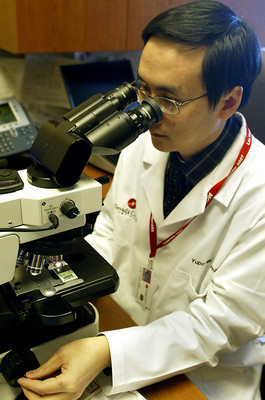



Its fundraising success was once touted as a sign that philanthropy in Las Vegas could be maturing, but on Thursday the Nevada Cancer Institute laid off 50 staffers and said the worsening economy has hurt its donations.
"Today is an unfortunate reflection of a difficult economic backdrop," said Heather Murren, co-founder of the nonprofit health organization, which links its research to providing cutting-edge cancer care to Nevadans. "We're not unique in feeling a slowdown in the economy."
Murren, who is chairwoman of the institute's board of directors, would not discuss how great the drop in donations was in 2008, but financial documents indicate already it had been experiencing a slowdown in giving from 2006 to 2007.
In 2007, the organization generated a little more than $50 million in contributions, down from $66 million in 2006. The figures include gifts, grants, and government support.
Dan Goulet, president and CEO of the United Way of Southern Nevada, said what the cancer institute is experiencing is widespread among charities in the Las Vegas Valley.
"These are challenging times for many of us in Southern Nevada, and nonprofit organizations aren't immune to economic downturns," he said.
Murren said fundraising expectations were met in the first quarter of 2008, but the second quarter weakened. Recently, she said, the decision was made to cut staff to ensure the institute could continue to work with patients.
The layoffs will not affect outreach and education offices in Elko, Fallon, and the Reno-Sparks area.
The organization traditionally has benefited from a solid relationship with the Nevada Legislature, which in 2003 made it the state's official cancer institute and which has appropriated more than $20 million to the mission since 2005.
But that might change.
"What is happening to NVCI is not good news," said Assemblywoman Sheila Leslie, D-Reno, chairwoman of the Legislative Committee on Health Care. "I'd say it's a step in the wrong direction but certainly understandable in these tight economic times."
Leslie said more difficult funding challenges might be down the line.
"The Legislature just can't fund them at the same rate in the future," she said. "The state simply doesn't have the money."
The layoffs, which took place immediately, were made "across the board" but will not affect the mission, Murren said. The number of patients seen will not be reduced, she said.
More than 6,000 patients have been seen since the institute was founded in 2002. Ten percent of those patients come from out of state.
Even as the president and chief executive officer, Dr. Sandra Murdock, met with affected employees throughout the day Thursday, work continued on a new 101,000-square-foot, three-story building that will include a conference center, offices, labs and a library. It is adjacent to the original building near Hualapai Way and Interstate 215.
Plans are under way for another 150,000-square-foot building dedicated exclusively to research.
Murren said the building going up now is an example of what is known in fundraising circles as a "restricted donation."
"The donor gives $20 million for a building, and it can't be used for anything other than brick and mortar," she said.
Until Thursday, 383 employees worked in departments that include administration, basic science, clinical trials, diagnostic imaging, finance, information technology, culinary services, laboratory medicine, legal and government affairs, communications, and development.
According to the institute's 2005-06 annual report, 220 employees worked there at the time.
The need for 163 new employees, Murren said, came as public services in the original building -- opened in 2005 -- came fully on line.
Murren does not think the health care organization expanded too fast.
"Given the facts that we were working with, our primary focus was that there was a pretty enormous need," she said. "When you delay trying to serve that need, it costs people. We felt like we needed to meet that need as quickly as prudent."
In 2005, the Chronicle of Philanthropy, the publication that examines fundraising, gushed about the fundraising efforts of the organization.
"The Nevada Cancer Institute, which has raised $65 million in less than three years of existence, is the most audacious new charity in a city that is churning out nonprofit organizations at a faster pace than all other urban areas except Atlanta," the publication said.
The trade journal said the success "is a sign that philanthropy in Las Vegas may be maturing."
The institute's high profile brought with it what fundraisers call a "wow factor." At a 2007 gala where Jim and Glynda Rhodes of Rhodes Homes gave a $10 million gift, Rod Stewart gave a high-energy concert. Howie Mandel, Paris Hilton, Sylvester Stallone and rocker Tommy Lee were on hand.
A foundation led by famed cyclist Lance Armstrong, who overcame testicular cancer, gave the institute a five-year, $500,000 gift.
The organization offers oncology care with several specialties such as breast, prostate, bladder, and kidney cancers.
Since 2005, it has opened more than 80 clinical trials. Unique drugs, not otherwise available to patients in Nevada, are available in such trials.
The institute uses radiation oncology to treat malignancies that include lung, brain, prostate and breast cancer. A mobile digital mammography van brings mammography services to Nevadans. At University Medical Center, the institute provides oncology and malignant hematology services.
Researchers have done some groundbreaking work, including a study that many scientists think will lead to a precise tool to detect epithelial ovarian cancer before physical symptoms are present.
Today, about 90 percent of women are diagnosed late, and the five-year survival rate is in the 10 percent range.
The study appeared in the Proceedings of the National Academy of Sciences, the world's most-cited multidisciplinary scientific journal.
Murren thinks that the institute will weather the financial storm and come out even stronger.
"Building an organization of significance is never easy," she said. "But we will continue to reduce the burden of cancer."
Contact reporter Paul Harasim at pharasim@reviewjournal.com or 702-387-2908. Contact reporter Annette Wells at awells@reviewjournal.com or 702-383-0283.


