Decision changes HOA powers
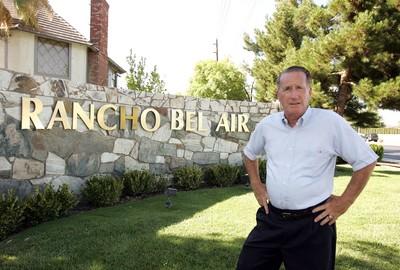


CARSON CITY -- An arbitrator's decision that says homeowners associations have to get a favorable vote from residents to implement special assessments could have far ranging implications for the 1.2 million Clark County residents who live in such communities, a lawmaker said Thursday.
"This is big," said Sen. Mike Schneider, D-Las Vegas, who has worked on homeowner association issues in the Legislature for years.
The problem is that state law requires associations to have a fully funded reserve for capital improvements, which creates the need for special assessments, but there is also the requirement in many associations that homeowners be allowed to vote, he said.
The two requirements conflict if homeowners vote no on special assessments. Schneider disagreed with the ruling, saying the reserve requirement is critically important to maintain the communities.
It is even tougher in the case of the arbitration decision in the dispute between Jonathan Friedrich and the Rancho Bel Air Homeowner's Association because the rules require a two-thirds vote, he said.
"It's almost impossible to get a two-thirds vote," Schneider said.
The dispute stems from a vote last year by the homeowners association board to implement a $20 a month special assessment starting Jan. 1 to fund a reserve for capital projects.
Friedrich objected, saying the association's rules required a vote of the homeowners, with a yes from two-thirds of the residents to implement the assessment.
The board disagreed, citing a state law that it said overrode the association rules.
But in the decision issued Friday, Arbitrator Dee Newell ruled for Friedrich, saying the board is required to put the matter to a vote of the homeowners.
"I'm ecstatic that I won my battle with my homeowners association," Friedrich said. "It's been a long, hard, nasty fight."
The decision does not impact standard homeowners association fees.
Schneider said a bill that would have cleared up the issue by allowing association boards to impose such fees passed the Legislature but was vetoed by Gov. Jim Gibbons, he said.
Even so, Schneider said legislative counsel has issued a legal opinion that says association boards can implement special assessments without a vote of residents, a view that conflicts with the arbitrator's decision.
But Las Vegas attorney Robert Sullivan, who represented Friedrich in the dispute, said the arbitrator got it right by requiring the board to seek a vote of the association residents.
The decision says that just because homeowners might vote against an assessment is no reason not to go through with the voting process, he said. It makes it even more important for the board to communicate to residents why the assessment is needed, Sullivan said.
While homeowners might vote against an assessment, the same could be said of an association board, he said.
The decision leaves unanswered whether a board could vote to impose a special assessment in the event of a no vote by homeowners, Sullivan said.
"But the answer is not to disenfranchise the voters," he said.
The decision does have some applicability to other associations that require homeowner votes in their rules, Sullivan said. It would be persuasive, but not binding, for other associations, he said.
The Rancho Bel Air decision can be appealed to district court, but there is no indication yet if the association will do so, Sullivan said.
Friedrich said he has struck a blow for homeowners all across Nevada with the decision.
But whether Friedrich, a transplanted New Yorker who now lives in Rancho Bel Air, is viewed as a hero or a troublemaker depends on who you talk to.
"The board despises me and the feeling is mutual," he said.
The $20 a month fee was suspended for 90 days as a result of the decision. By then, the association must put the issue to a vote.
Putting the issue to a vote as required by the association rules does not "automatically mean the reserve funding method suggested by the executive board will fail," Newell said in the decision.
Friedrich said he offered to withdraw the arbitration if the board would put the matter to a vote but was ignored.
"I bent over backwards because I wanted the majority to speak," he said. "I thought we lived in a democracy."
Friedrich said the decision should apply to all types of special assessments, and to all homeowners associations that require votes for such assessments in their own rules, as most do.
Robyne Brooks, property manager for the association, said she had not read the decision and could not comment. The attorney representing the association could not be reached for comment Thursday.
Friedrich's efforts to get the matter to a vote almost failed because of what he said were last minute dealings over a homeowners association bill at the Legislature.
Senate Bill 396, as amended in a conference committee in the last minutes of the Legislature, would have taken away voting rights for homeowners association residents, he said.
The proposal was originally in a Senate bill that did not see passage in the Assembly. But it was amended into SB396 at the last minute, Friedrich said.
As a result, Friedrich, among many others, asked Gibbons to veto the measure, which he did, citing in part, "unintended and unanticipated impacts on common-interest communities and those who live within those communities, including the possibility of increased assessments."