Ensign calls for full TV coverage of final stimulus talks

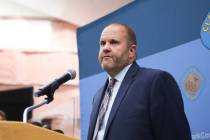
WASHINGTON — Sen. John Ensign today called on congressional leaders to allow full television coverage of negotiations this week where a handful of House and Senate members will finalize the $800 billion economic stimulus bill.
The Nevada Republican said broadcasts of the conference committee meetings will encourage “transparency and accountability” as senior lawmakers make decisions on the crucial legislation that President Barack Obama has said he is counting on as a key component of his economic rescue strategy.
“It should not be behind closed doors, it should be out in the open,” Ensign said. “When you are spending a trillion dollars it is even more important.”
Ensign maintained TV coverage of the conferees would “hold them accountable, to find out if there are things being hidden in the bill at the last minute, who is being done favors or if there are special things being put in the bill.”
Speaking to reporters earlier in the day, House Majority Leader Steny Hoyer, D-Md., said, “I don’t have any reason to believe the conference won’t be open.”
But as is usually the case with major bills, much of the heavy lifting on the most contentious issues is expected to take place out of the spotlight. Additionally, a number of lower-profile issues usually are negotiated by staff before the conference panel meets formally.
Sen. Harry Reid of Nevada, the Senate majority leader, said in a separate gathering that when Republicans controlled Congress, there were hardly any conference committee meetings, let alone ones conducted in public.
“The few conferences that were held were done in secret with only the Republicans being part of the conference,” Reid said. “And then, during the eight years of the Bush administration, there were absolutely none done.”
According to the Office of House Historian Robert Remini, “It is not frequent that cameras are allowed into House and Senate conferences.”
Because they are joint meetings of the House and Senate, the rules of neither body apply.
“Basically what it comes down to is whether or not the conferees wish to have these conference hearings open or closed to the public,” the office said in a statement.
Ensign made his comments after the Senate voted 61-37 for an $838 billion recovery bill that Democrats passed with help from three moderate Republican senators.
Reid voted for the bill, and then named himself as one of the conference committee members who will determine the final outcome. Ensign voted against it.
Lawmakers now will gather to negotiate the differences between the Senate version and a $819 billion House bill.
Reid said he wants the bill finished before Congress breaks for a Presidents Day recess at the end of this week.
Hoyer said the negotiations could stretch into next week.
Contact Stephens Washington Bureau Chief Steve Tetreault at stetreault@stephensmedia.com or 202-783-1760.