



High-flying class lands in Nevada aerospace hall
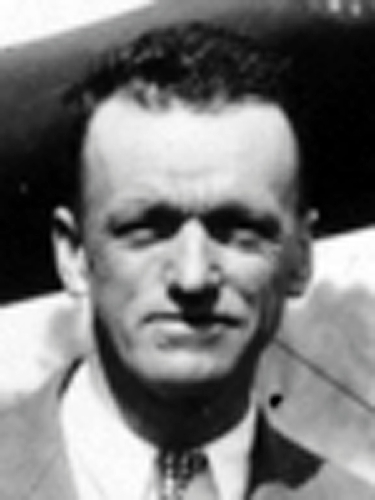
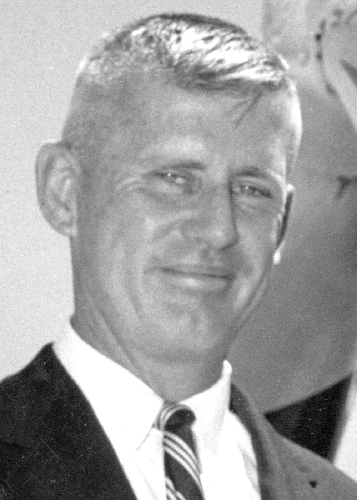
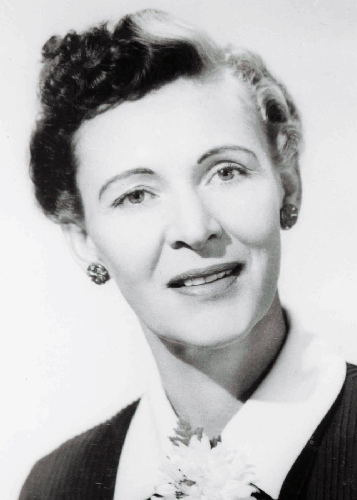
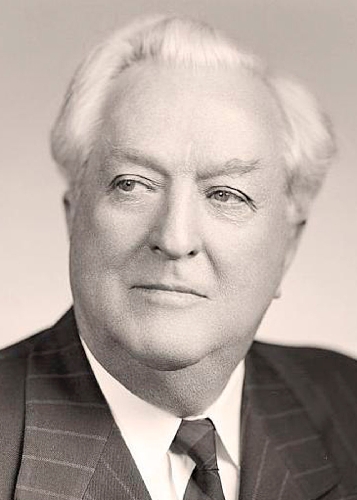


From a turn-of-the-century daredevil to a commander who flew Soviet MiG jets out of Area 51, this year's class of inductees into the Nevada Aerospace Hall of Fame is steeped in significance and intrigue.
In all, eight aviators and aerospace industry pioneers were inducted Friday night into the Hall of Fame at its second induction ceremony at The Landing at Henderson Executive Airport.
That is one less than in last year's inaugural class. The large number of inductees for the first two classes is an attempt to catch up with other states, such as Arizona, Iowa, Wisconsin and Ohio, that have recognized famous aviators for many years, said T.D. Barnes, director of the Nevada Aerospace Hall of Fame. Barnes and Robert Friedrichs founded the nonprofit institution, which is dedicated to preserving the legacy of the men and women who pioneered aviation in Nevada.
"It's special because for many years we've been behind. We've got more aviation history than any state but it's never been known," he said.
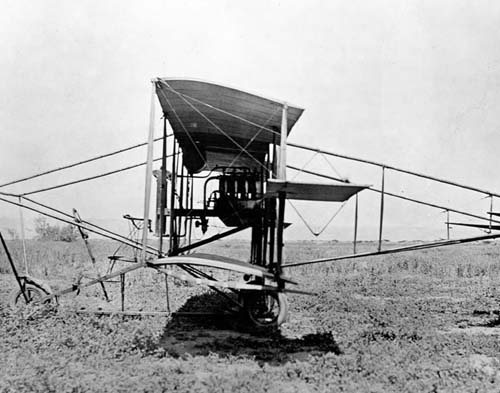
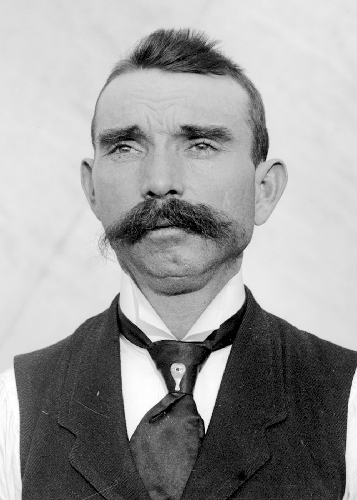
One of the colorful characters in the 2011 class is William A. Ivy, who flew the first powered aircraft in Nevada more than 100 years ago.
Ivy, also known as Ivy Baldwin for his high-wire walking and trapeze acrobatics in the circus, got his start in aviation in the late 1800s as a balloonist who would thrill crowds by jumping from balloons with a parachute.
In 1897, he joined the Army Signal Corps and was given command of the Army's only balloon, which was used to spy on enemy naval forces and defenses in Santiago, Cuba, during the Spanish-American War. He survived when the balloon was shot down on June 30, 1898, the first American pilot shot down in a war.
The success of the Wright brothers' first powered flight in 1903 opened a new door for Ivy. He acquired a Curtiss-Paulhan biplane in 1910, shipped it by rail to Carson City and set out to fly at the highest altitude ever. His flight on June 23, 1910, set a short-lived world record -- 4,725 feet mean sea level -- and also marked the first flight in Nevada.
Flash forward 50 years, and Nevada was still the site of high-altitude records being set in secrecy at Area 51, along the dry Groom Lake bed, 90 miles north of Las Vegas. That is where the CIA was testing the high-flying U-2 spy plane. Every flight reached new world records approaching its goal of more than 70,000 feet, said Barnes, who was a CIA hypersonic flight support specialist at the secret facility.
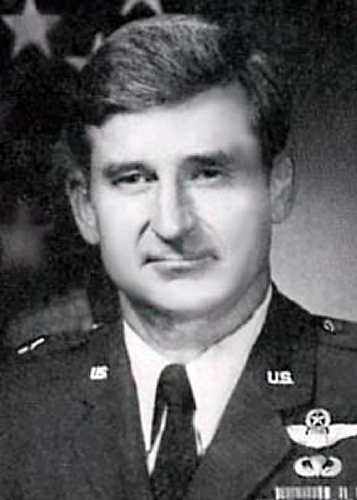
In 1973, an Air Force pilot, Charles "Pete" Winters, one of this year's Hall of Fame inductees, who later became a brigadier general, flew missions in Soviet MiG jets at Area 51. Barnes said the Soviet MiGs for the project had been obtained from foreign allies and were an extension of Project Have Doughnut, an effort to evaluate the MiG-21. The MiG flights were designed to test combat maneuvers against the Air Force's F-15A prototype fighter jet.
This year's Hall of Fame class includes two female aviation pioneers, flight nurse Jane A. Miller and commercial pilot and airline executive Florence J. Murphy. Other inductees were Sen. Patrick A. McCarran, William M. Stead, George E. Crockett and Walter T. Varney.
The 2010 inductees were Capt. Joseph Walker, Capt. William Hausler, Clarence "Kelly" Johnson, Col. John Macready, Col. Lowell Smith, Marie Elizabeth McMillan, Robert "Bob" Timm, John Cook Sr. and Cmdr. Bruce Van Voorhis, who was awarded the Medal of Honor posthumously for his heroic bombing runs during the invasion of the Solomon Islands in World War II.
Contact reporter Keith Rogers at krogers@reviewjournal.com or 702-383-0308.
ON THE WEB
Nevada Aerospace Hall of Fame website: http://nvahof.org/
Inductees of the 2011 Hall of Fame class
■ William A. Ivy: He made the first powered flight over Nevada on June 23, 1910, at Raycraft Ranch, three miles north of Carson City. He flew his 48-horsepower Curtiss-Paulhan biplane 50 feet off the ground before turning back after a half mile and landing in a field. Because the elevation there was 4,675 feet, he reached an altitude of 4,725 feet above sea level, erasing doubts that an airplane could launch at that elevation.
■ Sen. Patrick A. McCarran: He is the namesake of McCarran International Airport in Las Vegas and was selected for his leadership in the creation of an independent, national aviation authority, his advocacy for the Air Force as a separate entity, and development of civilian and military airfields across the United States.
■ Florence J. Murphy: She was born in Fernley in 1911 and became enamored with flying after taking a ride with a barnstormer in Las Vegas. By 1940, she was the first licensed female pilot in Nevada and one of the few licensed pilots in Las Vegas. She established Sky Harbor, a North Las Vegas airfield, in 1941 with her husband, John, and their friend, Bud Barrett. With a commercial license she flew flights in Nevada and Arizona for Bonanza Air Lines.
■ Charles P. 'Pete' Winters: A retired Air Force brigadier general from Las Vegas, he was selected for his role in developing and testing many advanced military aircraft. A member of the first class of the U.S. Air Force Academy in 1955, he flew 298 combat missions in F-100 Super Sabre fighter jets during the Vietnam War. In 1979, he was in charge of several classified projects involving development of high-tech aircraft. He supervised transition of the F-117A Nighthawk stealth jet from prototype to operational capability in less than five years.
■ Jane A. Miller: She developed flight nurse standards for emergency medevac and rescue operations. She became the first assistant chief flight nurse for the fledging Flight for Life program in Colorado in 1978. In 1980, she moved to Reno and became chief flight nurse for Washoe Medical Center's Life Flight program. She is co-editor of the trauma section for the text book "Flight Nursing: Principles and Practice."
■ William M. Stead: He founded the National Championship Air Races in Reno. While at Sparks High School, he was a member of the high school ski club, which helped him train ski troops in World War II. He was promoted to warrant officer for training a crash boat squadron in Florida. In 1951, he became involved in hydroplane boat racing, a sport he continued to pursue while he worked as an adviser to the Atomic Energy Commission for Operation Teapot nuclear tests at the Nevada Test Site. He spearheaded the effort in the 1960s to bring a national air race to Nevada and persuaded the Federal Aviation Administration to lift its ban to allow the event in Reno.
■ George E. Crockett: He was selected for his private and commercial contributions to aviation in Southern Nevada. He flew mail planes in the early 1930s and worked for Stinson Aircraft Corp. in 1940. He opened Alamo Airport in 1942 and founded the Nevada State Airmen Association in 1945. After providing support to military aircraft involved in above-ground nuclear tests in Nevada, he became president of the National Aviation Trades Association in 1964.
■ Walter T. Varney: He was chosen for his role in development of commercial airmail service in Nevada. He was born in 1888 in San Francisco. He attended the Redwood School of Aviation before enlisting to serve in World War I, assigned to March Field near Riverside, Calif. He opened an aviation school in Las Vegas in 1921, but when that didn't pan out, he ventured into the airmail business. He held a contract to deliver airmail from Pasco, Wash., to Elko in 1925, after Congress passed the Contract Air Mail Act. On April 26, 1926, his Varney Air Lines, which was based in Idaho, made the first commercial air mail flight in the United States, flying from Boise to Elko.


