Obama wins the battle




WASHINGTON - President Barack Obama rolled to re-election Tuesday, vanquishing Mitt Romney despite a weak economy that plagued his first term and put a crimp in the middle class dreams of millions. In victory, he confidently promised better days ahead.
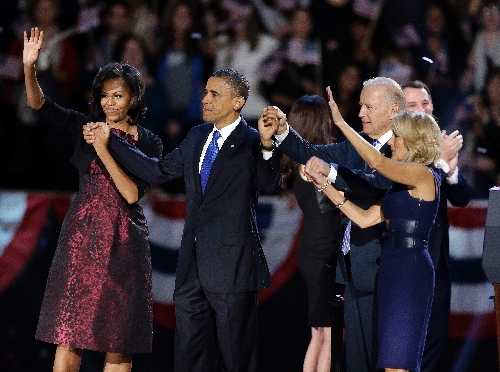
Obama spoke to thousands of cheering supporters in his hometown of Chicago, praising Romney and declaring his optimism for the next four years.
"While our road has been hard, though our journey has been long, we have picked ourselves up, we have fought our way back, and we know in our hearts that for the United States of America, the best is yet to come," he said.
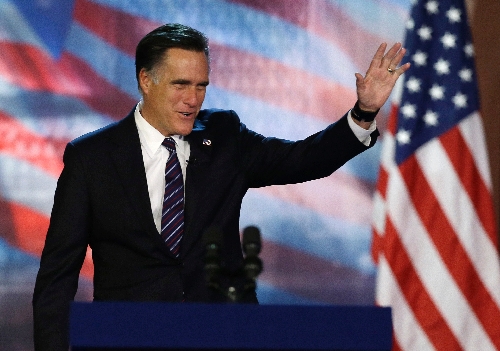
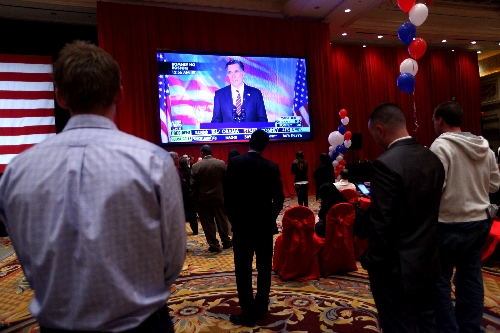
Romney made his own graceful concession speech before a disappointed crowd in Boston. He summoned all Americans to pray for Obama and urged the political winners to put partisan bickering aside and "reach across the aisle" to tackle the nation's problems.
With returns from 84 percent of the nation's precincts, Obama had 53.7 million, 49.6 percent of the popular vote. Romney had 53 million, or 48.9 percent.
The president's laserlike focus on the battleground states, including Nevada, allowed him to run up a 303-206 margin in the competition for the 270 electoral votes needed to win the White House, the count that mattered most. Remarkably, given the sour economy, he lost only two states that he captured in 2008, Indiana and North Carolina.
Florida, another Obama state four years ago, was too close to call.
Still, after the costliest, and one of the nastiest, campaigns in history, divided government was alive and well.
Democrats retained control of the Senate with surprising ease.
Republicans did the same in the House, ensuring that Speaker John Boehner of Ohio, Obama's partner in unsuccessful deficit talks, would reclaim his seat at the bargaining table.
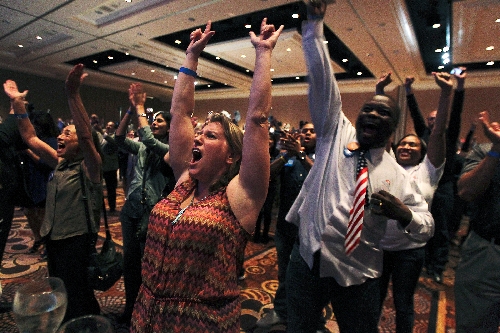
At Obama headquarters in Chicago, a huge crowd gathered waving small U.S. flags and cheering. Supporters hugged each other, danced and pumped their fists in the air. Excited crowds also gathered in New York's Times Square, at Faneuil Hall in Boston and near the White House in Washington, drivers joyfully honking as they passed by.
The election emerged as a choice between two visions of government: whether it occupies a major, front-row place in U.S. lives or is in the background as a less-obtrusive facilitator for private enterprise and entrepreneurship.
The economy was rated the top issue by 60 percent of voters surveyed as they left their polling places. But more said President George W. Bush bore responsibility for circumstances than Obama did after nearly four years in office.
That helped the president, who had worked to turn the election into a choice between his proposals and Romney's, rather than a referendum on the economy during his time in office.
Unemployment stood at 7.9 percent on Election Day. And despite signs of progress, the economy is still struggling after the one of the worst economic downturns in history.
In addition to Nevada, Obama captured Ohio, Wisconsin, Iowa, Virginia, New Hampshire and Colorado, seven of the nine states where the rivals and their allies poured nearly $1 billion into dueling television commercials.
Romney won North Carolina among the battleground states.
Florida was too close to call, Obama leading narrowly in a state where there were long lines of voters at some polling places after the appointed closing time.
Romney, who grew wealthy in business and ran the 2002 Olympic Games in Salt Lake City before entering politics, spoke briefly to supporters, some of whom wept.
"I so wish that I had been able to fulfill your hopes to lead the country in a different direction," he said. "But the nation chose another leader and so Ann and I join with you to earnestly pray for him and for this great nation."
Moments later, Obama stepped before a far different crowd hundreds of miles away.
"Tonight you voted for action, not politics as usual," he said. He pledged to work with leaders of both parties to help the nation complete its recovery from the worst recession since the Great Depression.
By any description, the list of challenges is daunting: high unemployment, a slow-growth economy, soaring deficits, a national debt at unsustainable levels, to say nothing of the threat of a nuclear Iran and the menace of al-Qaida and other terrorist groups.
There was no doubt about what drove voters to one candidate or the other.
About 4 in 10 said the economy is on the mend, but more than that said it was stagnant or getting worse more than four years after the near-collapse of 2008. The survey was conducted for The Associated Press and a group of TV networks.
Obama won in the reliably Democratic Northeast and West Coast. Pennsylvania was his, too, despite two late campaign stops by Romney.
Romney won most of the South as well as much of the Rocky Mountain West and Farm Belt.
Earlier Tuesday, the president was in Chicago as he awaited the voters' verdict on his four years in office. He had a concession speech as well as victory remarks prepared. He congratulated Romney on a spirited campaign.
"I know his supporters are just as engaged, just as enthusiastic and working just as hard today," he added.
Romney reciprocated, congratulating the man he had campaigned against for more than a year.
Earlier, he raced to Ohio and Pennsylvania for Election Day campaigning and projected confidence as he flew home to Massachusetts.
"We fought to the very end, and I think that's why we'll be successful," he said, adding that he had finished writing a speech anticipating victory but nothing if the election went to his rival.
The mood soured among the GOP high command as the votes came in, and Obama pulled a lead in critical states.
Like Obama, Vice President Joe Biden was in Chicago as he waited to find out if he was in line for a second term. Republican running mate Paul Ryan was with Romney in Boston, although he kept one eye on his re-election campaign for a House seat in Wisconsin, just in case. He won re-election to Congress.
The long campaign's cost soared into the billions, much of it spent on negative ads, some harshly so.
In a months-long general election ad war that cost nearly $1 billion, Romney and Republican groups spent more than $550 million and Obama and his allies $381 million, according to organizations that track advertising.
According to the exit poll, 53 percent of voters said Obama was more in touch with people like them, compared to 43 percent for Romney.
About 60 percent said taxes should be increased, taking sides on an issue that divided the president and Romney. Obama wants to let taxes rise on upper incomes, while Romney does not.
Other than the battlegrounds, big states were virtually ignored in the final months of the campaign. Romney wrote off New York, Illinois and California, while Obama made no attempt to carry Texas, much of the South or the Rocky Mountain region other than Colorado.
The campaign traversed contested Republican primaries, political conventions and three presidential debates. Obama, Romney, Biden and Ryan spoke at hundreds of rallies, and were serenaded by Bruce Springsteen and Meat Loaf.
Obama was elected the first black president in 2008, and four years later, Romney became the first Mormon to appear on a general election ballot. One man's race and the other's religion were never major factors in this year's campaign for the White House, a race dominated from the outset by the economy.
Over and over, Obama said the nation had begun to recover during his term. While he conceded progress had been slow, he accused Romney of offering recycled GOP policies that have helped the wealthy and harmed the middle class in the past and would do so again.
Romney countered that a second Obama term could mean a repeat recession in a country where economic growth has been weak and unemployment is worse now than when the president was inaugurated. The former businessman claimed the knowledge and the skills to put in place policies that would make the economy healthy again.
In a race where the two men disagreed often, one of the principal fault lines was over taxes. Obama campaigned for the renewal of income tax cuts set to expire on Dec. 31 at all income levels except above $200,000 for individuals and $250,000 for couples.
Romney said no one's taxes should go up in uncertain economic times. In addition, he proposed a 20 percent cut across the board in income tax rates but said he would end or curtail a variety of tax breaks to make sure federal deficits didn't rise.
Interactive Election Map