



Organizations, individuals offer suggestions for future
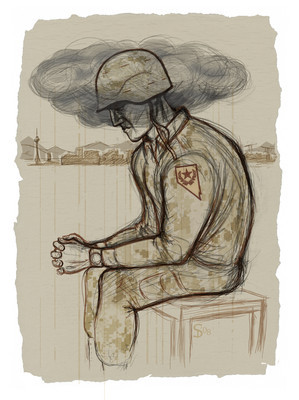


Better treatment for veterans is not a hard sell. But most progress must be made at the federal level, where it is hard to agree on an agenda, let alone accomplish one.
"All these different options are out there vying for attention as the best thing to do for veterans," said Tim Tetz, director of the Nevada Office of Veterans Services. "But the buzzword goal that everybody seems to agree on is 'seamless transition.'
"It means that one day the Army might be taking care of you at Walter Reed and the next day the VA is doing it at a new hospital in Las Vegas. And right now you're a million miles from that. VA can't even read DOD medical reports."
But a million-mile march starts with the proverbial first steps, so several organizations and individuals offered suggestions about which way to start.
IRAQ AND AFGHANISTAN VETERANS OF AMERICA SPOKESMAN PATRICK CAMPBELL
•Require servicemen returning from a combat zone to see a professional counselor within six months. "As it stands now, people have to ask for treatment, which means they have to self-diagnose, and they may not be able to recognize PTSD or admit they have a problem. And requiring it would be the most effective way of reducing the stigma associated with seeking counseling."
•Approve the VA budget a year in advance of the normal budgetary program. "For the past 13 years, the biggest health care system in the country has been running on a budget approved late every year. Any planning decision from construction to hiring medical providers is hurt."
•Reform disability decisions. "Service members wait six months, on average, to get a decision, and that's if they do it correctly. ... The VA is hiring a couple of thousand new processors but we need to ensure they, and the existing processors, are properly trained. For instance, any retraining the VA does now is general in nature; they train people how to avoid the most common mistakes, but that might not even include the particular mistake a particular officer keeps making. And they need incentives to get claims right, not just move paper."
•Simplify the new GI Bill passed earlier this year. "It's a great new program, but we need to smooth rough edges." For instance, the new bill's education benefits are far better than the old one's with respect to degree-granting institutions, but vocational training by other institutions is not covered. Therefore, if a new soldier wants the government to eventually pay for vocational education, he must sign up for the older GI Bill, which requires payroll deductions totaling $1,200. "Furthermore, he has to make that decision on the very first day he's in the military," Campbell said. "He shouldn't have to." About 9 percent of veterans take vocational training, but a first-day recruit is in no position to know whether he'll need it, and may make a regrettable decision. "The bill needs to cover all types of education," Campbell said.
IAVA recognizes that female veterans and homeless veterans have specific, pressing needs, but the organization hasn't settled on a legislative agenda to address them, Campbell said.
PRESIDENT'S COMMISSION ON CARE FOR AMERICA'S RETURNING WOUNDED WARRIORS (THE DOLE-SHALALA COMMISSION)
•Create a recovery plan for every seriously injured service member; a new corps of recovery coordinators would guide each through complex medical systems.
•Eliminate duplication and contradictions in parallel systems of determining disability and compensation by DOD and VA, assigning each agency sole responsibility for certain aspects.
•VA must treat all PTSD cases from Iraq and Afghanistan conflict. DOD and VA must rapidly improve prevention, diagnosis, and treatment of PTSD and traumatic brain injury; work aggressively to reduce stigma of PTSD.
•Strengthen support for families.
•Rapidly transfer patient information between DOD and VA.
•Strongly support Walter Reed Army Medical Center until its scheduled closing in 2011. (Once noted for the highest quality of care, in 2007 the hospital was the center of a scandal involving poor conditions and treatment of patients.)
Only piecemeal progress has been made on the recommendations since they were issued in July; a financial crisis got in the way.
U.S. REP. SHELLY BERKLEY, D-NEV.
Congresswoman Shelly Berkley added language to the Veterans' Mental Health and Other Care Improvements Act of 2008 (S. 2162) that will expand and improve mental health services for veterans, including treatment of substance-use disorders. She also caused the bill to be named in honor of Marine Lance Cpl. Justin Bailey, a Las Vegan who served honorably in Iraq and died of an overdose of prescription drugs given him while in the care of a California VA clinic. As a member of the House Committee on Veterans' Affairs, she helped secure land and funding for a VA medical center in Las Vegas.
Her spokesman, David Cherry, said her immediate goals on veterans issues include:
•Passing the Armed Forces Suicide Prevention Act, which requires DOD to implement comprehensive suicide prevention programs in all branches of the military including National Guard and reserves. She is a cosponsor.
•Better communication of information about benefits to new veterans.
•Housing for homeless veterans and increasing outreach to homeless veterans who may be eligible for existing programs.
U.S. REP. BOB FILNER, D-CALIF.
•The chairman of the House Committee on Veterans Affairs said recently he will lobby the Obama administration to establish a "de-boot camp," where service members returning from combat zones would undergo mandatory diagnosis for brain injuries and PTSD. He believes mandatory screening would reduce the incidence of suicide and domestic violence, and also accelerate the understanding of PTSD.
•Reduce the VA's backlog of claims by granting all those still pending from Vietnam veterans who claim injuries caused by Agent Orange.
•Modify regulations for veterans living in rural areas to seek alternatives, including private care, rather than travel to distant veterans hospitals.
THEY NEED IT NOW
With President-elect Barack Obama's nomination of the respected retired general, Eric Shinseki, to be secretary of Veterans Affairs, and the generally high regard in which America's volunteer warriors are currently held, veterans' advocates feel the time is ripe for reform.
But their sense of urgency is informed by the knowledge that such moments of opportunity, like the proverbial old soldiers, sometimes fade away.
Contact A.D. Hopkins at adhopkins @reviewjournal.com or 702-383-0270.
Online interactive


