EDITORIAL: Ford shows why government shouldn’t steer the economy
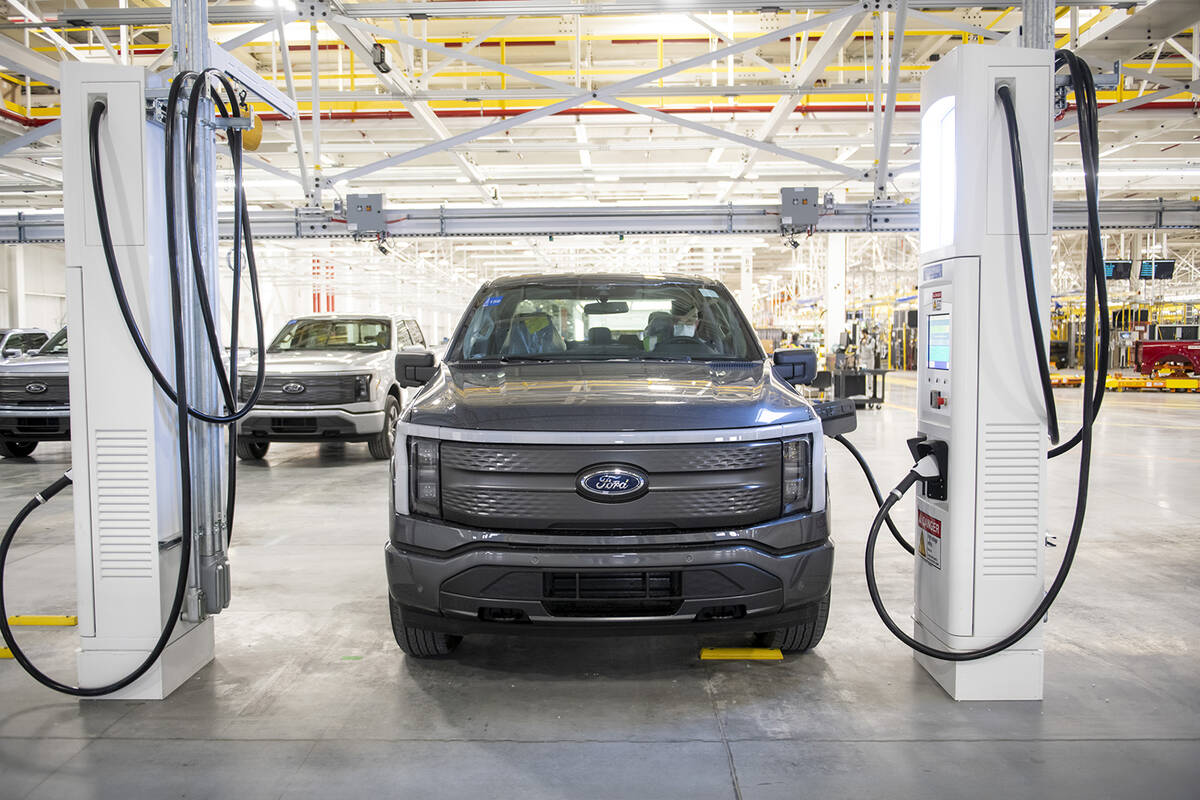





Federal mandates drove automakers into a financial ditch.
Ford Motor Co. has announced a dramatic shift away from producing electric vehicles. That includes dumping the electric version of its F-150 truck, dubbed the Lightning. The main result of its EV plan was lighting billions of dollars on fire. Ford said it would take a $19.5 billion charge as a result of the shift.
Ford had previously partnered with the SK Group on a massive battery production complex in Kentucky. The effort cost around $6 billion. But the companies never used one of the two buildings. The other functioned in a limited capacity, making the now-defunct Lightning F-150. Ford now plans to use the facility to make massive batteries for data centers.
Ripping off this Band-Aid hurts, but bleeding out on unprofitable EVs would do more damage. Since 2023, Ford has lost $13 billion selling EVs. For perspective, the company lost around $50,000 on each EV it sold in 2024.
This isn’t the only example of a car company shifting gears. Last year, General Motors took a $1.6 billion charge related to pulling back on its EV business. That’s a significant change from GM Chief Executive Mary Barra’s previous vision. In 2021, she said the company would have all electric vehicles by 2035. Last year, Stellantis ended its plans to create an electric version of its Ram 1500 pickup. Now, it wants to bring back a Ram with a V-8 engine.
On the surface, it appears that the leaders of these car companies significantly misread the market, collectively costing their companies tens of billions of dollars. But their EV-heavy strategies weren’t solely an attempt to anticipate the desires of consumers. They were attempting to comply with government edicts intended to appease the powerful green lobby.
Under the Biden administration, the EPA issued stringent tailpipe emissions standards. To meet them, automakers would have needed 56 percent of their sales be electric vehicles. Another 13 percent would have had to be hybrids. In 2023, EVs accounted for 7.6 percent of vehicle sales.
This was an example of the regulatory state run amok. The federal government shouldn’t be in the business of dictating the intricacies of the automotive industry. That’s especially true because this meddling was accomplished via regulatory edict, not direct congressional action.
President Donald Trump reversed course on this and other measures intended to force consumers into EVs before many of them were prepared to make the transition. His signature One Big Beautiful Bill Act also ended a $7,500 EV tax handout, which largely went to wealthy purchasers.
The Trump administration put customers back in the driver’s seat, and car companies are responding accordingly.