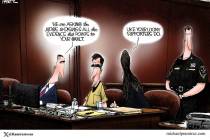
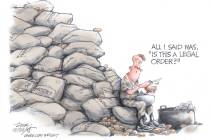
Immovable unions, irresistible budget crunch

Push is coming to shove at the city of Las Vegas.
Last week, two unions balked at the city's budget-cutting ultimatum: wage cuts of 8 percent in each of the next two years, no salary increases of any kind and no promises to "catch up" at a future date -- or else, mass layoffs of public employees.
Firefighters warned that such cuts would result in higher insurance costs and all sorts of carnage because of longer emergency response times. City officials called the warning a scare tactic.
Then the Review-Journal reported that the Las Vegas City Employees Association -- the bargaining group that represents most city workers outside of public safety -- sent a belligerent letter saying it would not come to the table till every other union had submitted to cuts.
So far the unions have agreed to a reduction in cost-of-living wage hikes of 1 percentage point. Not a pay cut, mind you, just a slightly smaller raise. How generous.
Along comes an article in Reason magazine titled "Class War: How public servants became our masters," by Steven Greenhut, a former Orange County Register columnist who now runs the Pacific Research Institute's Journalism Center.
Mr. Greenhut says public servants once were paid less than workers in the private sector but in return had greater benefits and job security. Now public-sector wages far outstrip those in the private sector, but the real time bombs are in the benefits, especially pensions that have grown beyond the ability of taxpayers to support in any actuarially reasonable way.
Mr. Greenhut notes: "Most of these benefits are vested, meaning that they have the standing of a legal contract. They cannot be reduced." And the employees have allies in government. For example, when the city of Vallejo, Calif., filed for municipal bankruptcy reorganization under the burden of 75 percent of its budget going to unionized police and firefighters, the state Assembly introduced a law that would not allow cities to file for bankruptcy without approval from a union-friendly commission!
Mr. Greenhut's article is not yet online, but some of his sources are. Take a gander at Michael Hodges' Grandfather Economic Report (http://mwhodges.home.att.net.) Mr. Hodges points out that in 1930 government accounted for 12 percent of the economy. Today it consumes 45 percent.
"People who are supposed to serve the public have become a privileged elite that exploits political power for financial gain and special perks," writes Mr. Greenhut. "Because of its political power, this interest group has rigged the game so there are few meaningful checks on its demands. ...
"It's a two-tier system in which the rulers are making steady gains at the expense of the ruled."
Challenge in the legislative halls? Most legislators, commissioners and council members owe their elections to public employee union support. And they have the same pension plan. Challenge in the courts? Judges are public employees.
If the unions take pay cuts, their union leaders will lose power. If the unions refuse and massive layoffs are required, the number of union members will decline, along with ballot power.
Push is coming to shove.