‘Indignation’ by Philip Roth

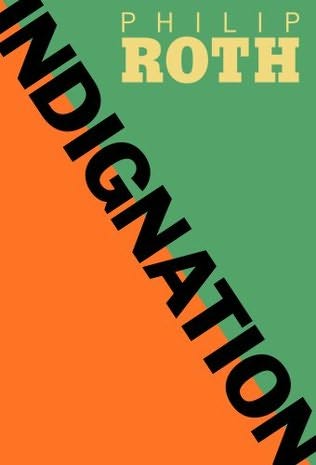 indignation n. anger or scorn that is a reaction to injustice, ingratitude, or meanness; righteous anger
Marcus Messner, son of a kosher butcher, begins his sophomore year of college in 1951 not in his hometown of Newark, N.J., but at conservative Winesburg College in Ohio.
He decides on Winesburg mostly to get away from his father, who is so overprotective that his mental stability is questionable.
The only child of the family, Marcus’ parents are supportive but meddling. His father sees danger around every corner and lives in fear that his son will be sent to Korea to fight and die in the Korean War.
In “Indignation,” Philip Roth creates colorful and flawed characters.
Marcus is angry at his dad, but still loves and respects him and reflects on what he learned while working for his father in the family’s butcher shop.
“It was my job not just to pluck the chickens but to eviscerate them. You slit the ass open a little bit and you stick your hand up and you grab the viscera and you pull them out. I hated that part. Nauseating and disgusting, but it had to be done. That’s what I learned from my father and what I loved learning from him: that you do what you have to do.”
At college, Marcus enjoys being free from his father’s worries, but he resents having to live with roommates he dislikes, being forced to go to chapel and being pressured to join a fraternity.
Marcus is a likable character, if a bit spoiled and immature. He rails against what he sees as unjust treatment yet worries about being forced to go to war if he is kicked out of school.
In the end, consequences catch up with Marcus, and the story has a twist, but you'll have to read it to find out.
Roth’s book is very well-written, sometimes sad, sometimes funny. BUT — the tiny hardback costs $26. It took me a couple of hours to read it. As enjoyable as “Indignation” is, unless you are a hard-core Roth fan, I’d get the book from the library.
I hope that’s not an indignity.