To the edge of the world with C.S. Lewis

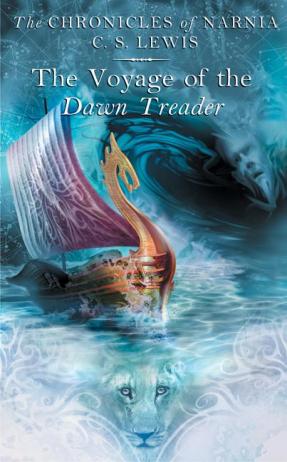 C.S. Lewis begins "The Voyage of the Dawn Treader" with one of my favorite first lines in children's literature.
"There was a boy named Eustace Clarence Scrubb, and he almost deserved it."
Two things are immediately clear: We aren't going to like Eustace much, but he's not quite beyond hope. This installment of "The Chronicles of Narnia" gives us the transformation of Eustace during a quest with his cousins, Edmund and Lucy Pevensie of Wardrobe fame.
The three have been summoned to Narnia to aid young King Caspian in his search for the seven lost lords who were banished during the reign of Caspian's despotic uncle, Miraz. It's an Odyssey-like adventure that will draw the crew of the seagoing Dawn Treader deep into the unknown, to the very edge of the world.
The tale, published in 1952, will be splashed across big screens this holiday season. Moviemakers are sure to do justice to showing how the three children are called to Narnia through a painting, but the book is full of scenes and asides by the author that give the story a depth beyond the scope of 3-D.
One example: the way Eustace is written shows how Lewis viewed the modern parenting model of his time. We initially come to know Eustace through a series of short, hilarious, self-centered diary entries about how ghastly and unfair things are for him. Lewis makes it clear that a good part of Eustace's bad behavior springs from the way he was raised — he calls his parents by their first names, he attends a progressive school, he's reading all the "wrong books" — a problem underlined by an incident where Eustace would have definitely benefited from knowing a little something about dragons.
He has to go through a lot before he's worthy of stepping into the vacuum left by the Pevensies. Peter and Susan made their last journey to Narnia in "Prince Caspian." This time, Edmund and Lucy learn from Aslan, the divine lion at the heart of the Narnia stories, that they are not to return. It's Eustace who becomes our world's champion for the country he once disdained as make-believe and he wears the mantle well, despite his bad start.
"You haven't been as bad as I was on my first trip to Narnia," Edmund reassures a much reformed Eustace. "You were only an ass, but I was a traitor."
It's worth noting that when Eustace returns home, his mother chalks up his dramatic change in character to the bad influences of his Pevensie cousins.
"Dawn Treader" is full of Lewis' own values — Caspian has to do what he must, not what he wants; greed is not good; same goes for slavery and bad governance; destinies must be fulfilled. And while such lessons could add up to a dull story, they don't because Lewis keeps the fantasy in the fantasy, which is strongly flavored with references to Celtic myth and colored with Christian values. At its heart, "The Voyage of the Dawn Treader" is simply a good story, which, of course, is the reason to read it.