



Watch, perhaps cut down, those tomatoes in summer heat
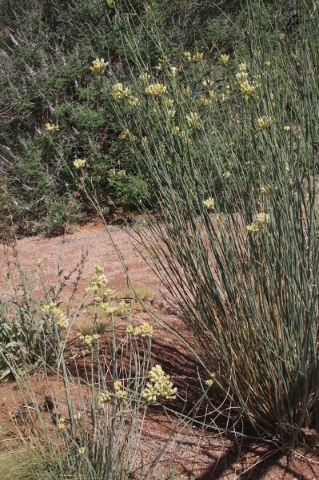


Back in the spring, I mentioned that I planned on cutting down my tomato plants in early summer. I received a call from a reader asking if that is always necessary.
The middle of the summer can be a time of heartbreak for gardeners who wish they could see their bountiful tomato harvest continue through the entire season. The climate of the Mojave poses a set of unique horticultural challenges, however, and tomatoes are not necessarily the sturdiest plants for the desert summer. That is one of the key reasons that we call them "warm season" vegetables, not "hot season" ones.
The fact that tomatoes often suffer during the hottest periods does not mean that the situation is hopeless. In general, smaller fruits fare better than larger ones, which can become bleached and blistered before they have finished developing.
Some, not all, tomatoes are more heat tolerant. These have names such as "Heatwave," which indicate that they are able to stand warmer weather than others can. Even those that are generally tender can continue to produce fruit if they receive protection from the most extreme temperatures. That means creating a shade cloth ceiling to keep out part of the intense light that can sunburn the developing fruit. Frequent misting can help because it slows the rate of dehydration of the flowers.
If the plants are green and growing, and still producing healthy, happy tomatoes then continue to do what you are doing. On the other hand, if the plant looks droopy and the fruits are not ripening properly, or are developing deep cracks, it might be best to cut the plant down, leaving just a few inches of stem standing. Make sure the soil is moist and arrange a layer of mulch around the plant. Come autumn, there should be new flowers and fruit.
MONARCH BUTTERFLIES
Another reader was interested in doing his part to help protect the beautiful, but jeopardized, monarch butterfly. These gorgeous insects are not only attractive, but they are also pollinators. Recently, people have been focusing more of their attention on preserving pollinators such as butterflies and bats, as well as honeybees. Without all these creatures, about one-third of our food would become unavailable.
Monarch butterflies that live east of the Rockies are famous for their multigenerational migrations from Canada to Mexico. Western monarchs have a different pattern, overwintering along the California coast, from Arizona, through Nevada and farther north, as far as Washington. The western migration is only a few hundred miles, which seems like a short distance compared with their eastern cousins. Still, this is a flying insect, small and delicate-appearing.
There are a few ways that residents can help to conserve these lovely butterflies.
Planting milkweed (Asclepias) is one of the first and easiest things to try. There have been occasions when people planted it and were concerned when they saw caterpillars destroying the leaves. The caterpillars eat milkweed leaves exclusively, so if you see a brightly colored caterpillar on your milkweed, then you have succeeded. Adults mainly eat nectar, which they obtain from many different flowers, including milkweed. Master gardeners are harvesting milkweed seeds of local varieties to promote more habitats for these beautiful butterflies.
There is excellent information on milkweed and monarchs available from Monarch Watch and from The Xerces Society. This group also coordinates the Western Monarch Thanksgiving Count and is looking for participants in this important survey.
Another way to protect monarchs, and pollinators in general, is to be alert when using pesticides. A product may be effective in killing insect pests, but it can be just as effective on other insects, such as honeybees and butterflies. Never apply them when the pollinators are foraging. Herbicides (weed killers) should also be applied with great care. While they kill weeds, they might not be able to tell the difference between the annoying weed and the plant you tended since it was a little seedling. They may also kill the nectar-bearing flowers that attract butterflies.
PRICKLY PLANTS
Finally, a question from a conversation about desert landscaping: "Why do desert plants usually have so many spines and thorns?" The short answer is: protection. Trees and shrubs usually have many leaves, but cactuses have none, and desert succulents only have a few very thick ones.
The pads of a prickly pear, the trunk of a barrel cactus and the relatively few leaves of an agave all store water, keeping the plant alive when water is scarce. They must also perform the work of photosynthesis. If an animal were to take a bite from one of these plants, it would be taking a large amount of the moisture and chlorophyll that keeps plants alive.
Self-defense and drought tolerance are crucial to desert plant survival. Spines and thorns are one way the plant survives.
Angela O‘Callaghan is the Social Horticulture Specialist for University of Nevada Cooperative Extension. Contact ocallaghana@unce.unr.edu or 702-257-5581.


