Child’s play: Design ideas for the nursery
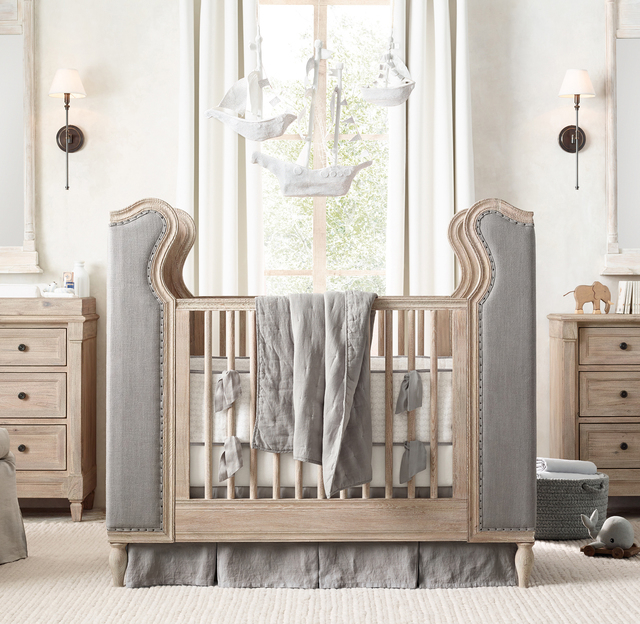
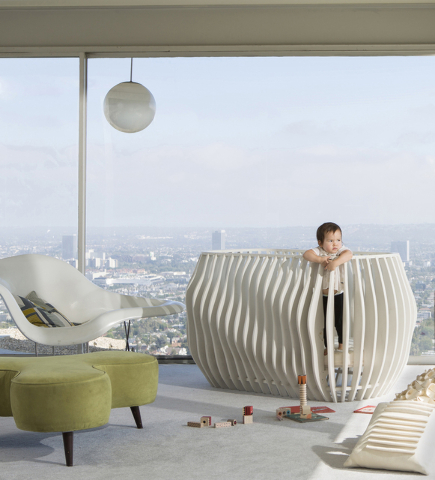



It’s never too early to cultivate a sense of style, though whether a baby’s introduction to furniture and ambience has any permanent imprinting effect remains to be seen.
Retailers have raised the bar in recent years with nursery and toddler furniture offerings. Safety, of course, remains at the top of the list. Just five years ago, for example, important changes were made to crib design with the outlawing of drop sides.
Some people will argue that buying a crib or children’s furniture these days has more to do with parents’ styles and sensibilities. Those who like a continuity or design flow in their homes — indoors and out — will also opt for similar quality and styles in children’s furnishings.
It is a category that has taken off, and retailers like RH Baby &Child (Restoration Hardware) and PB Kids (Pottery Barn) offer pieces that appeal aesthetically to their core customer. Specialty retailers like the Land of Nod and Galt Baby, which bills itself as “a modern baby lifestyle shop,” further the choices.
When it comes to outfitting the rest of a nursery or child’s room (often with an eye to growing in the space), there are plenty of options for going the traditional route, retro or thoroughly modern, with dressers, storage and desks. Add to that the expansive choices for fun wall coverings and bedding (well beyond licensed characters), and a child’s room can be fun, colorful, engaging and inspirational.
“In the past few years, I’ve seen nursery design elevate to a high level of chic,” says Los Angeles designer Betsy Burnham. “Clients are asking for better quality furnishings, rugs, lighting — even artwork — for their little ones, and we’re having a lot of fun with creative design details.
European designs now are more accessible, she says, and manufacturers have recognized a hole in the marketplace — especially at the high end.
“There’s no longer the idea of ‘Let’s just make do with my sisters’ crib,’ or ‘Let’s do the nursery last.’ Or ‘We don’t need to frame that art.’ The nursery (and child’s room) is just as hip and cool as the rest of the house.”
Increased demand for better style and quality has led exactly to those goods. It’s not difficult to find either high-end or well-constructed furniture in a choice of woods and finishes that are analogous to those in the prime real estate of a home.
And with that, there has been an uptick in prices, as the upgrades are not designed to be throwaway or destined for resale. At Nursery Works, whose clients include celebrities like Beyonce and Jay Z as well as Gwyneth Paltrow, prices are not for the faint of heart. Some cribs cost as much as $7,500.
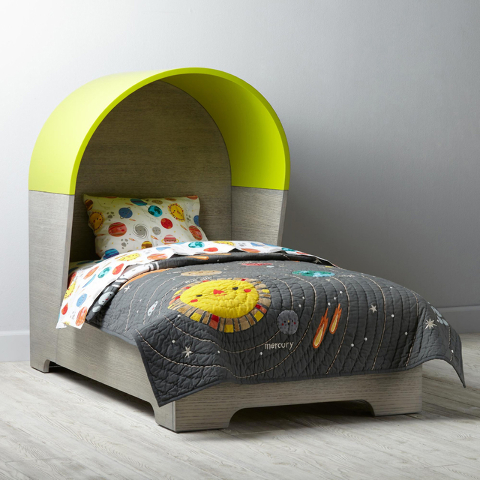
To that point, cribs, for example, are designed to last longer than the first few months of a baby’s life. Many can be converted to toddler beds, and some even transition into adult-sized daybeds.
There are cribs fit for princesses and princes, highly carved in provincial styles or even accented with 24-karat-gold plating, or acrylic cribs that are sheer or smoky. There are simple, modern silhouettes in colors such as kelly green, turquoise, lavender or hot pink. Also, dressers, storage pieces and desks come in an assortment of styles, some with fun shapes and vivid colors.
One New York-based gallery, Kinder Modern, specializes in curated vintage children’s designs from the 20th century — with pieces from modernists like Alvar Aalto and Hans Wegner. Also, there is a stable of fresh designs from an international roster of pros, each of whom approach with an eye to intriguing form, color and needed function.
Designers Lauren Larson and Christian Lopez Swafford of Material Lust like to think of their pieces as creating “subconscious heirlooms by injecting high design into the minds of growing children.”
“I actually don’t believe in toddler beds,” Burnham says. “I don’t design for the moment. I go from crib to bed. And larger pieces of furniture may need to change. But as the child gets older, you can change fabrics at the window or art on the walls. Get a rug. Get more sophisticated accessories. Change out the hardware (on a cabinet). Get (interesting) lighting. And art can be a revolving gallery.”
Lifestyle shifts have spurred the design boom for nurseries and children’s rooms.
“Our clients have gotten more savvy over the past decade or two,” says Burnham, who says that returning clients come back when they’re expecting and ask for her expertise in fashioning a room for their baby.
The desire to create a sense of continuity throughout a home — as evidenced by the explosion in well-designed outdoor furnishings — has been a strong motivator for manufacturers. Even finishes have been expanded — from natural maples and whites to a range of colors and even “weathered” looks and grays.
“We are definitely going lighter, if not white,” Burnham says. “We like driftwood finishes and gray painted pieces. Ivories with taupes for a luxury baby vibe or white plus color. If a couple’s taste is dark or black, we might transition to something taupe. There may be a midcentury eclectic vibe. But no matter what the style, everything will be on a par.”
Burnham feels that traditional palettes of pink and blue have moved into brighter, bolder hues — just not necessarily primary color combinations. “If it’s pink, it’s a cameo pink cashmere blanket, not the whole room. And patterns can be sophisticated — I covered the cushion of a daybed in a nursery in watermelon pink ikat, for example. There are obviously a lot of ethnic patterns that work — world traveled ethnic is in vogue, like vintage kuba cloth.”
How much can a nicely decorated room shape a child’s tastes and personalities?
“If parents take the time to think about a child’s surroundings — if you elevate the taste level, actually frame their artwork and create a gallery wall — it gives a sense of ownership.”