Las Vegas Valley to see more hospital construction into 2016
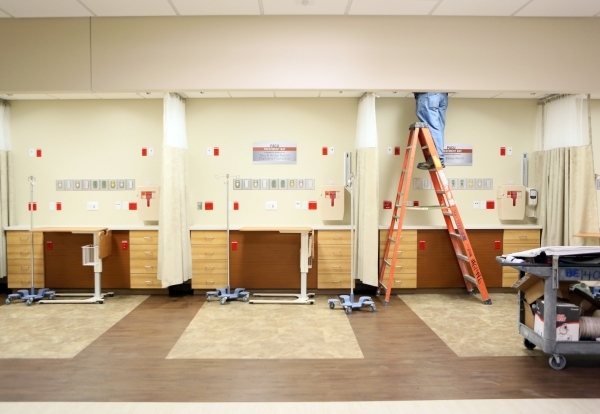
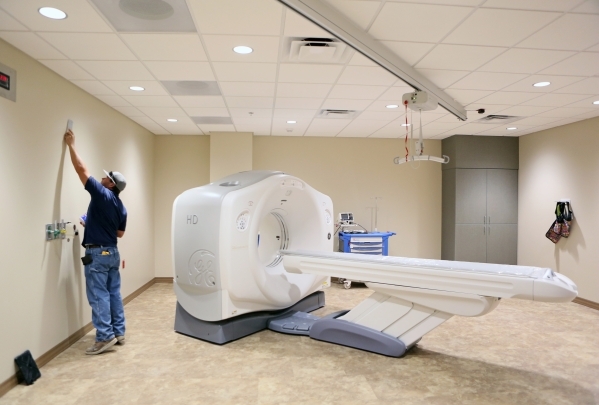
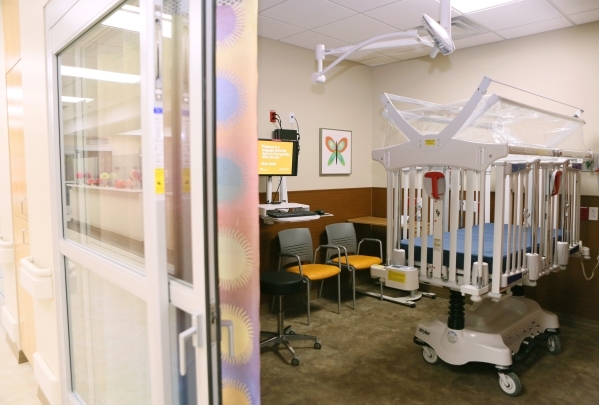
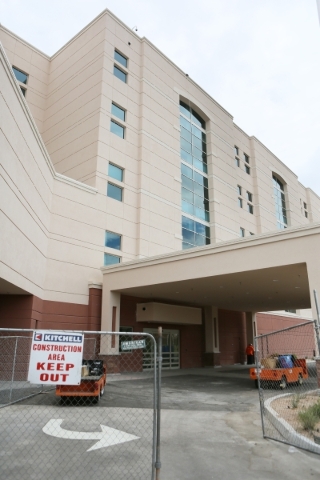
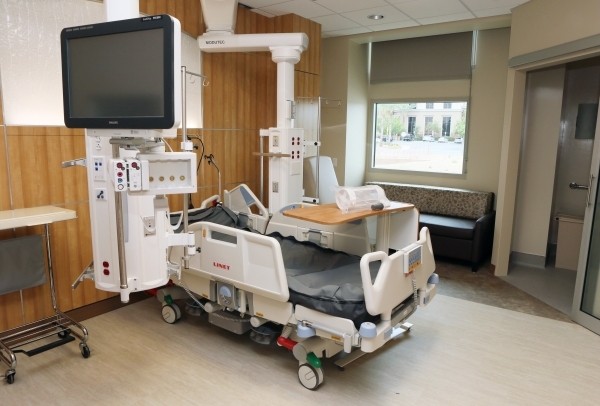
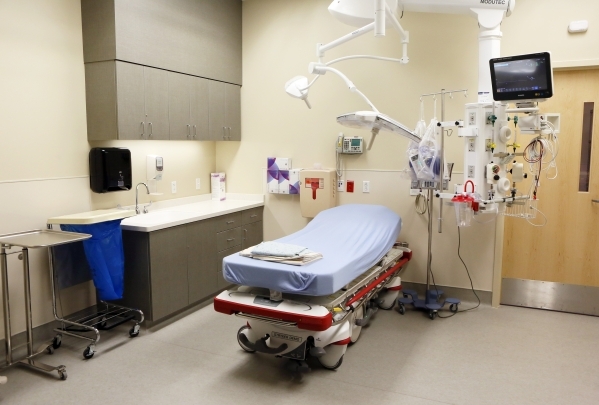
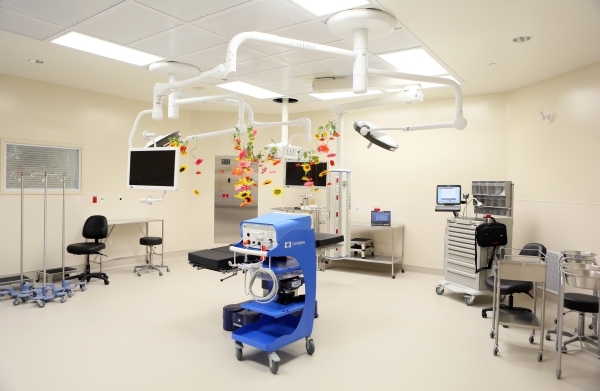




The planned August opening of a new tower at St. Rose Dominican Hospital, Siena campus in Henderson starts a hospital building spurt in Southern Nevada that will add more than 400 rooms by the end of next year.
The Siena tower will include advances in health care facility construction and design that have evolved since the hospital opened in 2000 with 230 rooms.
"We've always tried to be flexible," said Brain Branmann, head of Dignity Health Nevada. "You have to be process-driven today. You don't want to waste your peoples' time. You don't want to waste the patients' time."
Medical facilities must create a therapeutic environment where patients feel comfortable and stress-free while balancing the competing goals of efficiency, flexibility, expandability, sanitation, aesthetics, security, and sustainability.
Hospitals deliver a wide range of services and functions. They house toxic substances and fragile lives. They feature specialized laboratories and operating rooms, and deliver hospitality functions, such as food service and housekeeping.
At the center of the design is fundamental inpatient care. Regulations, codes and oversight agencies govern construction and operations, and every system requires specialized knowledge and expertise.
Two goals of modern hospital design are minimizing how often patients must be transferred between departments and moving nursing staff closer to their patients.
"Why should we move the patient all over the hospital when so many of those services can be brought to them?" Branmann said.
Brannmann envisions the day when nursing stations will be removed from all hospitals. In Siena's new tower, nurse workspaces are placed near patient rooms.
"That's better for our nurses to continue to be in contact with their patients so we don't need things like setting goals that they perform rounds every hour," he said.
EXPANSIONS AT OTHER SITES
Hospital builders today use more durable materials that are more efficient to clean to reduce the risk for infection.
The new Siena Tower will be open to the public from 10 a.m.-2 p.m. Saturday in an event that will include free food truck offerings, a farmers' market, tours of the expansion, health screenings and back-to-school immunizations.
Not counting the opening of the 210-bed VA Medical Center in North Las Vegas in 2012, the work underway is the first significant hospital construction in Southern Nevada since the opening of Centennial Hills Hospital in 2009. Mountain View Hospital expanded its facility three years ago, adding beds and doubling the size of its emergency department.
The Siena expansion will add another 100 rooms to the flagship facility of Dignity Health Nevada, which also operates the 147-bed San Martin campus opened in 2006 and the 119-bed de Lima campus. De Lima opened as Basic Magnesium Hospital in 1942 and was renamed de Lima in 1947 when the Dominican Sisters of Adrian, Mich., purchased the facility from the U.S. government.
In addition to the expansion at Siena, hospital construction underway in Southern Nevada includes:
Spring Valley Hospital: Officials broke ground June 26 on the construction of a four-story tower, which will add up to 144 beds to the facility. The first stage of the expansion will be completed in fall 2016 and add three labor and delivery suites, two neonatal intensive care beds and 18 post-partum beds with space for 18 more on the first floor. The second floor will provide another 36 medical/surgical inpatient beds, and the remaining floors will eventually accommodate 72 more beds, as needed.
Henderson Hospital: The sixth facility in the Valley Health System, scheduled to open in late 2016, will offer 142 beds for pediatrics, surgery and emergency services in Union Village at the intersection of Galleria Drive and U.S. Highway 95. Developers call Union Village an integrated health village anchored by the hospital and a health center with residential, entertainment and retail space, a senior retirement community, and a civic and cultural arts center in a master-planned community.
Southern Hills Hospital: Construction began in July on the so-called shelled fifth floor, which will add 46 more beds for orthopedics, and neurological and spine patients. "Shell" spaces, floors intentionally left empty during construction of a hospital, are built to accommodate future needs. The Southern Hills floor is expected to open early next year.
Valley Health System officials have been putting a shelled floor at Centennial Hills Hospital to creative use as a model for rooms at the facility under construction in Henderson. The mockup is a prototype for testing the functionality of the layout, systems and designs for intensive and intermediate care, medical/surgical rooms, operating rooms and the emergency department. The collaborative process included not only hospital leaders, architects and contractors, but also front-line clinicians: doctors, nurses and therapists.
DESIGN FOR STAFF, PATIENT COMFORT
Professionals from other Valley Health System hospitals have inspected the rooms to test-drive the designs for future users. Full-scale plastic foam mock-ups of various rooms of the new facility were erected. That allowed the users to simulate patient-care scenarios and see firsthand how the planned spaces would work. Based on those suggestions, the design and construction team will be able to make adjustments in improve patient and staff flow.
Tina Coker, chief nursing officer of Henderson Hospital, said her facility will achieve the goal of getting nurses closer to patients. To that end, the facility will not have traditional nurses stations. Instead, spaces on the various floors are intended for doctors to chart their patient notes.
"The nurses can still conference in here, but the goal is to have them out near the patients," Coler said.
Phoenix-based Kitchell Contractors, the company that originally constructed Siena as well as expansions of Mountain View and Sunrise hospitals, also used mockups to get vital feedback from employees who will be working in the new tower, said Mike Walsh, project director for Kitchell. Staff have been circulating through the new tower as construction has progressed.
"When they move in, they're going to feel like they own it because they've been there through the whole process," Walsh said.
Modifying a facility after construction can be costly, even prohibitively expensive, so the mockup approach potentially has saved the companies money and the staff members using the facilities a career of inconvenience.
"The cool thing for the users is they're not going to have to spend 20-30 years in a poor design," Coker said.
Research shows patients in well-designed rooms have less anxiety, require fewer pain medication and have shorter hospital stays. Hospital patients are often fearful and confused, and those feelings can affect recovery.
Staff members are encouraged to make hospital stays as unthreatening, comfortable and stress-free as possible.
The way patients are treated by staff is the by far most important facet of a patient's experience, but the interior designer plays a role in the effort to create a therapeutic environment. Aesthetics also can enhance the hospital's public image and contribute to better staff morale and patient care.
"Aesthetically, you want it to be comforting," Brannmann said. "You want it to be a calming environment. You want it to be homelike."
Contact Steven Moore at smoore@reviewjournal.com or 702-380-4563.