Indigenous conflict with Nevada lithium mine endures years after protest




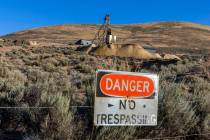
FORT MCDERMITT — Learning the protocol for “unanticipated discoveries” is a mandatory part of visitor training for the site where Lithium Americas, a mining company originally from Canada, plans to tear up the desert floor in search of lithium.
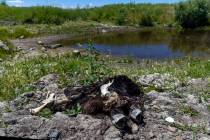
Those skeletons on the ground hold Indigenous stories of a fraught relationship that only oral histories, not written records, can tell.
“This area has been inhabited for centuries by Native Americans,” a training video from the contractor building the Thacker Pass mine says matter-of-factly. If anyone comes across human remains, funeral items or sacred objects, it’s an interruption of workflow. Activity must cease in the surrounding area for 30 days or until an authorized official gives a go-ahead.
It’s a stunning acknowledgement from a company that has expended a significant amount of money in legal fees to distance itself from conflict with tribes who are native to the Great Basin.
The Thacker Pass mine is moving forward, in many ways by force. Seven protesters from a Native prayer camp on the mine’s private property face ongoing civil charges and tall fines; surveillance of locals continues; a legal battle to stop the mine ended in loss for tribes; and members of the geographically closest tribe to the mine remain divided.
While the mine materializes and even more mining phases that extend its life are proposed, Indigenous value of the high Nevada desert is prompting conflict — long after protests against Thacker Pass made international headlines.

‘We have been out there for a long time’
Above the mine as far up as the eye can see is Sentinel Rock, known to some as Nipple Rock. It’s the highest point in the pass and a sacred worship site, an omnipotent reminder of decades of tension between the Northern Paiute and the U.S. government. Tribal members still go there to pray and feel connected to fallen ancestors.
Some tribal members say the Thacker Pass mine will be situated on “Peehee Mu’Huh,” or Rotton Moon in Paiute — the site of a 19th century U.S. Calvary massacre that left between 30 and 50 dead. The question of whether the project would disrupt the site became a central argument of a court case asking a judge to take away the mine’s permits.
According to a court declaration from Fort McDermitt tribal member Daranda Hinkey, oral histories describe how Paiute hunters returned home to find the “murdered, unburied, rotting, and with their entrails spread across the sage brush in a part of the Pass shaped like a moon.”
Another Fort McDermitt tribal member named Dorece Sam, Hinkey’s aunt, told the court that her great-great-grandfather Ox Sam was one of three known survivors of that 1865 massacre.
“His mother, father, brothers, and sisters were killed that day,” Sam wrote. “They were my relatives. As far as we know, they were never buried. My relatives still rest in Thacker Pass.”
Other supporting evidence of the massacre was laid out in court, such as two news articles from 1865 and the autobiography of labor organizer William Dudley Haywood. The Owyhee Avalanche newspaper wrote at the time that soldiers “fought the scattering devils over several miles of ground for three hours, in which time all were killed that could be found.”
However controversial, opinions about the mine are both positive and negative within the Fort McDermitt Paiute Shoshone Tribe, which eventually submitted a letter of support for the mine to the federal government. Then-Chairwoman Maxine Redstar said her council had met with the company more than 20 times.
“While this agreement cannot meet everyone’s expectations and desires, the Tribal Council has approved it to best serve the interests of the Tribe and its members, and to lessen the impacts the Project will have on our environment and cultural heritage,” Redstar wrote.
The tribe’s reservation is the closest reservation to the mine, by far.
“We don’t know what this is going to do to us in the long run,” said Dackota York, the tribal chairwoman who earned the top post in last year’s election and, in turn, inherited the lithium controversy. “Is this going to affect our water? And then the whole aspect of it being a possible massacre site, and remains probably being out there.”
History comes to light
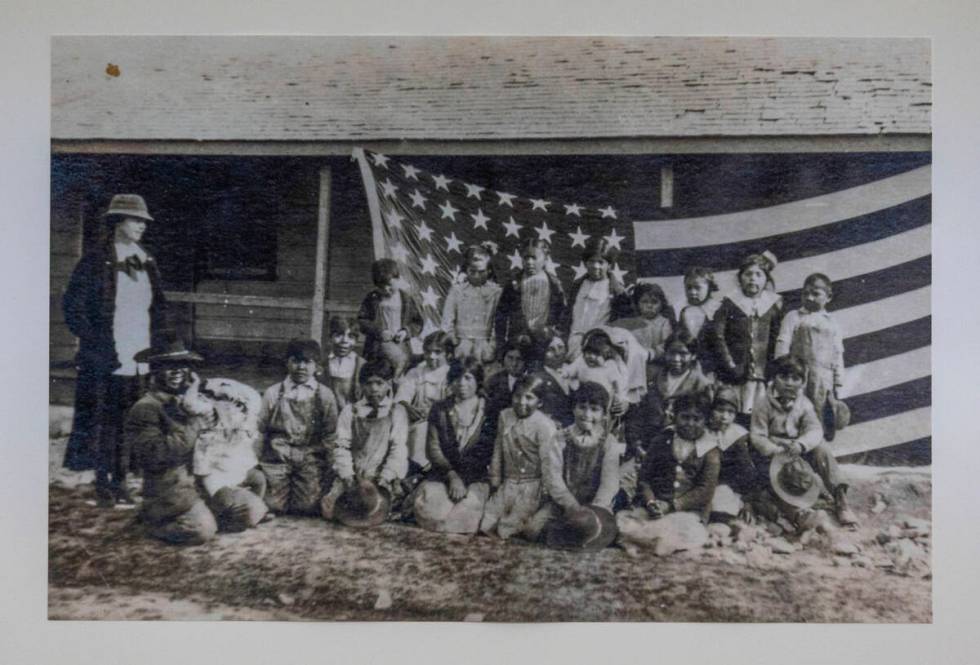
The tribe and its reservation are named after Fort McDermitt, an army outpost established in 1865 to help secure the region during the Snake War — a four-year, violent conflict between the U.S. and tribes of Idaho, California and Nevada.
Following the end of the war in 1868, Paiutes found refuge at Fort McDermitt, which became a regional social and economic hub, according to a 2021 dissertation written by the tribe’s language director, Thierry Veyrié. When the army abandoned the outpost in 1889, Natives stayed, and the reservation was federally recognized in 1936.
York noted on her trips to the mine site with her fellow councilmembers that she’s seen the ground littered with obsidian, the shiny black rocks that Northern Paiute used for tools and weapons.
“You can tell we have been out there for a long time,” York said.
Fort McDermitt was where prominent Native American author Sarah Winnemucca began her career as an interpreter for the Bureau of Indian Affairs in 1871. A statue of her sits prominently today in both the Nevada and U.S. Capitol buildings, celebrating her as the first Native American woman to publish a book, “Life Among the Paiutes: Their Wrongs and Claims.”
The book brought nationwide attention to the plight of the Northern Paiute for the first time.
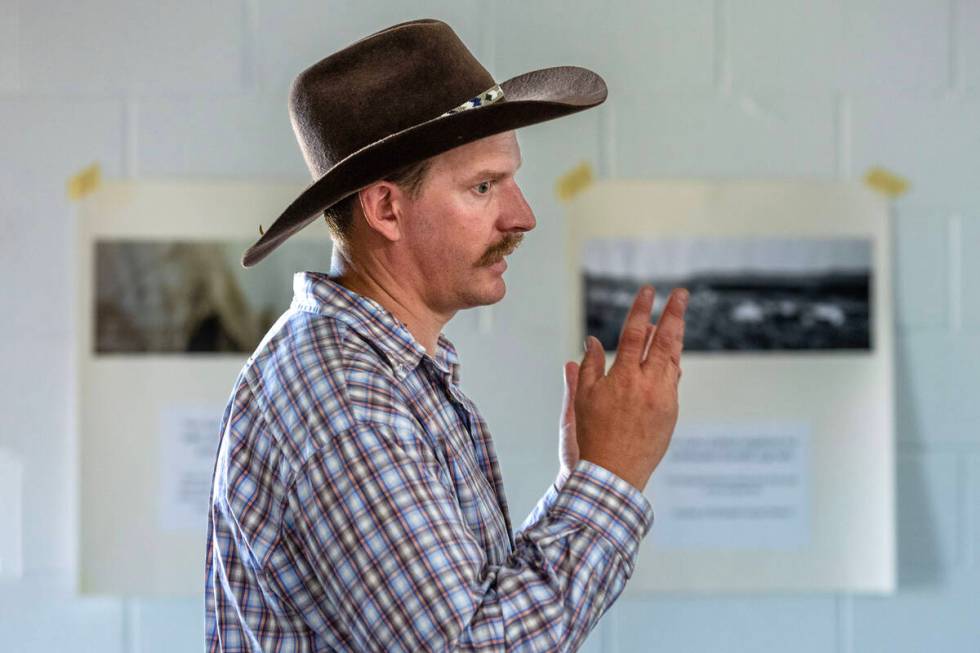
Veyrié grew up in France but speaks Northern Paiute well enough to instruct young students. Today, he’s the closest the tribe has to a historian as he tries to preserve a dying language.
Before taking his current job, Veyrié was up north across the state border, working on language with the Burns Paiute Shoshone Tribe. He said French and Paiute have more similarities than one might think.
While Veyrié disagrees with the assertion that the Thacker Pass mine is located on the specific site of those massacres, he says they were indiscriminate and violent.
“Even if it’s not a sacred site, the whole landscape is sacred, because it has agency,” Veyrié said.
Varied opinions
Talk to any random sample of Fort McDermitt reservation residents, and you’ll find a community divided about what to make of the mining industry’s interest in the region.
To some like Dana Wasson, the industry knocking on the tribe’s door is a positive, no matter how you slice it.
Wasson, a member of the Elko Te-Moak Tribe of Western Shoshone who lives on the Fort McDermitt reservation with her husband, said the jobs a new industry like lithium could create for young people are a win-win.
“It’s going to happen. Nobody’s going to stop it,” Wasson said. “Like I tell everybody, it’s already a done deal.”
Lithium Americas negotiated with the council to sign a so-called “community benefit agreement” on Oct. 20, 2022, following more than 20 meetings with the company. It’s a binding, mostly confidential document of which details are sparse.
The council agreed to let Lithium Americas build a $5 million community center that includes a preschool, daycare, cultural facility, playground and greenhouse, according to a company spokesperson. In a July interview, newly elected tribal Chairwoman York didn’t seem optimistic about those promises being delivered on.
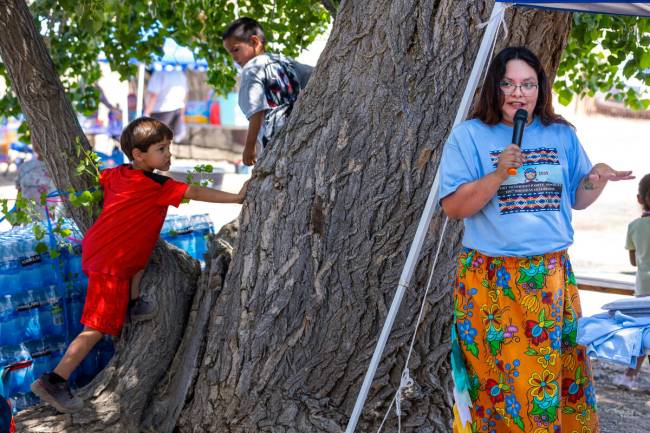
The mining company went before the council this year to amend the agreement, but neither company spokesman Tim Crowley nor York have divulged any more details.
Following grade school, tribal students are often forced to leave the reservation to get a good-paying job or higher education, Wasson said. She feels that could change if the mine brings economic development to the McDermitt area.
Unlike some of her peers on the reservation, Wasson said she’s been satisfied with the tribal engagement of Lithium Americas. In fact, she faults the ever-changing council for demanding too much of executives and failing to take the money offered without negotiating further.
“The mines don’t have an obligation; people have got to understand that,” Wasson said.
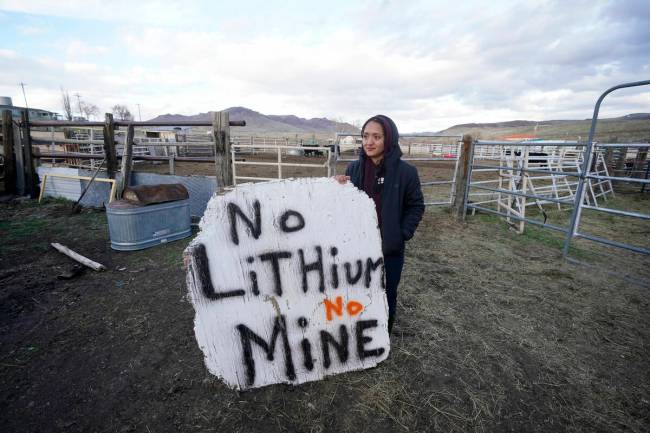
Chanda Callao, co-founder of The People of Red Mountain organization that has led Native opposition to mining in the region, said she believes Lithium Americas wanted to create division among tribal members.
“That was their intention, and they did a great job at it,” Callao said. “They made lifelong friends and family members choose sides.”
Lawsuit ends in heartache
Though the Fort McDermitt tribe did not sign on, other tribes intervened in the lawsuit of rancher Ed Bartell to challenge the mine’s tribal consultation process in federal court in 2021.
In court filings, tribes asked a judge to revoke the mine’s permits, alleging the Bureau of Land Management should have contacted all Northern Pauite tribes before the mine moved forward. The written letters sent to some were insufficient, they argued.
“My clients have described Thacker Pass as a cemetery,” then-attorney for the Reno-Sparks Indian Colony, Will Falk, told the court in a 2021 hearing. “We wouldn’t be having a discussion about irreparable harm if somebody was going to mechanically trench a Christian cemetery.”
U.S. District Judge Miranda Du did not revoke the mine’s permits, though she did acknowledge the tribe’s persuasive “broader equitable and historical arguments.” A follow-up lawsuit from the same plaintiffs came in 2023, and Du dismissed it.
Lithium Americas has since pointed to disagreement among tribal members themselves and a lack of written historical records or archaeological evidence. Company spokesman Crowley pointed to a 2021 NPR interview in which Fort McDermitt elder Alana Crutcher said she had never heard of the sacred site and that her tribe was “totally being misrepresented.”
The company conducted a cultural study to catalog artifacts with an outside consultant called Far Western, with the oversight and assistance of 11 members of the Fort McDermitt tribe.
Deland Hinkey, a Fort McDermitt tribal member and a member of Callao’s advocacy group, said the story of PeeHee Mu’huh is one he’s heard since he was a child. Hinkey was disallusioned by Du’s rulings in the two cases, saying he believes the BLM clearly violated federal laws.
“When a white man goes to court, the law is straight,” he said. “But when it comes to us, it becomes fluid. They proved that right there in court in Reno, Nevada.”

A tribe soldiers on
On a crisp summer day in July, monstrous amounts of Mormon crickets covered the concrete outside the tribal headquarters like a carpet.
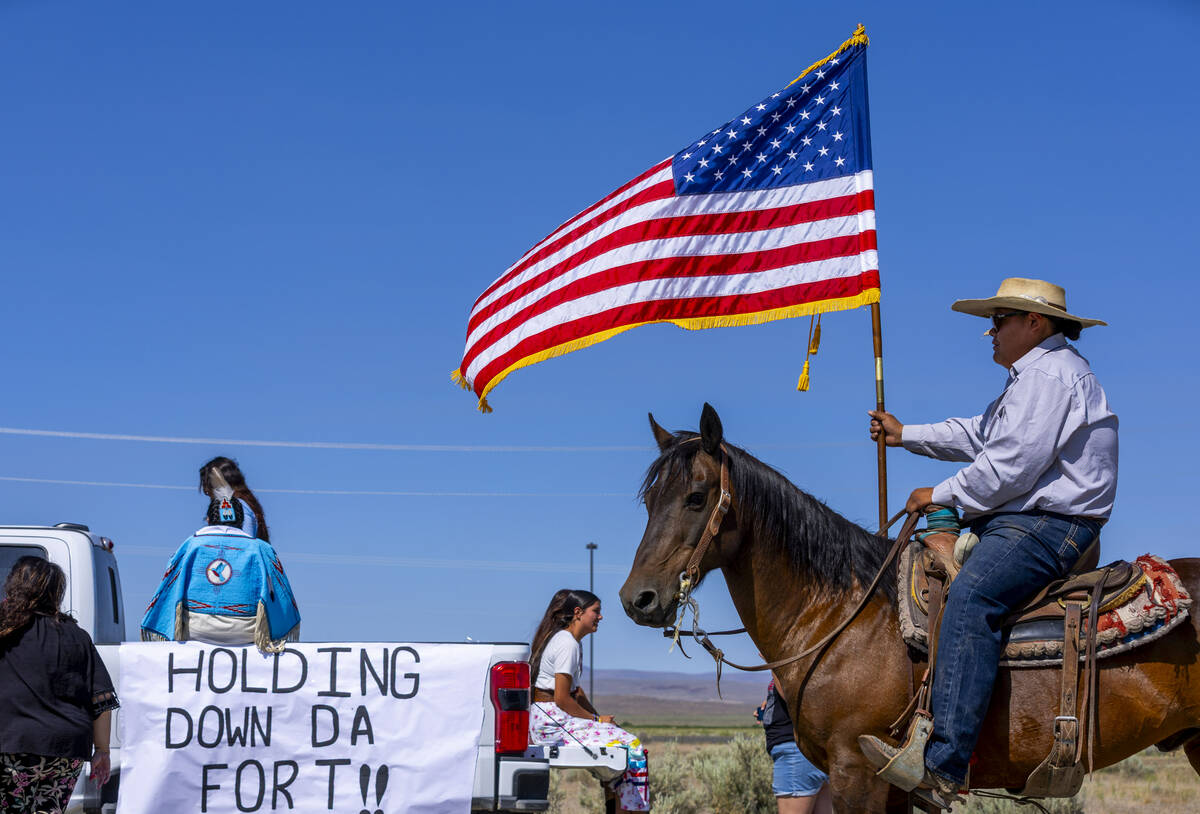
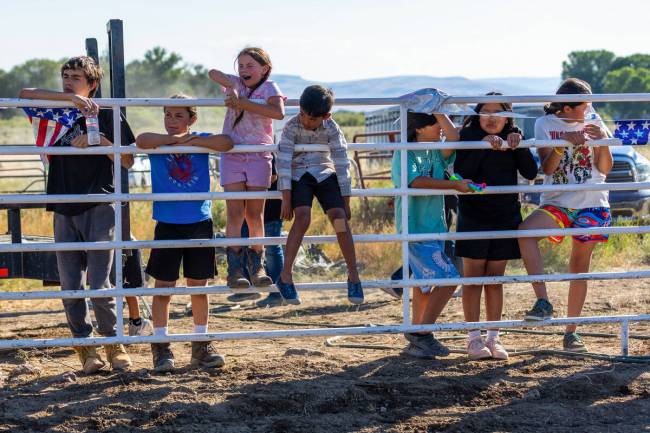
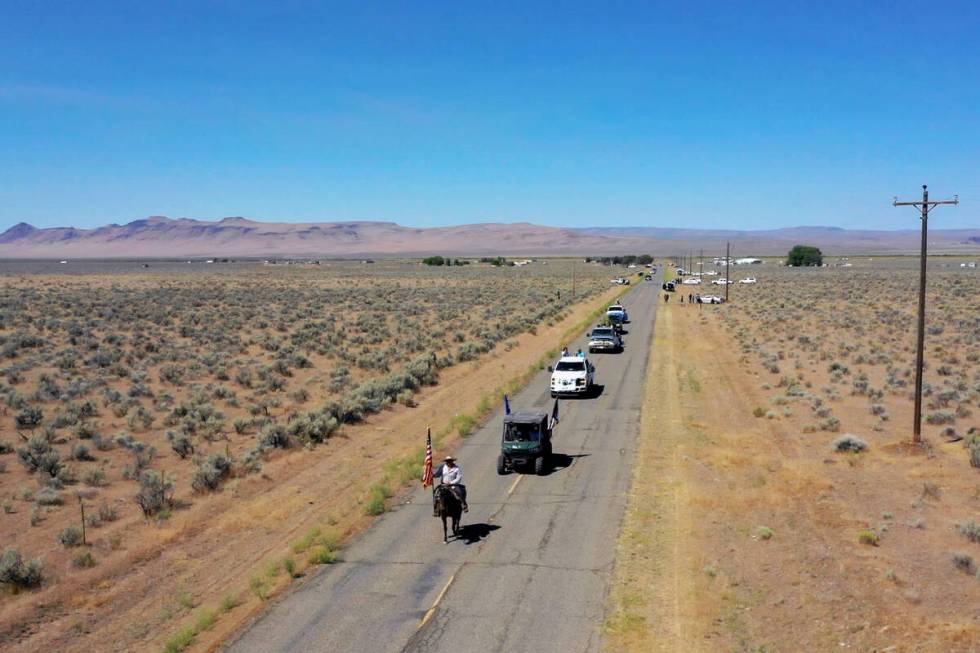
It was the reservation’s 136th birthday celebration and parade, where Humboldt County residents and tribal members alike came together to celebrate a common history. A balloon release and walk across the reservation earlier in the day honored Elena Dave, who worked as a secretary in the tribal office and died this year.
Available for viewing at lunchtime, language coordinator Veyrié put together a historical photo exhibit of images he’d collected from elders and other archives. It was the first major effort in years to truly document the tribe’s story.
Andrew Dave, 62, suited up a parade float his family made that featured a teepee and a yellow house, showing how tribal life has evolved through the years. His family wrote the Paiute words meaning “looking to a brighter future” on the side.
Dave, a retired BLM firefighter, said the lithium mine is disturbing a burial site he finds sacred. But even though the tribe is no stranger to mining or historic pollution, Dave said he feels he has little control.
“I guess we’re just going to have to live with it,” he said. “Who knows what’s going to happen down the road?”
This series was made possible, in part, by a grant and fellowship from the Institute for Journalism and Natural Resources.
Contact Alan Halaly at ahalaly@reviewjournal.com. Follow @AlanHalaly on X.