



EDITORIAL: A trickle of water sense from California


California has hundreds of miles of coastline, yet melted snow from other states remains an important source of its water. Perhaps a needed change is on the horizon — one that would even help Nevada.
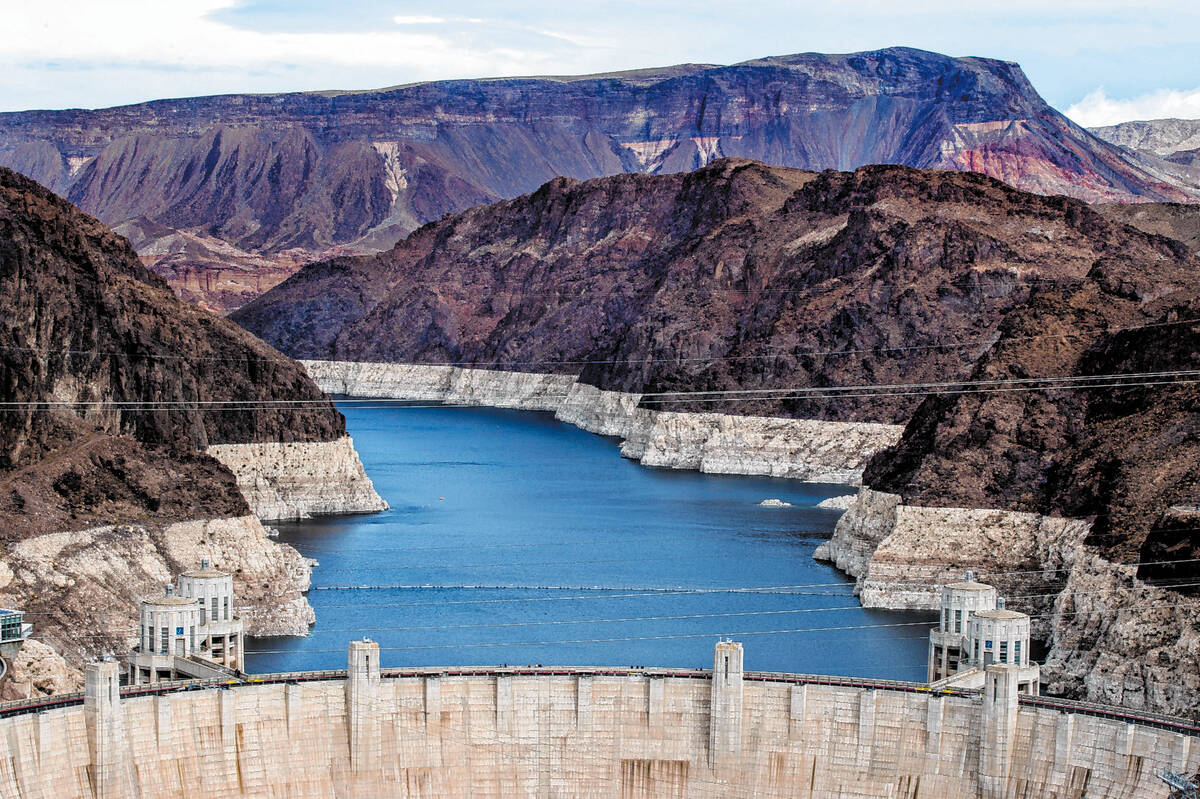
Interstate negotiations over the Colorado River appear deadlocked. The three Lower Basin states, including Nevada, remain at odds with their four Upper Basin counterparts. There is significant disagreement over what to do when the river doesn’t deliver enough water. Unfortunately, that has been the reality for many years, as the river was overallocated from the beginning. Lake Mead is forecast to drop even further in the coming months.
Las Vegas residents don’t need to panic. The third straw and the Low Lake Level Pumping Station will ensure Southern Nevada can continue to draw water from the river. That’s true even if the lake reaches “dead pool.” That terrifying-sounding term means that Hoover Dam wouldn’t be able to send water downriver. That would be a major problem for Arizona and California.
It looks increasingly likely that federal officials will need to step in.
“The river and the 40 million people who depend on it cannot wait,” Assistant Secretary of Water and Science Andrea Travnicek said recently, referring to the need for a new plan for the Colorado River. “In the face of an ongoing severe drought, inaction is not an option.”
A significant increase in available water would be very helpful. But it’s not coming from Colorado, where the “snowpack is 56 percent of the median,” according to the National Water and Climate Center.
There is another possibility. Ocean water can be made drinkable through desalination. Rudimentary forms of this have been used for millennia. The process has improved dramatically as technology has advanced. In 1930, the first major desalination plant was built to provide water for Aruba, an island near Venezuela. There are currently more than 15,000 desalination plants throughout the world.
While California has some desalination plants, its regulators haven’t made it easy. In 2022, the California Coastal Commission rejected a plan for a $1.4 billion desalination plant in Huntington Beach. It would have provided 50 million gallons of water a day. The project had been discussed for more than two decades. This is a prime example of the regulatory red tape that stalls out important projects.
But perhaps hope looms. Late last year, that same commission approved a pilot project for a small desalination plant near Fort Bragg, California. It should provide the Northern California city with around 13,000 gallons of usable water per day.
Additional water sources can help stretch the Colorado’s limited supply, helping Nevada and other states. The Fort Bragg plant isn’t much, but it’s progress. Solving the West’s water woes will require conservation, innovation and a willingness to re-examine the balance between agricultural and urban use. Desalination can be a part of that equation.


