



Nevada Supreme Court sides with Review-Journal’s challenge against judge
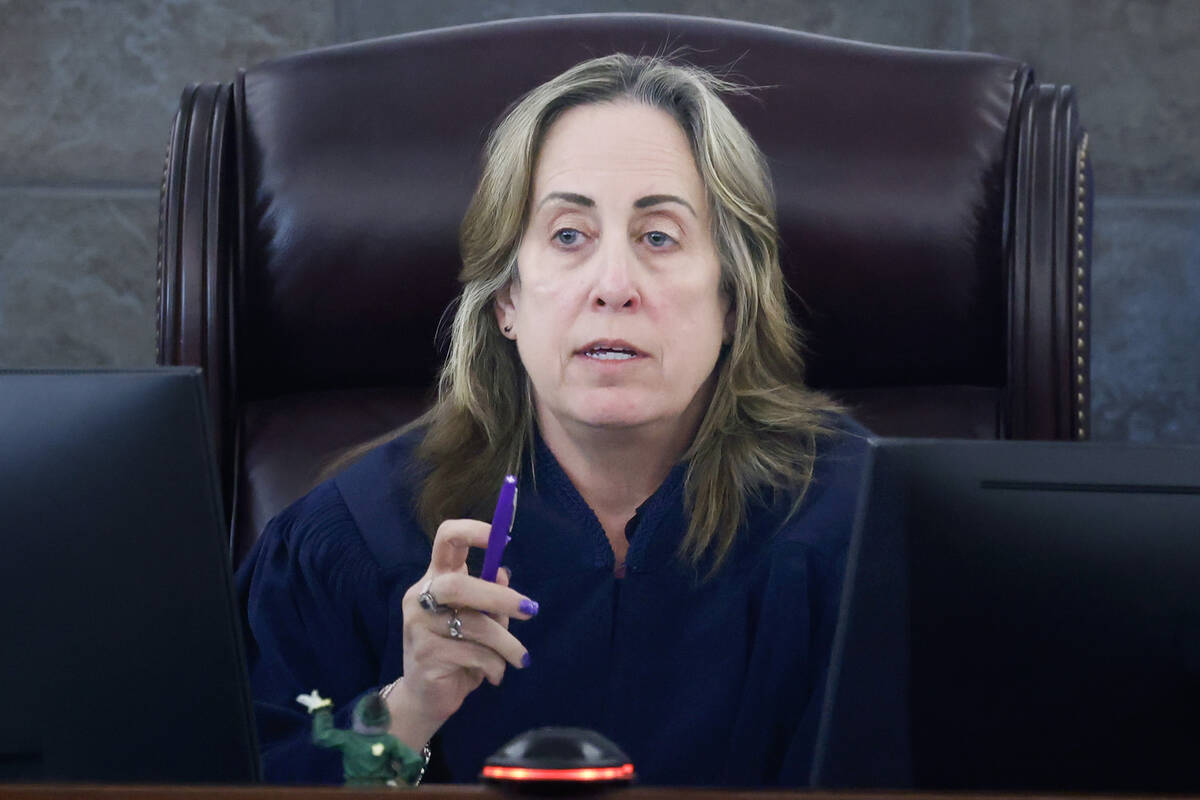




The Nevada Supreme Court on Wednesday sided with the Las Vegas Review-Journal and press freedom, striking down a Clark County judge’s effort to dictate coverage in a high-profile case.
The high court ruled that District Judge Jessica Peterson violated the First Amendment when she ejected Review-Journal staffers Noble Brigham, Akiya Dillon and Bizuayehu Tesfaye from the courtroom on Jan. 21 after they refused to agree not to publish the name of an alleged victim in Nathan Chasing Horse’s sexual assault trial.
Executive Editor Glenn Cook said the newspaper had no intention to publish the alleged victim’s name but that the decision on what to cover belongs to the press, not the government.
“This case was never about identifying or not identifying the victim of an alleged sexual assault. This was about the press’s ability to report what happens in open court,” Cook said. “We’re thrilled the Supreme Court has upheld the right of the press to serve as the eyes and ears of the public in any court of law.”
Lawyers for the Review-Journal challenged Peterson’s decision on Tuesday, arguing that the judge’s actions were a demand for editorial control over court proceedings. A panel of three justices agreed and ruled that Peterson’s actions amounted to unjustified prior restraint, a legal term referring to government censoring speech before it happens.
The justices ordered Peterson not to exclude Review-Journal reporters from Chasing Horse’s trial for refusing her request and to annul an order she made barring the newspaper from publishing the identity of the alleged victim. Chief Justice Douglas Herndon, Justice Elissa Cadish and Justice Lidia Stiglich signed the ruling.
“Petitioners argue that the district court manifestly abused its discretion in several respects, including by issuing an unconstitutional restraint and violating its right of access to the court. We agree,” the justices wrote.
In addition to its order, the court indicated that because the issue has statewide implications, it intends to issue an opinion further detailing its decision.
Justices: Peterson’s order ‘unconstitutional’
The justices wrote that Peterson’s restrictions, which she said were to protect the alleged victim’s privacy, did not assist in that goal because the person’s name had already been revealed in public court documents and during the trial.
“Although we are sympathetic to the alleged victim’s privacy concerns, the prior disclosure of her name diminishes any interest in protecting her anonymity,” the justices wrote. “Under these circumstances, the district court’s restrictions could not, as a matter of law, serve an interest of the highest order.”
The ruling also pointed to Peterson’s inconsistent application of her order as additional evidence that it did not help protect the alleged victim. At least one television journalist was not asked to agree to Peterson’s order, and other members of the public were allowed to remain in the courtroom during the alleged victim’s testimony, Review-Journal lawyers said.
“We therefore conclude that the district court manifestly abused its discretion by imposing an unjustified prior restraint,” the justices wrote.
Peterson’s removal of three reporters from the courtroom for not agreeing to her order “does not withstand scrutiny,” the justices wrote, and only served to “punish them for not submitting to an unconstitutional restraint.”
Benjamin Lipman, chief legal officer for the Review-Journal, said the newspaper was grateful that the Nevada Supreme Court addressed the newspaper’s challenge quickly.
“The freedom of the press is at stake in this case,” Lipman said.
Contact Spencer Levering at slevering@reviewjournal.com or 702-383-0253.


