Tight muscles can derail your workout progress


Have you ever driven a car with the emergency brake on? How about trying to get a tan wearing a coat? Absorb the information in a textbook by osmosis? Exercising with tight muscles can be just as frustrating.
Tight muscles can be annoying and tricky to self-assess. As you work out, you may notice a problem area because strength in that muscle has decreased. You may also notice that the problem muscles fatigue faster than they should.
A quick self-diagnosis may lead you to logically assume that the problem muscle could be weak. It makes sense to believe that decreased strength and fatigue denote a weak muscle. Putting your theory to the test, you exercise it more. You may even devote a workout day to your problem muscle. After blasting that muscle, you feel the burn. It may even start to twitch. Satisfied with your efforts, you continue only to find out that the problem remains.
Symptoms of tight muscles are described above: decreased strength over time and early fatigue. Those with a performance goal may see a strength plateau associated with a tight muscle. Athletes who train with distance goals may notice fatigue setting in sooner than normal.
Ask a trainer at your gym if your fitness goals are being curbed by tight muscles. Trying to determine the problem on your own may lead to a path that could make the affected muscle worse. Trainers have movement screens they use to help them assess a person’s movement. They are designed to help distinguish between tight and weak muscles. They can be helpful in pinpointing your specific problem and developing a strategy to correct it.
Muscles get tight for a variety of reasons. It may be that the muscle has been overworked. Some lifters tend to overwork their chest and lats. Performance plateaus caused by tight muscles are common among young lifters. Don’t forget to warm up and stretch properly.
Another reason can be that the muscle has been underworked and becomes tight. Hip flexors get tight because of prolonged sitting. They spend so much time in a shortened position and “stick” that way.
Yet another reason could be some kind of trauma — an auto accident, fall, incorrect lifting or exercising, just to name a few. Tracking your tight muscles to the root cause is sometimes a ghost hunt. Just accept they are tight and start fixing them. If it is a movement pattern issue, you’ll be one step closer the next time you perform that movement and get tight.
There are many tools at your disposal to “fix” your tight muscles. The trick is to get them to relax. Stretching and foam rolling are my go-to methods to help muscles relax. I always roll first and then stretch. See my earlier columns on foam rolling. Massage and heat are other tools.
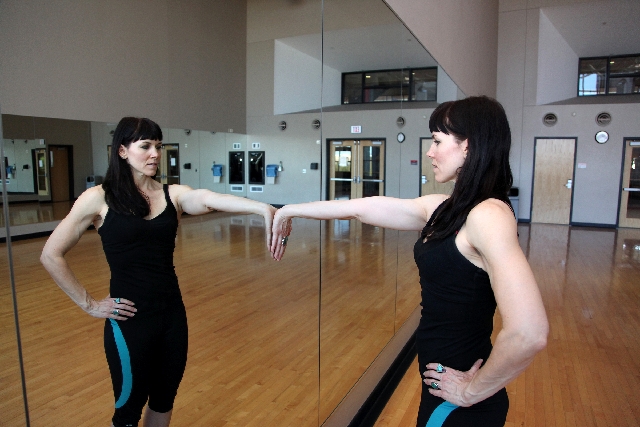
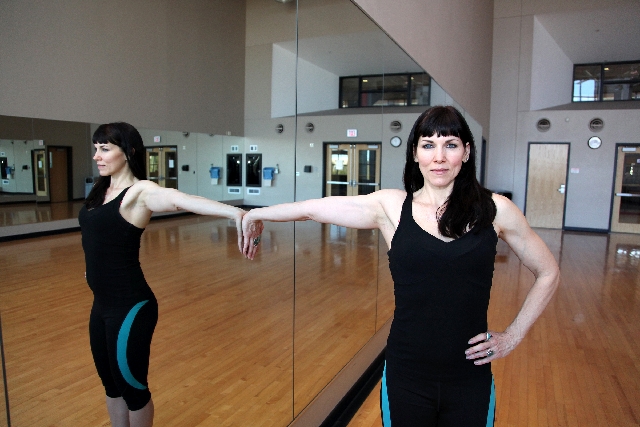
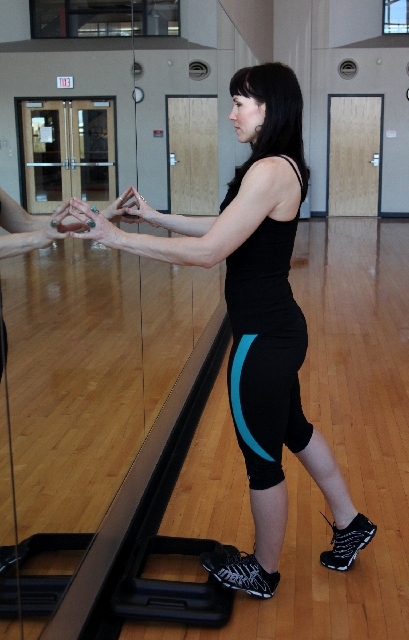
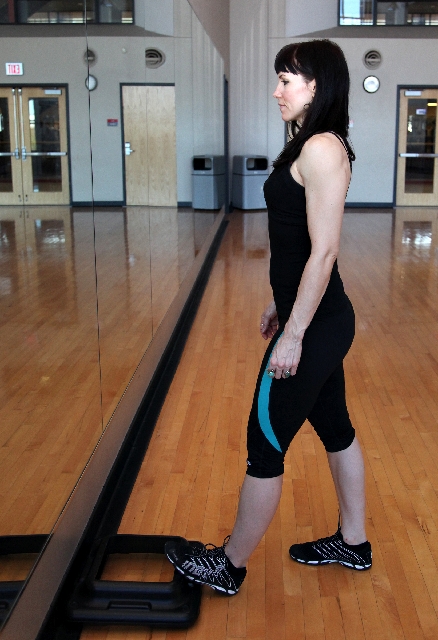
Today’s stretches cover some problem areas many people experience. Tight calves and biceps can affect many areas of the body. Overactive calves can limit mobility in the leg. Runners, cyclists and hikers can be prone to tight calves. Tightened muscles burn and make a fun sport tedious.
I see tight biceps among those who use their arms too much to perform movements such as pullups and rows. These lifts use the back musculature as the primary movers. Biceps are the secondary muscles involved but can be overworked if these lifts are not done properly.
Chris Huth is a Las Vegas trainer. He can be reached at 702trainer@gmail.com. Consult your physician before beginning any exercise program.