Real tree or not real tree?
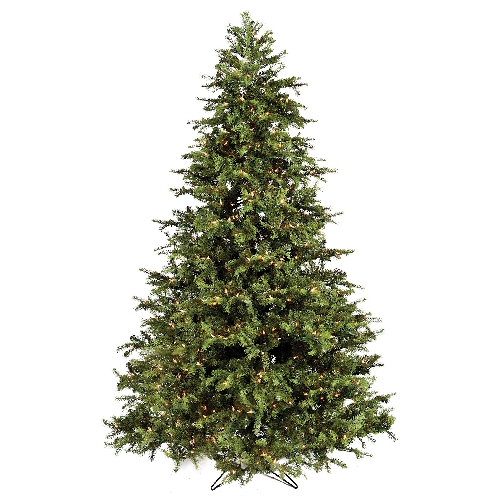

"O Christmas Tree, O Christmas Tree." With your sparkling ornaments and twinkling lights, I can see why so many songs have been written about you.
There's just something magical about seeing a tree decorated to the nines or how a certain ornament can trigger warm, smile-inducing memories.
Although I have never had a tree of my own, I have always enjoyed helping friends decorate their trees. And the delicious cup of hot cocoa that came with their tree-trimming parties was always an added bonus.
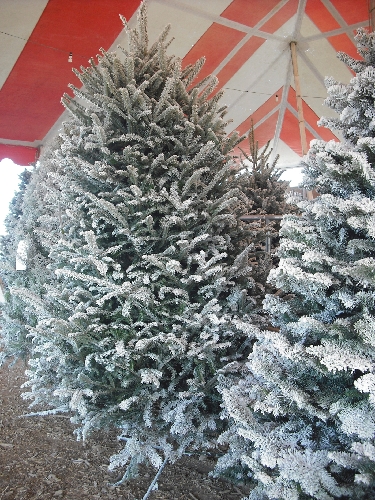
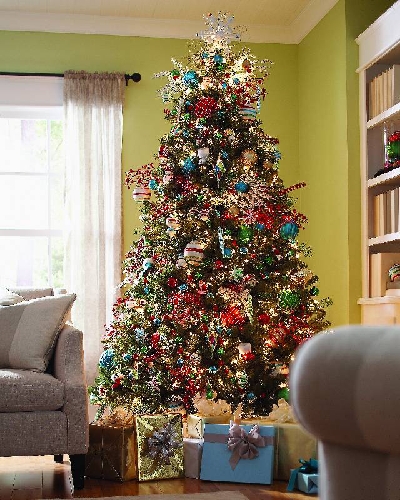
But the question that comes to mind now, as families across the valley are decorating their own trees, is what type of tree to get: real or artificial?
I'm sure the debate is no less heated than the ones in my home during Hanukkah each year about which is better: sour cream or applesauce - on top of potato latkes, of course.
There are merits to both types of trees as well as cons.
"Both are great," said Sarah Fishburn, director of design and trends for The Home Depot, which sells real and artificial trees. "You have to decide what fits your lifestyle."
Some of the arguments for or against either type often center around a tree's environmental impact. However, a study cited by the American Christmas Tree Association, a nonprofit organization representing artificial and real Christmas tree retailers, found that neither had a great impact on the environment.
"However, the study's findings show that length of ownership, disposal method and 'tree miles' can make a difference on which tree is environmentally preferable," the association reported.
Tree miles refer to how far a tree had to travel to get to your home.
The National Christmas Tree Association, which supports the industry and approximately 700 member farms where the trees are grown, touts the environmental benefits of a real tree.
"Unfortunately many people have the misconception that Christmas trees are cut down from the forest. Real Christmas trees are grown as crops, just like corn or wheat, and raised on a farm. Once they are harvested, new seedlings are planted to replace harvested trees. These would not have been planted if trees hadn't been harvested the previous year," the association said on its website.
Fishburn said a nice thing about real trees is that they are biodegradable and can be recycled. In fact, the Conservation District of Southern Nevada co-sponsors a Christmas tree recycling program each year, transforming the once-beautiful trees into useful mulch for local gardens and yards. There are more than 20 locations where trees can be dropped off.
Last year, Americans purchased about 21.6 million real trees and 12.9 million artificial trees, according to the American Christmas Tree Association. Either way you look at it, that's a lot of trees.
Many people gravitate toward real trees because of the memories they evoke.
"People remember their family's tradition of going tree shopping. As a child, it was something they looked forward to. Most families have a weekend they do that," Fishburn said.
The trees' scents also bring back memories, she said. And fragrance is one of the top reasons some people prefer a live tree instead of an artificial one.
But don't count out artificial trees, yet. There's a solution for that. Scentsicles are scented ornaments - available in several species - that hang on the artificial tree's branches just like any other ornament but are infused with pure fragrances providing that just-cut smell for about 30 days. They also are green and can be hidden within the tree's branches.
Other pluses for artificial trees are the convenience in setting them up and lack of maintenance - or falling needles that can pose a fire hazard.
"A faux tree is a cost effective, hassle-free alternative to purchasing a real Christmas tree. These days, faux trees could pass for freshly chopped and come prelit with no messy lighting wires to untangle. A 'fake' tree requires no watering, no cleanup after needle shedding and you get the fullness of a beautiful tree that can be used for years to come," said Kristine Hicks, buyer of home decor and lighting for Overstock.com.
And years is the operative word when it comes to comparing the life of an artificial tree with one that has been freshly cut. Today's quality artificial trees have average life span of 10 years.
So, there you have it; there's no clear- cut answer about which type of tree is best. There are compelling arguments for selecting either type.
But I think the answer lies in how I eat my potato latkes. Just use both.
And that's exactly what Fishburn recommended.
"With multiple trees, the family tree can be the real one and the themed tree in your foyer or living room can be the artificial one."