Authentic-looking copies can be costly




Some furniture styles are so popular that they are copied by cabinetmakers for hundreds of years. Some copies are easy to recognize as copies because their construction is modern -- new nails, machine-made mortise-and-tenon joints holding drawer parts together, telltale marks made by modern saws rather than the marks left by antique hand tools.
Well-made used copies, sometimes more than 100 years old, are selling for almost as much as similar brand-new pieces. Decorators want the "look."
Serious collectors would like to have an authentic of-the-period antique cabinet to display antique porcelains, but it can be very expensive. They save money by buying a newer cabinet so they can spend money on antique porcelains.
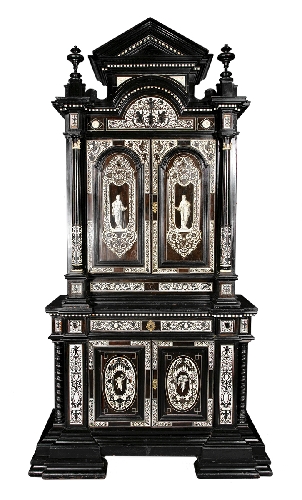
A 2011 Neal Auction Co. sale in New Orleans offered a mid-19th-century cabinet in the Renaissance (1460-1600) style made of expensive Circassian walnut with ebony and ivory trim. Today's endangered-species laws have banned the use of most types of ebony and elephant ivory. The cabinet was a good copy, heavy and rectangular. It had a base, columns, moldings, finials, carvings, paneled doors, elaborate decorations and about 15 drawers and four doors. Some experts say cabinets like this were made to resemble imaginary buildings.
The cabinet sold for $7,200. A new cabinet similar to this would cost well more than $10,000, and a 15th-century piece probably couldn't be found for sale.
The collector's rule is: Study the best there is in museums and buy the best you can afford.
Terry Kovel's column is syndicated by King Features. Write to: Kovels, (Las Vegas Review-Journal), King Features Syndicate, 300 W. 57th St., New York, NY 10019.