



Group alleges failure to protect species


Federal biologists literally are crawling along at a snail's pace to decide on listing 42 Great Basin spring snails and a couple other critters in Nevada for protection under the Endangered Species Act.
A wildlife watchdog group filed four lawsuits last week, claiming that the U.S. Fish and Wildlife Service has failed to make timely findings on petitions to list 93 species in violation of the act.
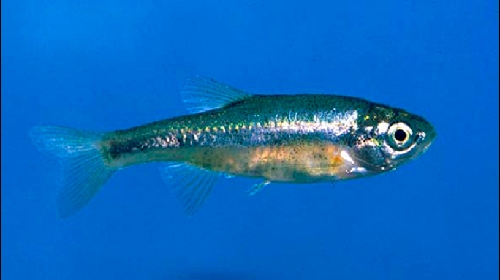
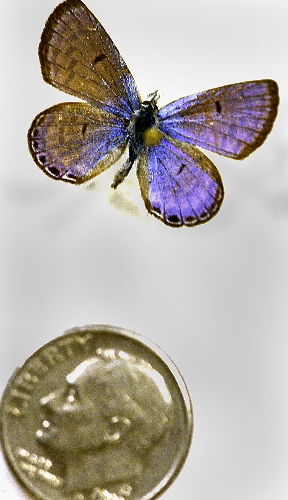
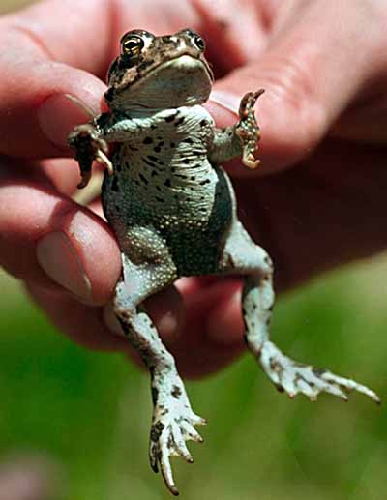
The Center for Biological Diversity alleges the wildlife service failed to protect the snails and other species, including the Mount Charleston blue butterfly, the Amargosa toad in Nye County, and the least chub, a shiny, 2½-inch-long fish in western Utah that the group fears will be impacted by planned pumping of groundwater in eastern Nevada to support urban water needs in Las Vegas.
The lawsuits were filed Thursday in Portland, Ore.; Tucson, Ariz.; Washington, D.C.; and Sacramento, Calif., which is headquarters for the Fish and Wildlife Service's regional office that includes Nevada.
"The service has been working on all of them," Bob Williams, the service's field supervisor for Nevada, said by phone Friday from Reno. "It's not that we don't take those things seriously. But it takes time to get them done."
Though behind schedule, he said, his staff has been working to make 12-month findings on all the species that conservation groups have petitioned for listing. Some recommendations, however, await action by officials at the regional or national level.
After a petition is filed, the service has 90 days to determine if the species warrants further study and 12 months to recommend if a species should be listed.
The service hasn't made a 12-month finding on any of the 93 species, according to Noah Greenwald, director of the Endangered Species Program for the Center for Biological Diversity in Portland. The center's lawsuits ask federal courts to compel the service to follow through in a timely manner.
Williams said a finding on the Mount Charleston blue butterfly, which some observers believe already might have slipped into extinction, has been sent to service officials in Washington for final approval and "is due to come out soon."
The butterfly has been proposed for federal protection, he said.
The Urban Wildlands Group Inc., a nonprofit conservation organization based in Los Angeles, filed a petition in October 2005 to list the Mount Charleston blue butterfly.
In May 2007, the Fish and Wildlife Service announced it had found "substantial scientific information" to warrant listing the tiny, blue butterfly as either threatened or endangered.
Even with a decision on the horizon, Rob Mrowka, the Center for Biological Diversity's Nevada conservation advocate, said, "it could be very well too late."
The fate of other species could be similar if the service continues to drag its feet.
"The Fish and Wildlife Service is not evil," Mrowka said. "They have good intentions."
Nevertheless, he said there was "a huge backlog" of cases for potential listing from the Clinton administration that the Bush administration barely put a dent in -- listing only a half dozen species.
So far, the Obama administration has listed two plant species for protection.
"The Fish and Wildlife Service is not prioritizing their work to list them," Mrowka said. "There's only so much time you have with species. They may actually go extinct like might be the case with the Mount Charleston blue."
The Center for Biological Diversity and Public Employees for Environmental Responsibility filed a petition to list the Amargosa toad in February 2008.
The Fish and Wildlife Service issued a 90-day finding on Sept. 10, 2009, indicating a listing for the toad might be warranted. Its field recommendation for the Amargosa toad was just completed and has been sent to the Sacramento regional office for consideration.
"It will be moving forward with a Washington review and in the Federal Register in a couple months," Williams said.
But work on a finding for the 42 different species of Great Basin spring snails, which are the size of pinheads, is a more tedious task.
"That is actually still being completed in the field," Williams said. "That was a big one. Trying to get a status review on 42 spring snails is a big effort. We're working on moving that forward."
Currently, snail populations are "fairly endangered from non-native species and livestock grazing," Greenwald said.
The Center for Biological Diversity views plans to pump groundwater from the Snake Valley basin in White Pine County, 300 miles northeast of Las Vegas, as a threat to the snails and the least chub.
Conservation groups and the Confederated Tribes of the Goshute Reservation petitioned the Fish and Wildlife Service in 2007 to list the least chub for protection.
"We hope that the lawsuits will speed protection for these species because they are endangered without protection," Greenwald said. "Things are happening on the ground that are potentially harmful and there's not adequate mitigation."
Contact reporter Keith Rogers at krogers
@reviewjournal.com or 702-383-0308.


