Shop Smart
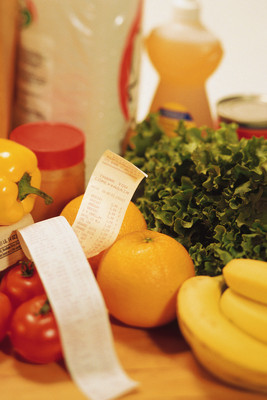




Grocery prices are climbing steeply and seemingly inexorably -- green peppers up more than 67 percent in the past two years, eggs up 69 percent, orange-juice concentrate up 34 percent, according to the Consumer Price Index. And, barring an election-year miracle, there's no relief in sight. So the question arises: Are there any effective ways to save money at the supermarket?
Sure. But it takes some work, and a lot of thought.
"One of the biggest mistakes is not using coupons enough and not looking in the right places for coupons," said Lisa Freeman, editor-in-chief of ShopSmart magazine, an offshoot of Consumer Reports.
Freeman said one of the best sources for coupons is still the Sunday edition of the largest-circulation newspaper in the area (in this case, the Review-Journal). But additionally, she said, be aware that a lot of manufacturers post coupons on their Web sites. Those include the sites of organic-foods manufacturers and even pet foods. The Iams site, for example, currently lists a $5 coupon for dog food (e-mailed to you, one per household).
There also are downloadable-coupon Web sites. A recent check of Coupons.com found coupons for $1 off a four-pack or larger of Scott Extra Soft Tissue, $1 off Bertolli Premium Pasta Sauce in a Pouch and buy-one-get-one-free (a value up to $3.99) for any variety of Dove chocolates, among others. And the Web site Shortcuts.com lets you choose coupons and link them to your store loyalty card. Smith's is one of the partner stores listed, and in addition, a visit to the Smith's site revealed a link to a Procter & Gamble partnership site that enables you to link coupons for many of that company's products to your store loyalty card.
There is, however, a coupon caveat: "They have to be brands you like to buy," Freeman said. And Mary Wilson, a registered dietitian and extension nutrition specialist for the University of Nevada Cooperative Extension, said even if you have a coupon it's wise to check other brands, because one may be priced lower than the coupon item, even with the coupon savings.
But back to store loyalty cards: Use them. Real Simple magazine reports that a store card can cut 18 percent from your grocery bill. Local supermarkets frequently have "loss-leader" deals such as 10 for $10, so if the item isn't perishable and/or it's something you'll use within a reasonable period of time, it would be wise to stock up.
Also consider trying store brands.
"We have said that over and over," Freeman said. "A lot of times people try them and think, 'Ick, I don't like that,' so they give them up. Store brands are constantly being reformulated; a lot of them are getting better. So if you haven't in a while tried a store brand of something you buy frequently, try it again." The savings, she said, can be 50 percent or more.
Wilson noted paying attention to unit pricing -- that would be the price by the ounce, by the pound, or a similar measure -- also is extremely important when grocery shopping.
"A lot of times we assume that the larger size is the better value, and that may not be the case," she said. Wilson recommended checking the unit price on the shelf tag, or carrying a small calculator so you can do the math. Consumer Reports related research from the Federal Trade Commission that canned tuna, peanut butter, ketchup, canned coffee and frozen orange juice, in particular, tend to cost more per unit when purchased in larger containers.
And speaking of those larger containers: While research from a couple of years ago found that club stores such as Sam's Club and Costco actually cost more per average marketbasket, Freeman said currently, they're competitive on food items including produce and packaged foods. But again, there are caveats.
"They're very good at getting you to buy impulse items," she said. "If you buy something you don't normally buy, you wind up wasting money because you may not use it." It doesn't make sense, for example, to buy mayonnaise in a jar "the size of your head" if you have a two-person household.
"If the product goes stale or out of date before you can use it, you're not saving money," Wilson said.
Also consider how much you eat and of which foods. While one consumer advocate said that one way to reduce grocery bills is to simply eat less, Wilson said that's the sort of advice that's not likely to be well-received. Still, she said, consider protein sources and portions.
"People serve portions of meat, chicken and fish that are larger than we really need," she said. "By reducing the size of the portions of the meat protein and serving more vegetables and grains and legumes, we can certainly save money and we end up being better off healthwise as well."
Another way to save is to use eggs, tofu, milk or beans instead of meat as the protein source for a meal. Kevin Burkum, vice president of marketing for The American Egg Board, said that since the average cost of an egg is less than 20 cents, "you can feed a family of four pretty inexpensively these days."
A whole egg costs a national-average 17 cents, according to U.S. Department of Agriculture data from May 14. Comparatively, 8 ounces of 2 percent milk costs 24 cents and 3 ounces of beef round roast costs 70 cents.
"Americans aren't very good at eating beans," Wilson said, but she advised trying to prepare one vegetarian meal per week. Try an egg-white omelet, she suggested, or an omelet with one egg yolk and three egg whites. Or have pancakes for dinner, she said.
"Reduce the amount of meat you eat, because that tends to be the most expensive thing in the cart," Wilson said.
Oh, and one more thing: Pay attention to store layouts and displays, because they -- as well as free samples -- are designed to encourage you to buy more.
"People make the mistake that items that are on special displays are on sale, especially on the end caps," Freeman said. "It's not necessarily the case. People get fooled very easily."
There's a reason staple items such as meats and dairy products are near the rear of the store: It's so you'll pass the tempting displays on your way to and from. And impulse buys often are near the front, so you'll grab them while you're waiting in line.
Save money at the supermarket? Sure, Freeman said. Just "make sure you're being smart about it."
Contact reporter Heidi Knapp Rinella at hrinella@reviewjournal.com or 702-383-0474.
TIPS TO SAVE AT THE STORE • Make a list and stick to it. • Make your list at home, so you can double-check what you already have on hand. • Don't shop hungry; you really will buy more. • Try to avoid taking children, spouses or friends with you, because they'll probably encourage you to buy more. • Use coupons, whether from the Sunday Review-Journal, manufacturers' Web sites, supermarket sites or sites including SmartSource.com, Coupons.com and CoolSavings.com. • Use a store loyalty card. It's an almost painless way of getting discounts -- sometimes deep discounts. Try store brands. Even if you've tried a store brand for a particular item (say, chocolate syrup) and didn't like it, try it again sometime. Store brands are continually reformulated. • Pay attention, as well, to newspaper ads and store circulars for special prices. Don't, however, assume that every price listed in a circular or ad is discounted, because that may not be the case. • Consider the cost of convenience. Consumer Reports found sliced Jarlsberg cheese on a deli counter for $7.99 a pound, and unsliced, in the same store's dairy case, for $3.99 a pound. And chilled 16 ounce bottles of Snapple at the front of a store were $1.19, compared to 50 cents, unchilled and “a couple of feet away.” • Beware of signs that tempt but may not really indicate savings. “Black, for example, is equated with luxury; yellow suggests an inexpensive product; and red screams discount,” notes Consumer Reports. Ignore the colors and instead check unit prices. Sources: Consumer Reports, ShopSmart magazine, Mary Wilson, Real Simple magazine �