



Experience in Navy helped prepare businessman’s career


A pingpong ball changed the course of Tom Stimmel’s life.
It wasn’t in a state lottery, and he wasn’t a lottery selection in the NBA.
Stimmel’s lottery happened to be one no one wanted to win 43 years ago in December 1971.
Stimmel was an 18-year-old senior in a small farming town in northwest Ohio preparing for mid-term exams when he stopped studying and tuned to his television set to see what his future would hold. That was reality TV in the Vietnam era when pingpong balls decided if someone would get drafted.
Like many of his age at the time, Stimmel didn’t want to fight in Southeast Asia. He wanted to go to college to study architectural engineering at Northern Michigan University. There were no more deferments granted at the time for going to college or being the only son in his family.
“I remember it like it was yesterday,” Stimmel said. “On the sixth ball, my birthday was called. My heart sank. I had been excited about going to college. I didn’t want to go off to war.”
Stimmel decided to enlist in the Navy and started in the service the following August once he completed high school. A stint in the Navy, he knew, would keep him from serving on the ground in Vietnam.
Little did Stimmel know at the time that he wouldn’t pursue his dream as an architect, and he would pursue becoming an officer and a lifelong career in the military. His stint in the Navy, which lasted seven years until 1979 only because he injured his knee, enabled Stimmel to become involved in the military’s earliest computer systems, setting the foundation for a career in high tech.
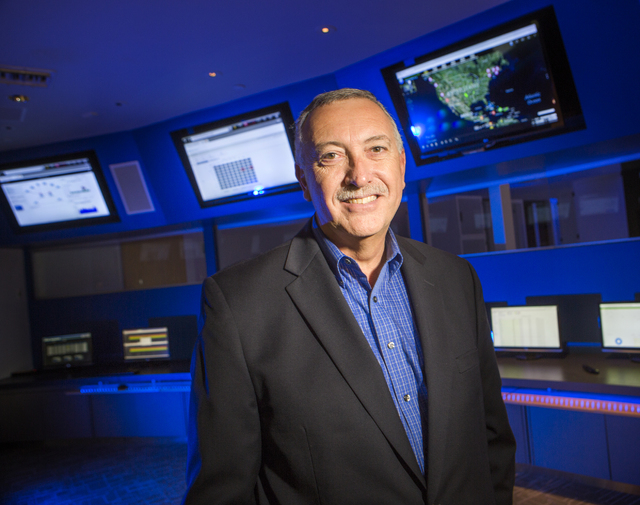
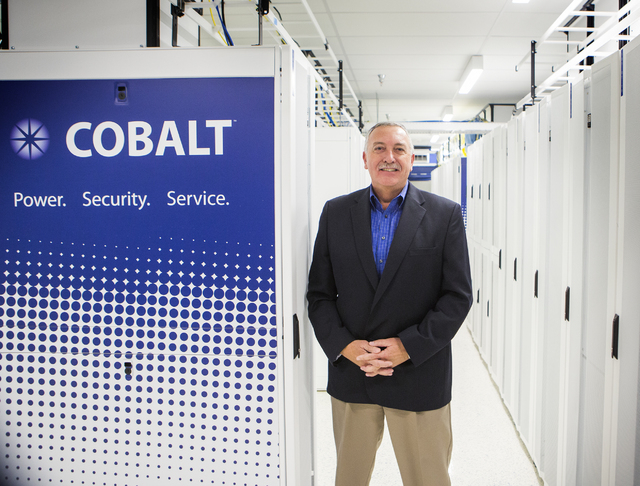
Stimmel, 61, a Las Vegas resident of 21 years, is now vice president of operations for Cobalt Data Centers, a provider of data center and colocation services. The company has seven employees.
“I loved my time in the Navy,” Stimmel said. “At first I didn’t expect to stay longer than my commitment, and within a couple years I couldn’t imagine leaving. I can honestly say the Navy made me who I am today. The Navy gave me the discipline, the attention to process and details, and the motivation I needed to build a career. I remember how disappointed I was that I had to leave the Navy. I didn’t realize yet that it had already given me everything required for success.”
Question: Why did you choose the Navy?
Answer: I had always been attracted to the Navy for some different reason. I always liked ships. As I grew up, one of the things that my grandfather would watch on TV was John Wayne movies and particularly the Navy movies. It grew on me. I looked at the Army for five seconds. I looked at the Marine Corps for two seconds. It was either going to be Air Force, Navy or even possibly the Coast Guard. I thought if I am going to serve my country, I’m going to go where I want to go and that’s in the Navy.
Question: You weren’t close to going to Vietnam?
Answer: I was a cryptologic technician in the Navy. The closest I got to Vietnam was my first duty station, which was Japan.
Question: What did you do when you had to leave the Navy because of a serious knee injuries that required two knee replacements?
Answer: I started in on the commercial side by being a telecom manager for a company in Cleveland and then a few years later moved over to the provider side and working for MCI Telecommunications. I have been that role ever since. I have been in this industry for 42 years.
Question: What jobs did you have in the industry?
Answer: I have had sales engineering jobs. I have had sales management jobs. I have had branch management responsibilities all the way up to now being vice president of operations.
Question: How did you end up with Cobalt?
Answer: In August in 2013, the company I was with (CoreLink Data Centers) ended up selling the company. After that, they did not want to keep any of the executive management, so I took a couple of months off. I hooked up with the Jeff Brown who is the CEO of Cobalt Data Centers, and we started chatting and I decided after three months, if this is what retirement looks like, I don’t want any part of it. I was bored to death and wanted to keep on working. I joined Cobalt Data Centers on 11-12-13.
Question: What does your company do?
Answer: We are a multi-tenant co-location data center company. Whoever sits down in front of their computer or has a hand-held device and they try to access the Internet, their search for information goes to a server somewhere out there in a data center. What we provide is the space for that company’s server – the power, the cooling and security that goes along with all that and customer amenities that we provide.
Question: How many facilities do you have?
Answer: This is the only facility we have. Cobalt was founded in 2011. The data center was built in 2012 and the facility opened for business in early 2013. The facility is 34,400 square feet. We have about 10,000 to 15,000 of that built out currently and we will be adding another 18,000 square feet in 2015.
Question: Where are they from and can you say who they are?
Answer: They are from all over. We have companies in here from the Caribbean, companies from the East Coast and companies from California. We try to keep the names of our customers confidential. A lot of time, they don’t want us to talk about who is here. We support that and will hold true to that.
Question: You say there’s about 10 big data centers in Nevada and a fast-growing industry. Why is that?
Answer: The weather is very attractive. Not only is it a great destination for people, but it’s a very friendly business environment. It also has this aura of a low-risk area for any natural disasters. Let’s say they have a corporate location back in Syracuse, New York, where they’re having a lot of snow right now. If their data center lost power and they could not turn their generations on but they had a disaster recovery location on the West Coast, they could still be operation. It wouldn’t affect their business.
Question: What is the biggest challenge the industry is facing?
Answer: I think that as we continue the emphasis on being very conservative on natural resources is going to play a big role in the data center business. They have been labeled as energy hogs in the industry, but I think as an industry we are starting to make major changes in how we operate and how we design our facilities to ensure that we are very eco-friendly. We have done that. We employ systems here that we use (air) economization, which means seven to eight months out of the year we can use outside air to cool our facility and we don’t have to use a lot of the capacity that we have from Nevada Energy.
Question: Looking back today, your background in the Navy has really helped you in your career?
Answer: I guess I was at the right place at the right time. Back in 1973-74 after I had finished my initial training for the cryptology classes and the Navy was just producing a new computer system for sending information to the various units around the world and specifically getting timely information back to the Pentagon, I was one who was sent to be trained on this new computerized system. They sent me to San Angelo Air Force base in Texas to go through the school. This is all prior to what we know of today as the World Wide Web.


