Questions abound over cancer center funds, future
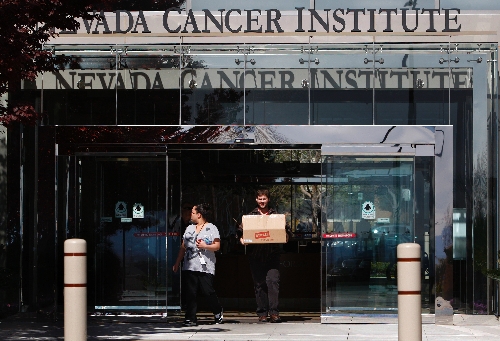


University of California San Diego Health System's stance that it will keep the Nevada Cancer Institute open, although at least partly contradicted by one of its top officials, raises questions about a critical financial condition that was part of the ownership change in January.
UCSD agreed to buy the institute out of bankruptcy for $18 million only if the Nevada Cancer Institute Foundation, now a separate fundraising arm, pledged to raise $20.8 million for UCSD over five years. The school also insisted on a hard-money backstop, which the foundation provided by rewriting the terms of a $15 million grant from the Engelstad Foundation originally designated for lung cancer research.
"UCSD was not willing to proceed (with the transaction) without this philanthropic commitment," according to U.S. Bankruptcy Court documents outlining the deal.
UCSD officials declined to state whether they consider the pledge and the backstop still in force, even though the current clinical practice will largely end on Dec. 31.
"Until we complete negotiations with (Comprehensive Cancer Centers of Nevada), we will not have further comment to offer," wrote spokeswoman Jacqueline Carr in an email.
As spelled out in an Oct. 1 statement, the University of California San Diego Health System is talking about leasing 42,000 square feet of the 142,000-square-foot flagship building at 1 Breakthrough Way in Summerlin to Comprehensive, although a deal is not done.
This would also involve transferring an unspecified number of institute patients and possibly some of the medical staff to Comprehensive Cancer Centers. UCSD officials have expressed the desire to sign other physician practices as tenants.
The agreement governing the fundraising pledge terminates the foundation's obligations if the University of California San Diego Health System "lease(s) to an unrelated third party all or any substantial part of the acquired assets," including the flagship building. However, this would only kick in if UCSD moves without prior written consent, "which consent will not be unreasonably withheld."
Nevada Cancer Institute Foundation officials declined to comment until more details fall into place. But if the pledge remains in place, it holds out the prospect of raising money for the for-profit Comprehensive Cancer Centers, part of US Oncology.
Throughout its decadelong existence, the cancer institute has conducted patient care and research as a nonprofit entity.
UCSD said the Comprehensive Cancer Centers proposal would expand care by bringing clinical trials to it an other potential building tenants as well as making available services such as genomic sequencing and referral ties for treatments such as bone marrow transplants not currently available locally.
In a Nov. 15 statement, UCSD called this a "new model of care" that would be instituted "without disruption to our patients" but "impact administrative staffing."
"Simply stated, UCSD does not plan to close the Nevada Cancer Institute," the statement read.
Interviewed on KNPR the same day, Dr. Thomas McAfee, dean of clinical affairs for UCSD Health Sciences, described the change as "not a termination of our goals. It's an evolution." However, he added later, "We are not going to close the institute until we have a transition plan for each patient fully developed."
He also acknowledged that the Dec. 31 employment termination announced to the institute staff on Nov. 5 would extend beyond administrators to the medical staff as well. Some people will stay on past that date to handle unfinished matters.
Contact reporter Tim O'Reiley at
toreiley@reviewjournal.com or 702-387-5290..