Proper lighting needs a good plan



Walking through my neighborhood I spot the odd house here and there still clinging to the holiday season with Christmas lights in full array. It's probably because these homeowners have put so much planning, time and effort into their lighting scheme that the thought of dismantling and storing it all is just too much to bear.
From a designer's point of view, I wish that people would attach the same importance to the lighting plan within their home - or at least have some kind of a lighting plan. Unfortunately, too many don't. What a difference it would make in their lives once they understood that proper lighting really goes far beyond just being functional.
The first thing to consider when planning lighting for a room is the room's function. Along with function is the mood you want to create as well as the harmony of the different elements that go into the design of your space. It's function, mood and harmony that really apply to any aspect of interior design, whether you're dealing with an entire room or only a part of it, such as the lighting.
What this means is that there's really so much more to plan for than just having enough light so that you don't trip over the furniture. There's a method to correctly lighting a room so that people will only notice that it feels right and comfortable. Generally speaking, the most successful room design is one that is balanced with elements that are much the same - and yet somewhat different - so that no one particular item jumps out at you and calls attention to itself. This same principle applies to lighting.
If it's done the right way, lighting is really somewhat invisible. It's there to do its job for task or ambient (general) lighting. We probably notice lighting in a room only when it is either too bright or too dark, but never, if it's just right.
You don't have to spend tons of money to make a room look great. And you don't have to be an expert on lighting to accomplish this. What you do need to know are the basics of functional and decorative lighting.
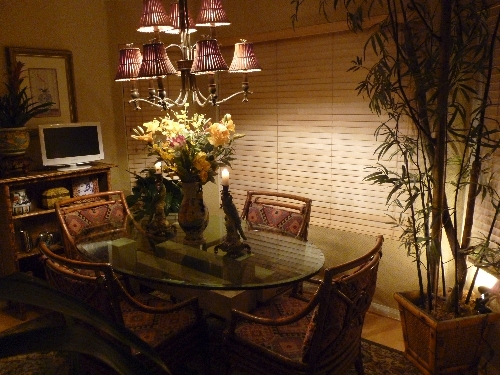
Lighting design is broken into three kinds of illumination: general, task and accent lighting. The best results will be achieved when you mix all three . Atmosphere is actually created by combining different types of light, such as direct light for reading, accent light for pictures or artwork and occasional lighting that helps create relaxing areas within a room.
Just the level of illumination will influence the mood of a room. A brightly lit room will project a positive, upbeat mood. A darker one is more intimate and romantic. It's a big mistake to just have one or the other extreme in your home. A successful lighting plan will always have variation in light levels because it needs to consider what, where and when activities in a room take place. In other words, don't use the same light for a dinner party as you would for washing the floor.
Dimmers remain an extremely effective tool for fine tuning the level of brightness in a room. They will add versatility to any light fixture and help conserve energy and extend bulb life. It is one of the top inexpensive interior design lighting tips that I can give you.
Be creative and mix it up , keeping in mind that all the lighting must, and should, work together. For example, you could place a floor lamp on either side of a sofa, but it would be much better to use a wall sconce and a desk lamp somewhere across the room. They'll all work together, provided they harmonize with the rest of the furnishings.
Accents of light in a specific part of a room with no functional purpose at all - other than the addition of a dramatic touch - are a key ingredient of a good lighting plan. Halogen makes the best accent light because of its intensity and brilliance. An example would be an uplight on a tree in a corner of a room, which creates an interesting interplay of lights and shadows. Try to use a bulb that is no more than three times as bright as the surrounding ambient lighting. On the other hand, task or work lighting should be three times as bright as general lighting.
Using a triangle pattern when lighting a space is another helpful hint. Also, overly bright task lighting will not make up for a dimly lit room. It's much better to increase the wattage of light bulbs in the other fixtures or increase the number of fixtures being used.
A room with dark, matte-painted walls and dark furnishings and carpet will need to have additional light to create a well-lit space; whereas a room with high-gloss, light-colored paint will require less light to illuminate the same space because of its reflective properties.
Lighting fixtures themselves can express a mood . Some are traditional and some contemporary. Some are over the top and ornate and some are starkly simple in appearance. Just as with your furniture, the style of the lighting fixtures should work in tandem and be suitable in the mood they create to the rest of your space. Do not put a lava lamp in a traditional style room.
Use light to enhance your home and your life. Imagine what our lives would be without it. Be aware of its vital importance to your decorating plans, how important it is to achieve the correct lighting levels for tasks that you want to do and for creating the right mood in a certain area. It can absolutely make the difference between a boring room and one that's alive with creativity and beauty.
Stephen Leon is a licensed interior designer and president of Soleil Design; he has been designing and manufacturing custom furniture and cabinetry for more than 25 years. He is president-elect of the Central California/Nevada Chapter of the American Society of Interior Designers and is a certified professional in green residential design. Questions can be sent to soleildesign@cox.net.