Pruning, landscaping classes on tap

I have classes scheduled Saturday at the University of Nevada Cooperative Extension Master Gardener Orchard in North Las Vegas and Sunday at Plant World Nursery.
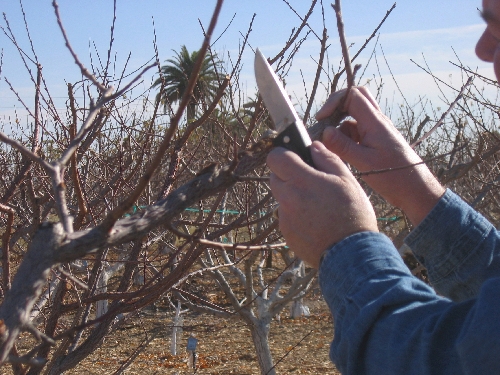
Saturday morning I will teach how to prune apples, pears and quince from 9 a.m. to noon. Sunday afternoon my eight-week class on landscape design, formerly Landscape Design with the Desert in Mind, starts at 2:30 p.m. I will coach you through design principles aimed at saving both water and energy and you will finish with a completed design. There is a cost for this series of classes. Class size is limited but there is still some room left.
From noon to 2 p.m. at Plant World I will be speaking on what to do with your fruit trees during the month of January. This will include all of the fruit trees we grow at the orchard.
You can sign up for any of my classes at eventbrite.com or email me at extremehort@aol.com for more information.
In January fruit trees should be pruned, dormant oil should be applied on a nice warm day, and a fertilizer application is in line before the second or third week of the month. You also should apply iron chelate as well.
A real good time to check for borers is right after a rain. I like to dig out any borer damage at this time of year so the insect will not have a hiding place when it emerges this summer.
Hold off on your grape pruning until late February. There will be a class on grape pruning at the orchard in mid-February.
There is plenty of wood mulch at the orchard. It is free to the public if you load it yourself. There also will be fruit wood available for smoking and grilling.
Q: How do I get my Christmas cactus to bloom? I was given a 9-inch pot back in November, kept it indoors and gave it plenty of light, only to find out that it's supposed to be in the dark for 14 hours a day. I started that three weeks ago, been watering once a week, gave it cacti food twice, but there have been no blooms.
A: The Christmas cactus is a true cactus and nearly identical to the Thanksgiving cactus. These cacti bloom at slightly different times and they get the names Christmas and Thanksgiving cactus because of their bloom times.
The amount of light (actually it's amount of darkness) will typically get them to bloom, if all the light they receive is natural daylight. It's when they receive extra light inside the home that breaks this rhythm of flowering and causes them not to flower.
These cacti bloom when we get a minimum of 12 hours of darkness. If they are growing inside, they need to be covered so they receive no light from artificial sources. Once covered, they will bloom for six weeks if they remain covered religiously. They also respond to cool temperatures. Placing them in a colder location in the dark will help them bloom.
Christmas cactus is an epiphytic cactus, which means it does not grow in the soil in the wild but on the surface of other plants such as trees. We can, however, put them in containers and grow them with soils amended with lots of compost, similar to what they would find growing on the surface of a limb in the tropics. This is much like orchids and bromeliads.
These cacti can be grown outside here on the northern or eastern exposure in a well-amended soil or in containers, but you must bring them in if there is any chance of freezing temperatures.
Q: My helpful husband gave me a 6-foot-by-6-foot greenhouse for Christmas and I'm wondering what in the world I can do with it here in Las Vegas. I am thinking that I can get a head start on growing seedlings and things like that, but during the summer months it will probably be a storage area since it's so hot here. I have it located on concrete on the southwest side of my house and, unfortunately, there is no other place for it. Also, maybe I can extend the season into winter months? Any information would be great.
A: That was very thoughtful of your husband. As you have probably already figured out, greenhouses can be tough to manage in our climate, but it can be done. You have one thing going for you. You have a greenhouse. What you don't have going for you is that size and its location.
Small greenhouses are difficult to manage in this climate because they heat up so rapidly. By modifying your greenhouse you may only have to shut it down for two or three months during the summer.
Generally speaking, in hot climates with lots of sunshine tall greenhouses are better than short greenhouses. Anything you can do to make the greenhouse taller is a good thing. Heat accumulates toward the top of the greenhouse. As the heat builds, it puts heat on the crops growing lower. The taller the greenhouse, the easier it is to keep the heat off of the plants.
That southwest exposure also is tough in the summer but would be nice in the winter. During the summer the sun is nearly overhead and in the winter it is at a low enough angle that it mostly comes in through the side walls. You might want to consider orienting your greenhouse so that the door is on the east or north side.
Next, I would put some shade cloth on the roof or paint the roof with white latex paint to reduce your solar load. There is some bamboo fencing that is quite reasonable that you might consider placing over the roof to create some shade during the summer months. These are all options. These should be done on the outside of the roof .
I would probably look at the bamboo fencing first since you can adjust it by putting more or less of it on the roof.
If it's possible, you might consider putting a couple of vents in the roof that you can open or that will automatically open for you if there is too much heat in the greenhouse. This will help reduce the heat load somewhat, though it will not cure the problem.
You also might consider a small swamp cooler that draws in air from the outside. Put it on the cooler north or east side if possible.
It also is important that the greenhouse is not sitting in a rock landscape. If it is surrounded by rock, it will compound your problem. The most you will be able to drop the temperature from that little swamp cooler is going to be about 20 degrees from the outside air temperature.
Another way to drop the temperature is to replace one wall with or build into the wall a pad system similar to commercial greenhouses. This uses recirculating water just like a swamp cooler . On the opposing wall is a fan that pulls air through the wet pad cooling the inside of the house. If the pad is 4-6 inches thick, it could cool the house significantly provided you reduce sunlight entering through the roof.
Bob Morris is a horticulture expert living in Las Vegas. Visit his blog at xtremehorticulture.blogspot.com.