



Abandoned mines censured in report
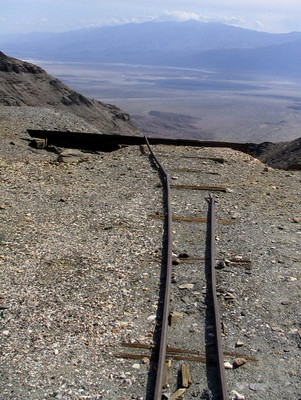
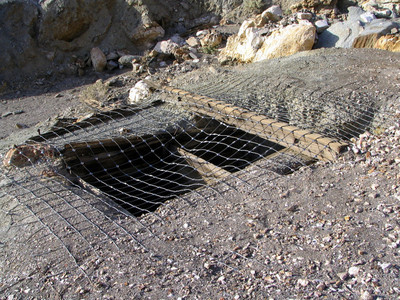


WASHINGTON -- The government has endangered the public's health and safety by failing to clean up abandoned mines on federal land in the West, according to a scathing audit released Friday.
The Interior Department's inspector general found dangerous levels of arsenic, lead and mercury, along with gaping cavities, at dilapidated hard-rock mining sites easily accessible to visitors and residents.
Bureau of Land Management supervisors told staff to ignore the problems, and employees who tried to report contaminated sites were threatened with retaliation, the audit said.
At least 12 people were killed in accidents at abandoned mine sites between 2004 and 2007, and "the potential for more deaths and injuries are ominous," it said.
The mines are mostly in California, Nevada and Arizona. The California Department of Conservation estimates there are about 47,000 abandoned mines in California. Other surveys have estimated about 500,000 such sites nationwide, where gold, silver, copper, lead and other minerals were mined, often decades ago.
The Nevada Division of Minerals runs the Abandoned Mine Lands Program to address the dangerous -- and numerous -- remnants of the state's prospecting past.
Nevada is home to about 200,000 abandoned mine openings, 50,000 of which are hazardous, state officials have estimated.
Environmentalists have estimated cleanup costs as high as $72 billion. But the inspector general's audit noted that simple precautions could be taken, such as fences and warning signs. So far, the audit indicates, the Bureau of Land Management has hardly been up to the job.
"BLM's abandoned mines program has long been undermined, neglected and marginalized by poor management practices and insufficient staffing and resources," said the report.
In response, BLM issued a statement defending its abandoned mine program as "highly effective." The statement did not address specific circumstances raised in the audit.
"The BLM has an active program in place to identify and address (abandoned mine land) hazards on its lands," said spokesman Matt Spangler. "The agency worked closely with the IG audit team over the last year in examining the abandoned mine site challenges that it faces. The BLM accepts the IG's recommendations and will work diligently to implement them."
BLM is part of the Interior Department and administers 258 million acres of public land primarily in 12 Western states. The majority of abandoned mine sites within Interior Department jurisdiction are on BLM land.
Last year, 13-year-old Rikki Howard died and her younger sister was injured after they accidentally drove their all-terrain vehicle into an open 125-foot mine shaft near BLM's Windy Point Recreation Area in Kingman, Ariz.
The mine shaft is on a small piece of private property surrounded by BLM land. Only after the accident, BLM provided a fence and warning signs for the site. Yet when auditors visited the area, they found two other deep mine shafts nearby, one unfenced and one only partially fenced, and with no warning signs.
One official told auditors that fencing a site could lead to BLM liability, because it was an acknowledgment that BLM knew about the site. An employee was told not to identify abandoned mine sites because it got in the way of other duties. Several employees reported management threats against their careers for raising abandoned mine issues.
"The findings of this audit paint a picture of compelling urgency, which should trigger a quick call to action by both the department and Congress," the audit concluded.
Congressional action may not be fast to come.
Lawmakers have failed to rewrite the General Mining Law of 1872, which was meant to allow prospectors stake claims and mine gold, silver and other minerals for free. The law has negligible cleanup requirements and is essentially unchanged.
Last year the House passed a reform bill to create an abandoned mine cleanup fund and force mining companies to pay royalties, like coal and other extraction industries already do. But efforts have stalled in the Senate. The main obstacle is Senate Majority Leader Harry Reid, D-Nev., a gold miner's son who has long protected the gold-mining industry in his state.
Reid has said he opposes the House bill, and though legislation has been introduced in the Senate by Sen. Dianne Feinstein, D-Calif., it has not advanced.
"Sen. Reid has been an advocate for responsible mining law reform and will continue to be," Reid's spokesman, Jon Summers, said Friday.
House Natural Resources Committee Chairman Nick Rahall, D-W.Va., said the audit "underscores the need to pass meaningful reform of the law before additional tragedies occur."
The Review-Journal contributed to this report.


