



Added Medicaid cuts raise concerns
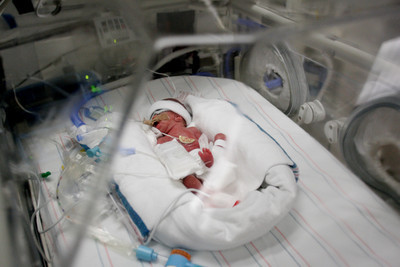


The medical services lost at University Medical Center in order to offset an $8 million Medicaid shortfall might seem relatively modest come January when Nevada Medicaid will cut what it reimburses hospitals for inpatient services by 14 percent.
That's nearly three times the 5 percent cut that resulted in this week's elimination of numerous services, including outpatient oncology and kidney dialysis programs. Once the new cuts go into effect, UMC's $8 million loss will swell to about $20 million this fiscal year, Brian Brannman, the hospital's chief operating officer said during a forum Thursday to discuss options for keeping the hospital's oncology services.
News of this latest wave of Medicaid cuts to offset the state's continual budget hemorrhages has nearly all hospital officials screaming for mercy.
"We're witnessing the unwinding of a very thin safety net,'' said Larry Matheis, executive director of the Nevada State Medical Association. "The cuts in Medicaid payments for children, pregnant women and hospitals are just the start of what is going to become a serious crisis of access to care for our most frail and sick. The costs to the state are going to be greater than the savings; it's just a matter of the costs showing up a little later.''
And because Nevada's Medicaid program receives matching funds from the federal government, Matheis said, the state loses an additional dollar for every dollar that's cut from the program.
The additional Medicaid cuts could lead to closures of some rural hospitals, delays in care to the sick, emergency room overcrowding and the elimination or reduction in services at for-profit hospitals, said Bill Welch, executive director of the Nevada Hospital Association.
"If we thought the hospital wait times a few years ago were bad, we haven't seen anything yet,'' said Welch, referring to a period in 2004 when a state of emergency was declared in Clark County because of emergency room overcrowding. At that time, one of every three emergency beds was being occupied by someone suffering from a mental illness.
This new crisis would see these beds occupied by patients suffering from chronic illnesses. For example, a patient with a kidney-related illness might be admitted because he didn't have access to dialysis, or patients whose cancer has metastasized will be showing up in the emergency room.
If that happens, Welch said Nevada's sickest and frailest citizens who depend on public support will die early while the costs of health care will shift to the taxpayer -- those with jobs and private health insurance. Taxpayers might face higher taxes as counties try to offset losses at public hospitals like UMC, he said.
Hospitals in Nevada with more than 100 beds provided a combined $533 million in uncompensated care last year, Welch said. Most of that care was provided in Southern Nevada.
Welch said only 34 percent of Nevadans are able to pay for provided medical care services. The other 66 percent cannot, he said.
"The emergency room, regardless of whether it is an emergency or not, will become the safety net for health care in this state if people have no other place to go,'' he said. Hospitals have also been advised that unless there's a fix to the state's cash flow problem, Medicaid reimbursements might stop altogether by mid-March or early April until the next fiscal year, Welch said.
Chuck Duarte, administrator of the Health Financing and Policy Division, said the division is expected to cut Medicaid reimbursements for inpatient hospital services by 10 percent in the 2010 fiscal year. But, that could all change depending on the state's budget.
The Health Financing and Policy Division manages Nevada Medicaid and Nevada Checkup programs.
"I know of hospitals right now in our rural communities that if those payments stop, those hospitals can't make payroll. ... This is reality.''
Earlier this year the state's Department of Health and Human Services announced 5 percent "across the board" cuts for inpatient hospital services to offset the state's budget deficiencies. Because the 5 percent is an average, some services saw deeper cuts.
For example, reimbursements for care provided in Level III neonatal intensive care units were cut by 24 percent. Obstetrics was cut by 11 percent, officials said.
Nevada Medicaid also reduced rates for home-based, long-term care services and eliminated eyeglasses as a covered benefit for adults.
Medicaid reimbursements in some pediatric sub-specialties such as heart, orthopedic, kidney, cancer and psychiatric, were cut by up to 41 percent.
Some specialists, including nearly all pediatric orthopedic surgeons, have dropped Medicaid patients as a result, officials say.
Though not directly pointing fingers at Nevada's leaders -- similar cuts are occurring throughout the nation -- both Welch and Matheis say the community should have had more involvement in the decision-making process.
"This wasn't well thought out,'' Matheis said. "It is very questionable to make children and pregnant women bear the burden of the state's financial troubles. Those decisions have put public hospitals, such as UMC, at considerable risk of not being able to perform its mission.
"If it (UMC) cannot be the safety net then people with cancer, children with special needs and women in need of prenatal care won't have a place to go. UMC is the last stop, otherwise it's an awfully long fall to a very hard surface.''
Some health care providers agree with Welch and Matheis.
In letters sent to the state's Division of Health Care Financing and Policy in early October, several pediatric surgeons asked the state to reconsider the cuts.
In his letter, Dr. Mark Barry, a Las Vegas pediatric orthopedic surgeon, said he was troubled that he was not informed of the 41 percent reimbursement cut ahead of time "and did not get the chance to voice" an opinion.
"I'm hearing from pediatric specialists who are finding it very hard to get doctors in Southern California to accept Nevada Medicaid patients. They can't afford to treat them,'' Matheis said. "We've got children who need follow-up for transplants, children who need orthopedic surgery. Kids fall down and break things and they're not going to stop that just because the state can't afford to treat them.''
Dr. John Nowins, president of the Clark County OB/GYN Society, says he cannot comprehend why the state would cut Nevada Medicaid, which he said is already grossly underfunded.
In its own budget presentation to the state's Legislative Committee on Health Care in January, the state's Department of Health and Human Services mentions that it is last in the nation in per capita spending for Medicaid. According to the report, which is based on 2005 figures, Nevada spends $490.26 per person versus the national average of $1,027.
Nevada also ranks at the bottom for enrolling individuals into Medicaid and has historically provided the least amount of coverage to pregnant women, Nowins said.
Because of the number of uninsured in Nevada, coupled with a rise in unemployment and housing foreclosures, and the nation's overall economy, Welch and Matheis say it is imperative the community is involved in future budget reduction discussions.
Not all cuts have the same impact and some hurt far worse than others, Matheis said.
"We all need to sit down at the time and have a discussion about some real solutions, not just go cut,'' he said.
On Friday about 60 local and state health officials, community advocates, elected officials and stakeholders took a stab at some short-term solutions for salvaging UMC's outpatient oncology services, one of seven programs to be cut at the hospital.
One short-term solution came from Nevada's oldest and largest oncology group -- Comprehensive Cancer Center of Nevada.
James Kilber, the for-profit oncology group's executive officer, offered the services of its physicians at no cost to UMC as long as the state would be willing to pay for cancer drugs.
Health officials have said the most expensive part of cancer care is the drugs, which can cost up to $12,000 per dose.
"We're willing to step forward immediately,'' he said. "And we challenge every oncology group in this community to join us.''
Clark County Commissioner Lawrence Weekly, who attended the two-hour forum, called the gesture a good first step. Another step would be to "take to the streets" and encourage the community to support UMC's oncology outpatient clinic.
Weekly said it costs $2 million a year to keep UMC's outpatient oncology clinic's doors open.
"I'm not trying to compare this crisis to that of 9/11 but I just remember when we faced that ordeal and how our economy was threatened. Everybody got together and we raised millions for families that were impacted,'' he said. "This would just be a short-term solution but at least if we raised funds we could possibly help keep UMC's outpatient unit open while our legislators figure out this budget crisis.''
Another meeting will take place next week to further discuss solutions, Weekly said.
Contact reporter Annette Wells at awells @reviewjournal.com or 702-383-0283.


