



Bar may face fight over lawyer ads

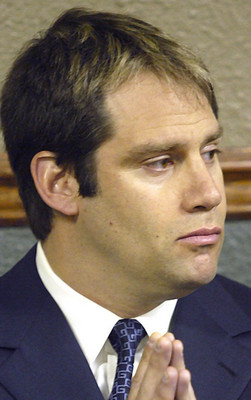


CARSON CITY -- Las Vegas personal injury lawyer Glen Lerner figures he would not be the "heavy hitter" he likes to portray in television ads if he were afraid to take on a fight.
Consequently, he vows to refuse to comply with new state Supreme Court regulations that require lawyers to submit their TV and print advertising to State Bar of Nevada committees for review.
The regulations went into effect Sept. 1, and lawyers must submit their current advertisements to the State Bar by Sept. 17.
"They might try to make me comply, but I will fight them if they do," Lerner said. "If they tell me I have to, then I guess we will end up in court. I am a Boston boy, and I don't care if I ruffle feathers."
Lerner contends too many uptight Nevada lawyers resent people like him and Carson City's Joe Laub, who have built lucrative personal injury businesses through colorful advertising. Critical lawyers behave like "bluebloods" and consider advertising a disgrace to "The Law," Lerner said.
Some of those bluebloods will take seats on the State Bar's ad review committees and find fault with his ads simply because they hate him, Lerner said.
"I am not going to turn my ads over to my competitors," said Lerner, who through advertising has been able to open offices in several states. "How am I going to get a fair shake with them? If people don't like my ads, then don't come to me for legal help."
Lerner has an ally in Allen Lichtenstein, counsel for the American Civil Liberties Union of Nevada.
"This is clearly prior restraint on advertising, regardless of how they have framed it," Lichtenstein said. "It's a censorship board. No one is saying false and misleading advertising should not be punished. But what every individual finds objectionable is subjective."
Deputy State Bar Counsel David Clark doesn't buy their objections. He contends the new regulations only require the ad committees to review ads and then make recommendations to State Bar Counsel Rob Bare on whether they are false or misleading.
The Bar counsel and his staff then will conduct their own reviews of the ads, hold hearings if necessary and determine whether discipline should be brought against the lawyer.
That is the current disciplinary process, and it has not changed with the advent of the ad review committees, Clark said.
"The ad committees don't have the authority to pull an ad. They just review them and make a recommendation to the Bar counsel."
Clark said the Bar counsel and staff have yet to decide what they should do with lawyers who refuse to submit their ads to the review committees.
Ad review committees were needed because the State Bar had been learning of questionable ads only if it received complaints or if staff lawyers saw the ads themselves, he said.
"Now we have a mechanism so everybody has to play by the rules. You have to give us a copy of the ad."
Today's lawyers not only advertise on TV, but in many types of publications, including foreign language newspapers, Clark said. It is easy to miss some of them, he said.
"One of the complaints about past enforcement was it was spotty," Clark said. "Now we can eyeball every ad. We are four lawyers and five para- legals. In the past, if a billboard violated the rules, the chances were nothing happened unless it was along the path I take to work."
The new rules on lawyer advertising, issued by the court in April, require lawyers to submit their ads to the State Bar for review either 15 days before or after publication or broadcast.
If an ad is deemed to be inaccurate or misleading, the lawyer can be disciplined if the ad is not pulled following the Bar counsel's formal disciplinary process.
Clark said the discipline can be everything from a private or public reprimand to a suspension or disbarment.
The most severe disciplinary action he can recall being brought against a lawyer was a six-month suspension.
In some cases, the state Supreme Court must review and approve discipline brought against lawyers.
Under one advertising rule which was not changed, an attorney cannot make "false or misleading communication" about his abilities and services in an advertisement.
Any statements in which the lawyer hypes his ability are "subject to proof of verification."
But in announcing the new rules, state Supreme Court Justice James Hardesty emphasized the court no longer would be regulating taste in lawyer ads.
"Taste is something we cannot govern without infringing on First Amendment rights," he said. "So restrictions on taste will be eliminated, but the new rules will make sure the content is not false or misleading."
The new rules specify lawyers cannot make claims that create an unjustified expectation about the outcome of a case.
If the lawyer mentions the fees he charges in an advertisement, he also must disclose how long those fees will remain in effect.
Clark said that regulation is important because too often ads would mention a specific contingency fee, such as 33 percent of what's recovered for a client, yet would not state the fee would be higher if the lawyer handled the case for more than a certain period of time, or if the case ended up in court.
Now if a contingency fee is mentioned, then the lawyer must include a disclaimer that opposing lawyers might have to be paid "in the event of a loss."
Clark says submitting ads to the committees represents prior restraint on free speech.
He pointed out that the ads can appear for 15 days before the lawyer even has to give copies to the State Bar.
Lichtenstein maintains that still is a form of "near prior restraint."
If the State Bar or competing lawyers think there is something false or objectionable about a lawyer's ad, Lichtenstein said, then they should file lawsuits, go to court and have a judge pull them.
"This is the only situation I know of where you have to get a stamp of approval immediately after advertising," Lichtenstein said. "It was like this with motion pictures at one time."
Clark noted the new regulations also allow lawyers to submit advertisements in advance of publication or broadcast, for a $250 fee.
If the ad committee then recommends that the ads are not false or misleading, the lawyer cannot subsequently be disciplined by the Bar counsel for running the advertisements, Clark said.
He noted Lerner challenged the State Bar last year in federal court when it moved to challenge one of his ads.
Under a pending agreement, the State Bar would not try to discipline Lerner under the old ad regulations if he will follow the new advertisement rules.
Lerner remains defiant. He insists he will not submit his ads to the review committees.
"They can't regulate free speech," he said.


