Commissioners to consider change to ethics policy
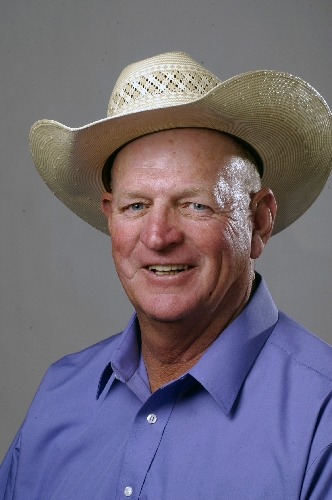




It's been dubbed by some Clark County officials as the "Collins Amendment."
As in Commissioner Tom Collins.
It's a change the Clark County Commission will consider to its ethics policy Tuesday in what seems to be a reaction to Collins' recent lobbying conflict over a $600 million bus contract. No action will be taken Tuesday.
The tweak is simple: Commissioners aren't supposed to act as paid consultants or lobbyists for people or businesses that deal with state and local government.
Collins engaged in a monthlong consulting and lobbying relationship with Veolia Transportation, a company bidding on a seven-year fixed bus route contract. Collins since has quit that position, but he still runs a consulting company. Veolia and First Transit are in court over the contract after the Regional Transportation Commission split their votes between the bus operators.
Commissioner Chris Giunchigliani, who requested the policy change, stopped short of calling her actions a direct response to her colleague's relationship with Veolia, although some county officials said otherwise.
According to the most recent financial disclosure documents submitted to the secretary of state, there are no other commissioners who engage in consulting work or lobbying practices.
"What Tom did was not illegal in any shape or form, but sometimes you need to step back and say, 'I thought we covered this, but let's make sure we did,' " Giunchigliani said.
She said, "While it was absolutely within his rights, sometimes you don't just do things because you can."
Collins said last month he saw nothing wrong about working for Veolia, which he said approached him.
"I think I am staying on an ethical path," Collins said at the time.
On Tuesday, Collins was in London on business with the Las Vegas Convention and Visitors Authority and could not be reached for comment. He was made aware of the agenda item, according to a Nov. 2 email to the County Commission and county staff provided to the Review-Journal.
This isn't the first time Collins' ethics have been questioned. In 2010, the commissioner was a registered lobbyist for Tuffy Ranch LLC, which, according to the secretary of state's website, is run by a group managed by Harvey Whittemore, developer of the master-planned Coyote Springs development straddling Clark and Lincoln counties on U.S. Highway 93. Collins also serves on the board of the Southern Nevada Water Authority, which had dealt with Whittemore and water rights on the project.
David Damore, a political science professor at the University of Nevada, Las Vegas, said the move to change the county policy by removing the conflict best serves the public's interest.
"This is a state built on conflict of interest," Damore said. "Citizen legislators and this notion that no one is a full-time politician, that means they're doing something else in their off time."
It's all about how they're perceived by the public, he added.
"It creates the perception problem that plays into the stereotypes of politicians," Damore said. "That they're self-serving and using their office for personal financial gain. It's the whole reason why people don't trust politicians. Even if what (Collins) is doing is legitimate, it creates a perception problem."
The city of Las Vegas established an outside employment policy in 2007, which prohibits all employees, including City Council members, from work that creates a conflict of interest or impairs the employee's judgment in performing official duties.
Commissioner Steve Sisolak said elected officials have to regulate themselves. Ethical policies don't do enough to penalize wrongdoers, he added.
"You don't get a job as a consultant with clients who appear in front of a governmental agency at all," he said. "I thought it was pretty darn clear. ... But we put this in there that you can't lobby, and now what? There's no fine and no discipline. That's why people are so cynical to the process. That's disappointing when the public loses confidence in an elected official."
Sisolak called on the state Ethics Commission to tighten sanctions on those who abuse their power in office.
"We won't come up with every single possible scenario until somebody finds a loophole and drives a truck through it," Sisolak said. "People get frustrated, and I understand it. There should be a bigger consequence when you knowingly do it, and when you're an elected official, you're knowingly doing it."
Contact reporter Kristi Jourdan at kjourdan@reviewjournal.com or 702-455-4519.