Litigation likely in soil cleanup
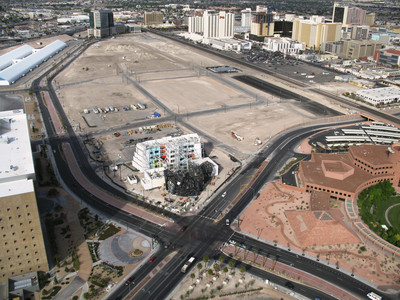





A disagreement about cleaning up polluted soil in a former rail yard downtown probably will go to court, but for now the city of Las Vegas and Union Pacific Railroad Co. have agreed to split some of the costs.
City officials want to proceed with construction at the newly rechristened Symphony Park, which until Wednesday was known as Union Park. To do so, soil contaminated with petroleum and other pollutants must be moved, and more bad soil probably will need to be dealt with as projects continue.
But Las Vegas and the railroad, the land's former owner, are at odds over who's responsible for cleanup costs, which could reach $30 million.
"This allows development to continue on schedule," said Bill Arent, acting director of the city's business development office.
The City Council agreed Wednesday to set aside $5 million as half of a pool of money to cover soil remediation costs. Union Pacific is to contribute another $5 million.
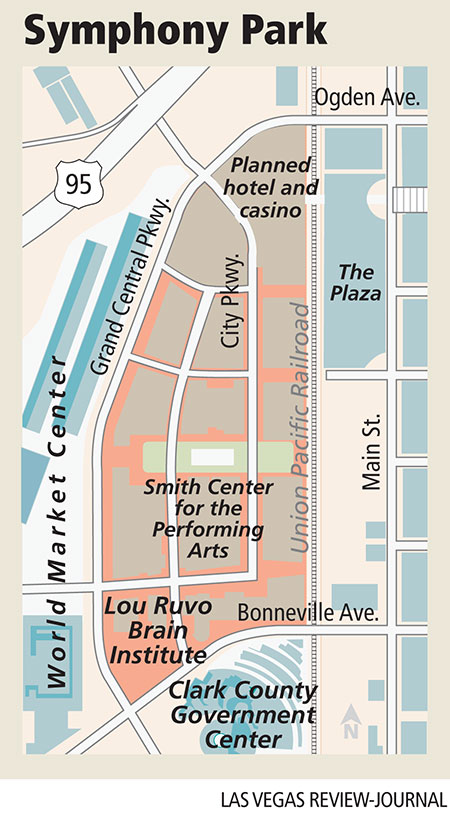
The funds will allow construction to proceed on the Smith Center for the Performing Arts later this month. The project is at the center of the 61-acre site on the west side of downtown.
"We're putting this in a position to move Union Park forward while the matter is litigated," Mayor Oscar Goodman said.
A Union Pacific spokeswoman did not respond to a request for comment.
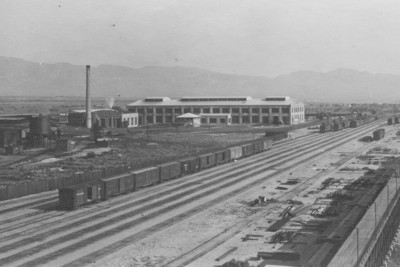
Symphony Park was once part of a much larger tract that was a switchyard and fueling station for trains for decades. The ground and groundwater became contaminated with petroleum products, lead and arsenic.
The state Division of Environmental Protection made the railroad clean up soil and groundwater starting in 1992, in part to prepare a site for the Clark County Government Center. The cleanup focused on the 61 acres that now belong to the city.
The agency signed off on the soil cleanup in 1998 and the groundwater in 2000. As work begins on Symphony Park, where plans call for medical research facilities, restaurants, hotels and homes in addition to the arts center, more cleanup might be needed.
"It was cleaned up to a certain standard, which qualified it to be used as commercial/industrial land," said Environmental Protection Division spokeswoman Jill Lufrano. "But if there are going to be homes, if someone is going to live there, it has to meet a higher standard because someone is going to be there 24 hours a day.
"NDEP was aware of the remaining contamination when we closed the work plan. The agreement that NDEP has with Union Pacific is whatever is left to clean up would be worked out between them and the (land's) purchaser," she said.
That's where the disagreement with the city comes in.
In 1996, Union Pacific sold the land to Nevada Stadium Partners Limited Partnership and attached a document stating that the partnership and any successive owners would reimburse the railroad for "excess remediation costs," according to city documents.
The city's position is that it did not accept that agreement when it acquired the property in 2000, and the city and the railroad disagree over whether the money spent so far on remediation and the money that will be spent qualify as "excess remediation costs."
Las Vegas spent about $575,000 to remediate soil for the Lou Ruvo Brain Institute site at the south end of Symphony Park.
Costs for all the soil work for the entire 61-acre parcel will be $20 million to $30 million, Arent said.
Contact reporter Alan Choate at achoate@reviewjournal.com or 702-229-6435.
Slideshow