



Mom says state law is on her side
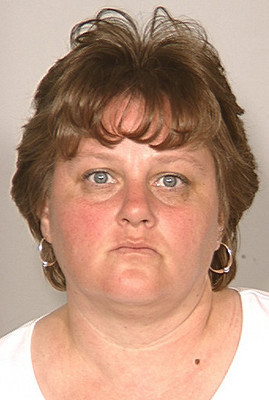


The mother accused of killing her 15-year-old son by withholding medical care is asking to have the murder charge against her dismissed because Nevada law gives her the right to make that decision, her attorney contends.
In court documents that cite the law, Deputy Public Defender Dan Silverstein argues that Lena Anderson, 40, didn't commit homicide by not giving her 15-year-old son, Patrick Atkins, lifesaving medical care for his deadly kidney disorder.
"Under our laws, refusing to submit to life-sustaining medical treatment is not murder," Silverstein said. "Patients and their families have the right to make those decisions for themselves."
Silverstein filed his request Monday to have the murder charge thrown out. Anderson is scheduled to appear in court May 12 for a preliminary hearing.
The law Silverstein cites is known as the Uniform Act on Rights of the Terminally Ill, or the "living will" law. It allows adults suffering from fatal illnesses to declare before they die that they don't want steps taken to keep them alive.
The law applies only to people age 18 and older and asks them to sign, in advance, a declaration declining medical treatment to prolong their lives.
This is slightly different from Anderson's case. She is charged with one count of murder by child abuse, based on allegations that she withheld medical care from her son, a minor. Authorities repeatedly warned her that not providing care would result in her son's death.
In addition, Patrick never signed a statement saying he wanted to die.
Patrick died Feb. 6 of acute renal failure, chronic renal insufficiency and congenital posterior urethral valves, according to the Clark County coroner's office.
Police arrested Anderson in April.
Clark County Child Protective Services had investigated Anderson in the past when accusations surfaced that she didn't take her son to doctor appointments or provide the correct medical supplies.
County prosecutor Vicki Monroe declined to comment Monday on Silverstein's request to drop the murder charge because she hadn't yet seen it.
Silverstein said Patrick wanted to end his life because of his illness.
The teenager had a chronic kidney disorder and was placed on multiple medications.
He used a catheter to drain fluids from his body, and it needed to be changed four times a day.
Patrick suffered so much from the illness that he decided to take his death into his own hands, Silverstein said.
"In this case, his wishes can be inferred by his inactions," Silverstein said. "He did not take that medicine. He did not use the catheters."
Silverstein said Anderson was capable of choosing whether to continue Patrick's treatment even if he wasn't.
"Even though it may not have been written down and even if they didn't inform the hospital, she knew him better than anybody. She knew what he would have wanted," he said.
Derek Humphry, president of the Euthanasia Research and Guidance Organization, a pro-euthanasia group based in Oregon, said Patrick's death sounded more like a case of death by neglect than euthanasia.
"Euthanasia means help with a good death," said Humphry, who had no direct knowledge of the case. "Neglect is not help."
Contact reporter David Kihara at dkihara@reviewjournal.com or 702-380-1039.


