



Plans for 70,000 at Burning Man draws little opposition
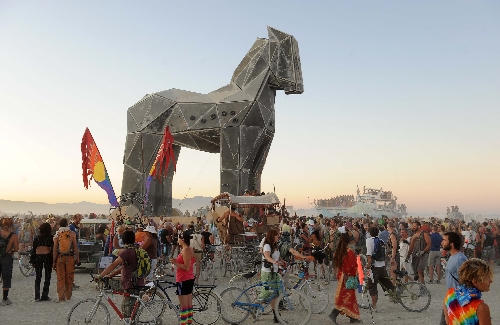


RENO -- When it drew much smaller crowds in the 1990s, the Burning Man festival generated strong opposition from the Sierra Club and others over its impact to the Northern Nevada desert.
But with an April 16 deadline looming for public comment, organizers' request to boost the maximum allowable crowd size by 20 percent to 70,000 is attracting only scant opposition .
Sierra Club activist Tina Nappe of Reno attributes the reversal of the position to Burning Man organizers' track record of cleaning up and addressing environmental concerns at the largest outdoor arts festival in North America.
Black Rock LLC, which runs the weeklong celebration of self-expression and self-reliance leading up to Labor Day, recognizes the desert environment has limitations and strives to minimize environmental impacts, she said.
The federal Bureau of Land Management oversees the eclectic art and music gathering because it's staged on public land in the Black Rock Desert, about 100 miles north of Reno.
"BLM's 'leave no trace' program has received a real boost by Burning Man," Nappe wrote by email.
Cory Roegner, of the BLM's Black Rock Field Office, said no group has come out against organizers' proposed five-year license that would increase the crowd cap from 58,000 to 70,000 over the next five years.
Fewer individuals than past years have lodged complaints, he said.
"Organizers have been doing a great job of cleaning up and leaving no trace," Roegner said. "I think they're also providing a lot of economic benefits to Northern Nevada, which I think members of the public are responding to."
The festival pumps millions into the economy of a state that leads the nation in foreclosures and unemployment. Burning Man participants spend an estimated $10 million around Reno, and Reno-Tahoe International Airport receives about 15,000 people from more than 30 countries for the gathering.
Organizers' requests to increase the capacity comes after the festival sold out for the first time last year with a crowd in excess of 53,000. The sellout forced organizers to sell the bulk of this year's tickets through random drawings, but demand exceeded supply thanks in part to scalpers, leaving many regulars out in the cold.
"There's a lot of different things that irritate people about Burning Man, but when we hear of issues we put every effort to resolve them," Burning Man spokeswoman Marian Goodell said. "As the event has grown, we have prided ourselves on listening to neighbors, and I think that's why you haven't heard any major complaints to the latest request."
Goodell said she thinks the desert venue could accommodate a Burning Man crowd of 100,000 or more.
"We're not aiming for it at this point, but the desert can hold that many. But we have to make sure we have the infrastructure for a larger crowd ... (and) whether our community wants it. We just went over 50,000 people for the first time last year. We're fans of slow growth."
After it moved from San Francisco's Baker Beach, the inaugural Burning Man in Nevada drew 80 people in 1990. Attendance climbed to 23,000 in 1999. It was capped at 50,000 under the most recent five-year permit granted by the BLM, which expired in 2010.
Since then, the event has operated under temporary annual permits.


