POLITICAL NOTEBOOK: Settelmeyer pushes return to primary
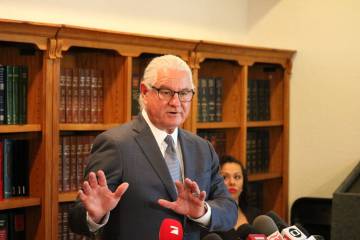

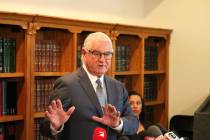
A couple of weeks before Nevada's GOP presidential caucuses, Republican state Sen. James Settelmeyer of Minden held a telephone town hall with 2,000 of his GOP constituents. He offered to help them find where their precincts were so they could meet and vote for their favorite candidates.
He got an earful.
Most of the Republicans didn't want to take time to attend a caucus meeting, which started at 12 p.m. sharp in rural Douglas County, he said. They wanted to vote in a primary instead, casting a ballot at their own convenience -- either absentee by mail or by quickly dropping a ballot in a box between 7 a.m. and 7 p.m., the usual hours polls are open for regular elections.
Some 94 percent of the town hall participants surveyed said they wanted a primary, he said. So that's what he's working to give them next time around. Even before the Feb. 4 GOP caucuses began, Settelmeyer ordered a bill draft to change state law to bring back a Nevada presidential primary.
Settelmeyer's proposal would set a presidential primary date on the same day as other primary races -- congressional, state, legislative and local -- so the election wouldn't cost the state more money, at least $1 million. But he also proposed shifting the entire primary calendar from June to February so that Nevada would still be one of the earliest states to vote in the presidential race.
Such a change would mean a crowd of candidates campaigning heavily around the holidays.
"You'd just have to say to people, 'I see you putting up Christmas lights, can you put up my (campaign) sign, too?' " Settelmeyer said. "It's better than disenfranchising people."
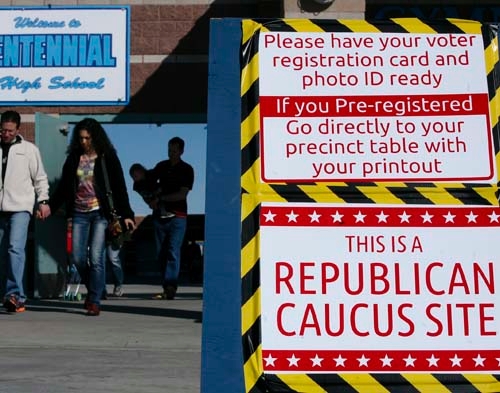
During the Feb. 4 GOP-run caucuses, hundreds of Republicans who prefer a presidential primary signed petitions supporting the idea at caucus sites across the state, including in Douglas County, Carson City and some places in Clark County, according to GOP officials.
Sally Minster, a member of the Clark County GOP executive board, is among Republican leaders who said a state-run primary might be a good idea to allow more Nevadans to vote.
"I personally like a caucus because you get to sit around and discuss politics and organize, but most people don't like them and it can be chaos," Minster said.
The GOP caucus certainly was chaotic this year. Many Republicans didn't know when or where to gather for their precinct meetings, and hundreds turned up too late to participate. As a result, turnout was only 32,894, or 26 percent less than the 44,324 who caucused in 2008. The total Republican turnout was 8.2 percent of the 400,310 registered Republicans across the state.
■ ■ ■
Nevada has experimented with presidential primaries before, but went back to a caucus system in 1984 due to low voter turnout and the growing cost to taxpayers. Republicans held their own presidential primary in 1996, but it cost more than $500,000 and didn't gain much attention.
Bringing back the presidential primary would likely face a tough time in the Nevada Legislature, which meets in 2013. Democrats already are expressing opposition, saying Republicans just don't know how to run a successful competitive caucus like the Democrats did in 2008 when 100,000 participated.
And election officials suggest it's not a great plan to set the date in February. The result would be a short primary campaigning season for all candidates -- and a very long general election season. That could make it tough for lesser-known challengers to beat better-financed incumbents.
Secretary of State Ross Miller said it's not realistic to set a presidential primary date in law since the national parties determine the election calendar and Nevada must remain flexible.
"The presidential election calendar is very fluid. The worst thing we could do is set a hard date," Miller said in an interview, adding it doesn't make sense to move up the entire calendar either. "A February primary for all of the races would be extremely unpractical and problematic to administer."
Nevada used to hold its primary for most races in September of even years. But that didn't allow enough time to organize for the general election in November, said Larry Lomax, registrar of voters for Clark County. Lomax said federal law requires states to send out absentee ballots for members of the military at least 45 days in advance of an election, leaving too little time.
So the primary was changed to August for elections in 2006 and 2008, but turnout was low, partly because of vacationing voters and excessive heat in Southern Nevada, he said.
In 2009, the Nevada Legislature set the new primary date for the second Tuesday in June, which seemed to work well during the 2010 election, he said. The 2012 primary will be June 12.
Lomax predicted "a lot of resistance" to moving the primary election to February, which would mean candidates would have to file for office around October. Now, filing opens in March.
"I don't care if they do it, but it would be very difficult to find support for moving it up to February," Lomax said. "I find that an interesting conversation if they want to have a presidential primary and leave the rest of the offices where they're at. June is just great for us. School's out and it's not too hot."
■ ■ ■
There may be more fallout from the confusing GOP presidential caucuses, but leaders from both the Democratic and Republican parties said they would fight to make sure Nevada retains its status as an early voting state and one of the most important election battlegrounds in the West.
U.S. Sen. Harry Reid, D-Nev., worked hard to make the Silver State's contest count by winning a spot in 2008 behind first-up Iowa and New Hampshire. Democrats still caucused third this year, although President Barack Obama is running uncontested. The Republican caucus got bumped into fifth place in the voting lineup, behind Iowa, New Hampshire, South Carolina and Florida.
Former Gov. Bob List, a national committeeman and a Republican National Committee official, said nobody in the GOP national leadership is talking about moving Nevada later in the calendar.
"I haven't heard anyone suggest Nevada would lose its early state status," List said after talking to RNC officials last week. "I think we'll all do a post-mortem to see how we can do a better job."
Jill Derby, the former chairwoman of the Nevada Democratic Party, knows how to do it right. She was head of the party when it undertook a massive drive in 2007 to boost participation in the Democratic presidential caucuses. The party registered 30,000 new voters on caucus day, which helped the Democrats gain a 100,000 registered voter advantage over Republicans in 2008.
Reports at the time said the Democratic Party spent more than $2 million and went into debt by a couple hundred thousand dollars more to put on the caucuses. In contrast, the Nevada Republican Party spent about $200,000 on the 2012 caucuses, said David Gallagher, executive director of the state party.
"We knew we were going to be in the national spotlight," Derby said in an interview. "We were organized and at it for about a year. We had mailers, phone banks, volunteers to coach people through the caucus process. These (Republican) guys just didn't do it. It was almost a joke."
Derby said Democrats had one other major advantage. The 2008 race was so competitive between Obama and Hillary Clinton and other contenders that the candidates campaigned nearly full time in Nevada for about six weeks before the caucuses, which were on the same day for both political parties.
"It was so hyped that we probably helped the Republican turnout that year," Derby said.
This year, the four remaining GOP candidates campaigned in Nevada for only a few days before the Feb. 4 caucuses, which followed the Jan. 31 Florida primary. And Mitt Romney won 50 percent of the vote, nearly equaling his finish here four years ago and making the race far less competitive.
Contact Laura Myers at lmyers@reviewjournal.com or 702-387-2919. Follow @lmyerslvrj on Twitter.