



Shots to be limited
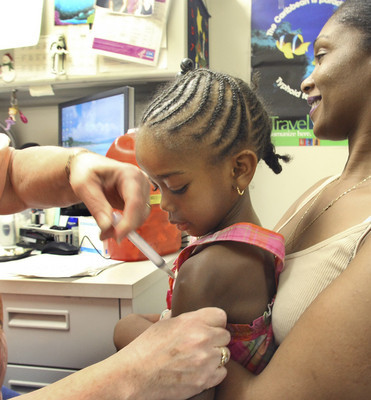


Starting Jan. 1, the Nevada State Health Division is no longer providing eight required vaccines to insured children at no cost, prompting fears that some diseases that have been long dormant might break out in the Las Vegas Valley.
The change means either the child's insurance provider or the parents have to pay for the vaccines, health officials said Friday.
Children who qualify for Medicaid and Nevada Check Up, or who are underinsured, Native American or Alaska Native, will continue to receive the vaccines as well as others under the state's Vaccines For Children program.
The move concerns health care providers, as well as patient advocates, for several reasons. Some say the rising costs of vaccines might lead to physicians not offering shots because insurance providers don't reimburse the full amount for them. Others fear parents could forgo vaccines for their children if insurance doesn't completely cover them.
"It's a bad policy," said Larry Matheis, executive director of the Nevada State Medical Association. "When preschool children aren't getting proper vaccines on time and there's a sudden outbreak, that's when we're going to have massive use of our emergency rooms. It's only a matter of time before there is a measles, mumps or chickenpox outbreak here.''
Matheis said the medical association, as well as various health agencies, plan to discuss the issue in upcoming months. The matter is so serious in Nevada that state laws might have to be created. For example, he said, lawmakers might have to consider requiring insurance companies to cover vaccines.
Nevada already ranks last among states for vaccination rates among children between 19 months and 35 months, said Beverly Neyland, a Las Vegas pediatrician.
Friday's announcement, she said, only exacerbates the problem.
State health officials say the change had to be made because Nevada faces declining federal funding, increased costs for vaccines and a growing population. Also, state health officials say, Nevada is one of only a few states that continues to provide vaccines to all children.
The decision to stop the program comes just months after the state's health division was notified by the Centers for Disease Control that its federal discretionary funding of $2.8 million for vaccines would decrease by 22 percent, or $500,000. The funding was used to provide certain recommended vaccines to all children regardless of Medicaid or Nevada Check Up eligibility.
In July, the health division removed one of the more expensive vaccines, varicella, from the list of vaccines provided to insured children in an effort to save money for other vaccines. The varicella vaccine costs more than $100, said Martha Framsted, a health division spokeswoman.
This year, more than 258,000 children have received vaccines under the program for insured children. More than 370,000 have received vaccines under the Vaccines For Children program, which has a budget of $26 million and covers all vaccines, officials said.
"Everybody is frustrated,'' Matheis said. "Unfortunately, this was known in the spring, and it really should have been presented at the special legislative session. Had legislators been informed, I'm sure they would have looked into maintaining this program.''
Framsted said there is hope some insured children will qualify for vaccines under the Vaccines For Children program. For instance, if a child's insurance doesn't cover all the vaccines, they might be considered underinsured and thus eligible for free or reduced cost vaccines.
Neyland said there's a lot of controversy surrounding the word "underinsured.''
"If the insurance company says the child is covered, even if they underpay the physicians for the vaccine, then the child is still considered insured,'' she said. "That's where the problem is.''
Matheis said another problem health officials will face is with children whose insurance providers don't pay for vaccines at all, such as the Culinary Union.
However, the two largest insurance providers in Nevada -- Anthem Blue Cross Blue Shield and UnitedHealthCare -- do provide some coverage, officials say.
Sally Vogler, a spokeswoman for Anthem, said the insurance provider covers all vaccines. But a parent might face some out-of-pocket costs depending on the plan's co-payment.
Peter O'Neill, a spokesman for UnitedHealthcare's southwest region, made similar comments. He said the insurance provider covers all vaccines recommended by the CDC, but the out-of-pocket costs are going to depend on the co-pay. And, for various vaccines, there are different levels of co-payments.
O'Neill said, from an industry standpoint, vaccines have not been typically viewed as a covered benefit. But that's changing, he said.
"This is going to hit the insurance companies, but it's legitimate,'' Vogler said. "It is in the best interest of the insurer to provide vaccines to children. The kids who are going to be hurt by this are those that are between the cracks.''
Health officials aren't as concerned about school-aged children getting the required vaccines -- they need them to enroll in school -- as they are younger children.
Bonnie Sorenson, director of clinic and nursing services for the Southern Nevada Health District, said the state's immunization rates for school-aged children are good.
Where the state has problems, she said, is with children 3 and under.
Children who need vaccines can get them through the Health District, Nevada Health Centers, and through their pediatrician or primary care physicians.
Vaccines cost $16 per shot and $20 for two or more at the Health District under the Vaccines for Children program.
Starting Jan. 1 though, insured children would have to pay full cost for the vaccines.
Vaccines cost between $32 and $140 each at the Health District. Some vaccines, such as MMRV -- measles, mumps, rubella and varicella -- are given in multiple doses.
"The thing I'm concerned about is that we've recently seen pocket epidemics of measles in the United States. Two recent outbreaks were identified in Phoenix and San Diego and tracked back to Sweden and Belgium,'' said Neyland, president of the state chapter of Academy of American Pediatrics. "If you look at Las Vegas, we have a lot of visitors coming from different countries and if our immunization rates go down, what are the chances? The chances will be high that we will have epidemics here."
For more information, contact the state's immunization program at 775-684-5900 or visit http://health.nv.gov.
Contact reporter Annette Wells at awells@ reviewjournal.com or 702-383-0283.


