



State lawmakers propose legislation on immigration
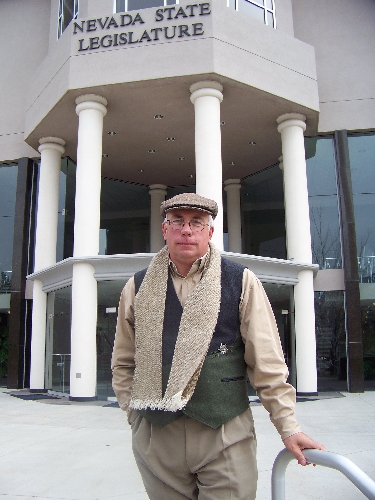
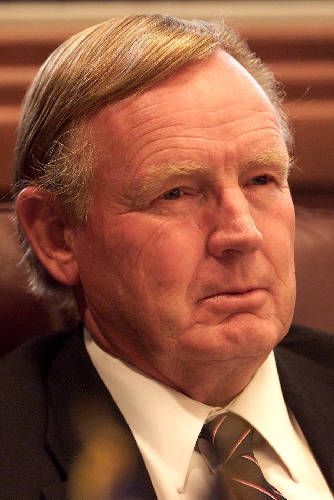


At least two Nevada legislators are pursuing bills in 2011 that target illegal immigrants, though similar bills historically haven't gotten far.
Assemblyman Don Gustavson, R-Sparks, has asked the Legislative Counsel Bureau to draft a bill for the coming legislative session based on a controversial Arizona immigration law that is being challenged in federal court.
Assemblyman Pat Hickey, R-Reno, meanwhile, has requested a bill that would require employers to use the federal E-Verify program to determine whether employees are authorized to work in the United States. The program is voluntary for most employers.
Hickey also has requested a bill that would impose a fee on money wire transfers outside the country, which he says would give undocumented workers who send money home each month better opportunity to "pay their fair share."
The proposed legislation faces an uphill battle, the assemblymen concede, but they hope to spur a debate on the issue.
Gustavson said the goal of his bill is to "get citizens in Nevada back to work."
"We have a lot of people in the country illegally and working here," he said. Targeting undocumented workers could open up jobs for those who are legally authorized to work, he said.
But Hickey said Gustavson's Arizona-style bill doesn't have "a snowball's chance in hell of passing in Nevada."
"We're not a border state with the same safety and legal concerns that Arizona has," he said. "I'm trying to propose a couple pieces of legislation a little more targeted to challenges" in Nevada.
A judge earlier this year blocked portions of the Arizona law that would have allowed police officers to question a person's legal status while enforcing other laws. It also would have made it a state crime to be caught without papers in Arizona.
Sections that were not blocked include one that allows the impounding of vehicles that are used to transport undocumented persons. Another, targeting those who hire day laborers, bans hiring someone whose entering a car would obstruct the flow of traffic.
Proponents of the Arizona law say it is a common-sense measure to make up for the federal government's inconsistent approach to immigration policy. Opponents say it sets the stage for racially motivated harassment by police of Hispanic residents and visitors.
Influential Silver State Republicans said there is little to no benefit in debating whether Nevada should re-create Arizona's law.
"Anything that divides people, sets them apart, is probably not a good thing," incoming Senate Minority Leader Mike McGinness, R-Fallon, said.
McGinness, who takes over the leadership spot from Sen. Bill Raggio, R-Reno, did not sound eager for the Legislature, which has 120 days starting Feb. 7 to balance the budget and tackle statewide redistricting, to add more controversy to the agenda.
Sig Rogich, a prominent Nevada political consultant, said a hard-line stance on immigration could play well with a portion of the Republican base but would drive away potential centrists and Hispanic voters.
"They should avoid the short-term temptation of playing to people's anxieties and fears and look to the long-term solutions," he said.
Gustavson also is pursuing a bill that would require driver's license exams to be administered in English. Currently in Nevada, exams are given in either English or Spanish.
Hickey wants to make E-Verify mandatory in part because he thinks certain industries in the state -- gaming, hospitality and construction -- "have benefited from the illegal labor force," he said. Such legislation will be difficult to pass because of the power of those industries in Nevada, he said.
He thinks a bill that would impose a fee on money wire transfers to locations outside the United States has a better chance at succeeding, in part because it would generate revenue for the cash-strapped state.
The money sent home by Mexican migrants represents Mexico's second-largest source of foreign income after oil.
Hickey said the fee on such remittances would be dedicated to help pay for education in Nevada.
Oklahoma last year adopted a law that imposed new fees on money wire transfers at business such as Western Union. Wire transfers at banks are not subject to the fees. A provision was added to that bill that allows Oklahoma residents to deduct the fee from their state income taxes.
Mexico's House of Representatives passed a resolution urging government agencies to stop buying products from Oklahoma in response to the fees. Western Union also opposed the fees, calling them regressive and anti-consumer.
Reveriano Orozco , who recently sold his local chain of money-tranfer businesses that catered to Hispanics, called such fees unconstitutional.
It's not fair, he said, to selectively target certain businesses that offer a service and not others. Such a law also would be designed to target Mexicans, which is discriminatory, he said.
"I'm not worried. I don't think this kind of law would fly in Nevada," he said.
Fernando Romero, president of Hispanics in Politics, said Nevada bills targeting illegal immigrants have failed in the past because they would have infringed on individual rights, not just on illegal immigrants.
E-Verify, for example, has had accuracy problems and could lead to citizens and legal residents being wrongly denied jobs, he said.
The much-debated Arizona law, meanwhile, would punish anyone, including citizens and legal residents, caught giving an undocumented immigrant a ride.
"You no longer have the right to transport 'Pepito' from Point A to Point B without having your vehicle impounded," Romero said.
Disallowing the printing of driver's license exams in Spanish also would harm citizens and legal residents who have trouble with English, he said.
"For many people, English is a difficult language. That doesn't mean they are here illegally," he said.
Nevada does not offer driver's licenses to illegal immigrants.
Review-Journal writer Benjamin Spillman contributed to this report. Contact reporter Lynnette Curtis at lcurtis@reviewjournal.com or 702-383-0285.


