U.S. Senate bill aims to streamline VA claims, reduce backlog
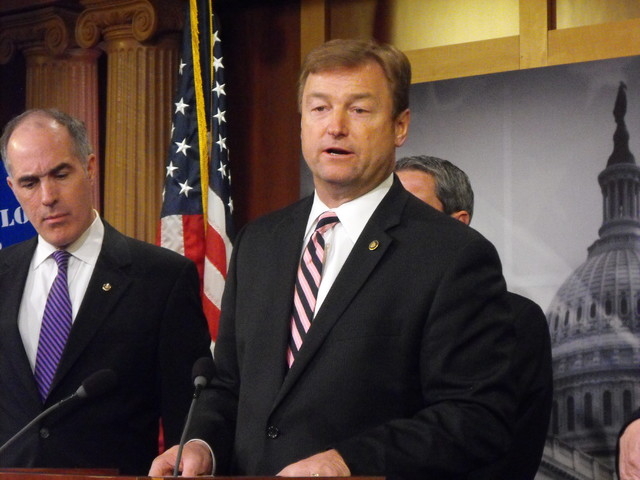
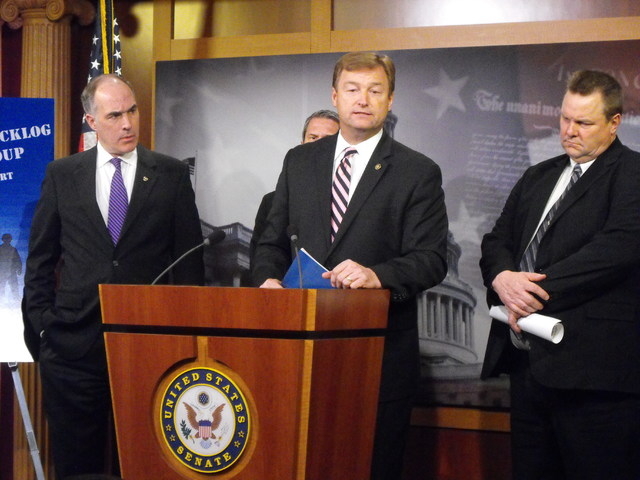




WASHINGTON — A bill that aims to streamline veterans benefit claims was proposed in Congress on Thursday by senators who said the government has failed to uphold its duty to disabled service members for the past 20 years.
Sen. Dean Heller, R-Nev., and five others called for a series of actions they said would address a claims backlog that has proved challenging for the Department of Veterans Affairs to whittle down, leading to long waits for decisions they said can devastate a veteran financially and emotionally.
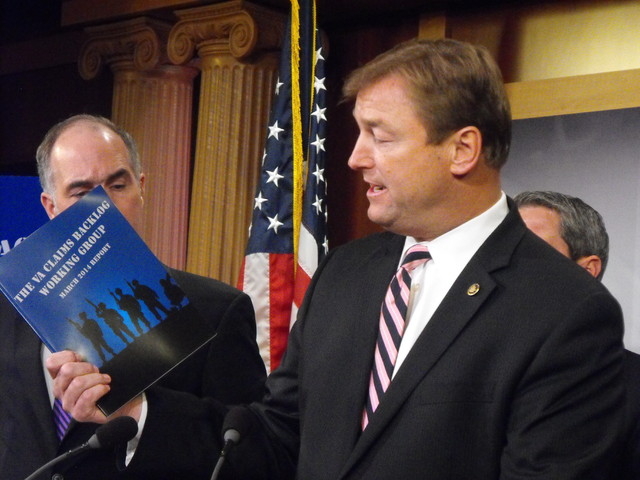
The legislation was unveiled along with a Senate report that detailed the potential pitfalls that veterans face seeking compensation for service-related injuries, and gaps in the VA’s handling of their claims. According to agency’s latest weekly workload report, 686,861 disability claims are pending, with 403,761, or 59 percent, unsettled longer than the VA’s goal of 125 days.
“This backlog in my opinion is tantamount to breaking our promises to our nation’s veterans and must come to an end soon,” said Heller, who formed a “VA claims backlog working group” last summer with Sen. Robert Casey, D-Pa.
A 45-page report by the Senate group provided the basis for the legislation, as well as a primer on how the number of claims have grown, through court rulings, new laws, the wars in Iraq and Afghanistan, and decisions by VA leaders that broadened the types of illnesses qualifying veterans for federal assistance.
At the same time, though, the VA has struggled to keep its numbers current, it said. Between 2005 and 2012 the agency increased its full-time employees in a bid to manage an increase in claims, with little improvement, it said.
“Regardless of the increase in labor, the production per full-time employee decreased from 101.2 claims to 74 claims,” according to the report. “Further the average days to complete claims increased from 177 days in 2006 to 262 days in 2012 per full-time employee.”
Also, performance by VA regional claims offices has varied widely, from the office in Providence, R.I., completing claims in an average of 97.2 days, to Reno, which ranked as the slowest at 425.9 days. The Reno office serves the entire state of Nevada.
A provision in the new legislation would require the VA to identify reasons for the disparity and to consider adopting best practices of the most efficient operations.
Numerous laws, high-level commissions and investigations dating to 1993 have fixed specific deficiencies and reduced backlogs in the past, according to the senators. “However, the VA continues to see the backlog rise every few years because the claims process cannot handle a surge of claims filed.
“Unless the claims process is reformed, the VA will not only continue to develop backlogs but it will also never fully eliminate them,” they said.
The new legislation contains a suite of changes to VA processes that aim to move claims more efficiently, including speeding the transition to an electronic benefits management system. It would require the Department of Defense, Social Security Administration and other departments to respond to requests for veterans’ records within 30 days, alleviating a major choke point that has taken 157 days on average, according to the Government Accountability Office.
Heller said veterans organizations and VA officials helped form the report and the legislation.
The VA has adopted reforms in an effort to reduce the backlog. “We’re not trying to diminish what they have done to this point,” Heller said. “We just think they can do a lot better.”
Heller said the biggest potential for improvement could come through a requirement that service members undergo more training in how to file benefit claims before they leave the military, and that information continue to be made available to them electronically afterward as some veterans wait years before they apply. Claims that are not fully developed take on average 200 more days to be processed, according to the VA.
Heller said the goal is to get more veterans to file applications that are accurate and complete, otherwise “that is what usually bounces back.”
“That is probably going to have to take shape before they get out of the armed forces,” he said. “They need to sit down and have that conversation with their commanding officer, to know what benefits are available to them and how to file.”
The legislation authorizes an additional year of benefits as incentive for veterans to file complete claims.
Senators acknowledged that even if the legislation passes, it could take several years for results to show.
“It is my goal we won’t be having this conversation five years from now,” Heller said.
Besides Heller and Casey, the bill’s sponsors are Sens. Martin Heinrich, D-N.M., Jerry Moran, R-Kan., Jon Tester, D-Mont., and David Vitter, R-La.
Contact Stephens Washington Bureau Chief Steve Tetreault at 202-783-1760 or STetreault@stephensmedia.com. Follow him on Twitter @STetreaultDC.