Obesity becoming a national security issue


Soon, America will be too fat to fight.
Forget about rampant diabetes, heart attacks and joint problems — the scariest consequence arising out of our losing battle with the bulge is the safety of our country.
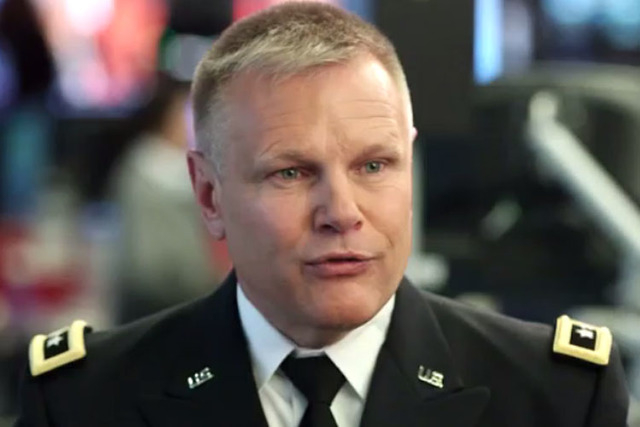
In about five years, so many young Americans will be grossly overweight that the military will be unable to recruit enough qualified soldiers. That alarming forecast comes from Maj. Gen. Allen Batschelet, who is in charge of U.S. Army Recruiting Command.
Obesity, he told me, “is becoming a national security issue.”
I was so taken aback by Batschelet’s statement that I felt the need to press him. Come on! Obesity? A national security crisis? The general didn’t blink. “In my view, yes.”
Of the 195,000 young men and women who signed up to fight for our country, only 72,000 qualified. Some didn’t make the cut because they had a criminal background, or a lack of education, or too many tattoos. But a full 10 percent didn’t qualify because they were overweight.
Before you accuse me of sensationalizing, it’s that 10 percent figure that worries Batschelet the most.
“The obesity issue is the most troubling because the trend is going in the wrong direction,” he said. “We think by 2020 it could be as high as 50 percent, which mean only 2 in 10 would qualify to join the Army.”
He paused. “It’s a sad testament to who we are as a society right now.”
The problem is so worrisome for the Army that recruiters have become fitness coaches, like the trainers on the NBC show, “The Biggest Loser.”
Yes, your tax dollars pay for Army recruiters to play Dolvett Quince or Jillian Michaels to whip could-be recruits into shape with the hope they can diet and exercise their way to become real recruits. If they lose enough weight, they’re sent to boot camp. Some make it; many don’t. But, Batschelet told me the Army must try.
“We are the premier leader on personal development in the world,” he told me. “We want to see you grow and become a leader. That is a great strength in our Army.”
Except the Army never considered the type of growth it’s now contending with. Nowadays “personal development” means working on both character and … girth. The general, along with so many others in this country, is struggling with why so many Americans, despite all the warnings, continue to eat too much and exercise too little.
I have a theory. It ain’t pretty. But it’s got to be true: We just don’t care.
“The acceptance of obesity is prevalent,” according to Dr. Claire Putnam, an obstetrician and gynecologist who believes obesity is a national crisis right now. “When you look around you, 70 percent of adults are overweight or obese. It’s seems normal,” she said.
Just look at the numbers: More than one-third of U.S. adults are obese. Seventeen percent of all children and adolescents in the U.S. are obese. That’s triple the rate from just a generation ago.
So, maybe we should face the fact that we’ve grown comfortable with our girth. It is crystal clear we haven’t the foggiest idea of who needs to lose weight and who doesn’t.
Just the other day, Twitter trolls scolded the singer, Pink, for gaining weight. Pink is not remotely fat. Neither is Selena Gomez, haters. Or Britney Spears, hecklers.
If 70 percent of us are overweight in this country, why are there so many willing to fat-shame people who are not remotely obese? Maybe it’s easier to criticize others for carrying extra weight than to admit we have a weight problem ourselves. Because it is abundantly clear we are wallowing in denial.
Putnam points to one of Kaiser Permanante’s medical questionnaires. You know, the paperwork patients are asked to fill out before they see the doctor. There is actually a box on the form that allows the patient to “opt out of talking about obesity.” Some patients refuse to step on the scale.
“You want to be sensitive to that patient,” Putnam told me. “You don’t want to nag. But, doctors need to step in and say we need to fix this.”
CNN’s chief medical correspondent, Dr. Sanjay Gupta, agrees with Putnam.
“Perceptions of weight are a big part of the problem,” he said to me. “If a person is overweight — as difficult as it is — they ought to be told. You know, this issue reminds me of the issue with concussions. We should call them what they really are: a brain injury, not ‘getting your bell rung.’ In the same vein, we should tell people who are overweight or obese that, clinically, they’re ‘overweight’ or ‘obese’ and at risk for just about every chronic disease in the book.”
In other words, chubby is not the proper way to describe a person who is obese. Just like “fat” is not the proper term for Pink or Selena Gomez. And, yes, semantics matter. According to the CDC, 81 percent of overweight boys and 71 percent of overweight girls believe they are just the right weight.
We’ve clearly lost our perspective on what’s normal when it comes to a healthy weight. So much so it’s becoming a national security problem.
So what will it take? The answer cannot be the U.S Army.