Astronaut Michael Collins, Apollo 11 pilot, dies at 90
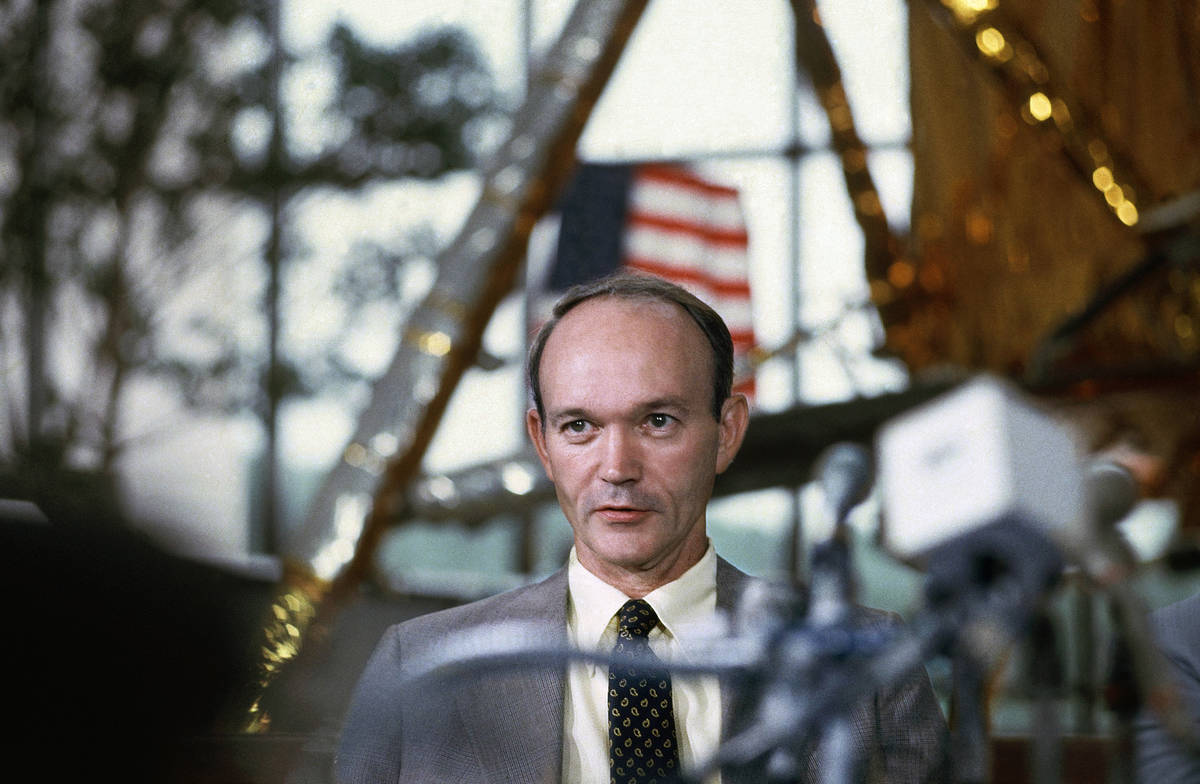
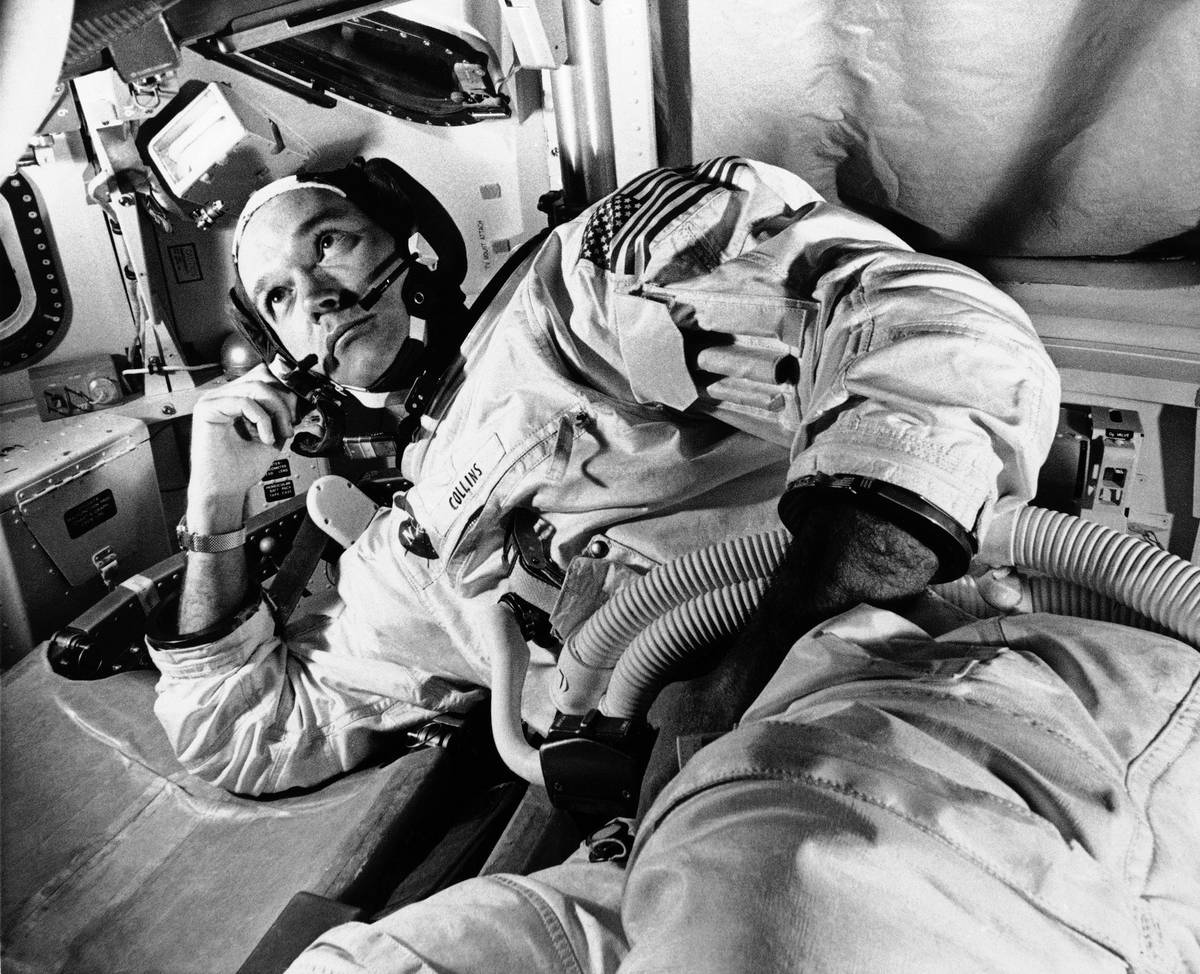
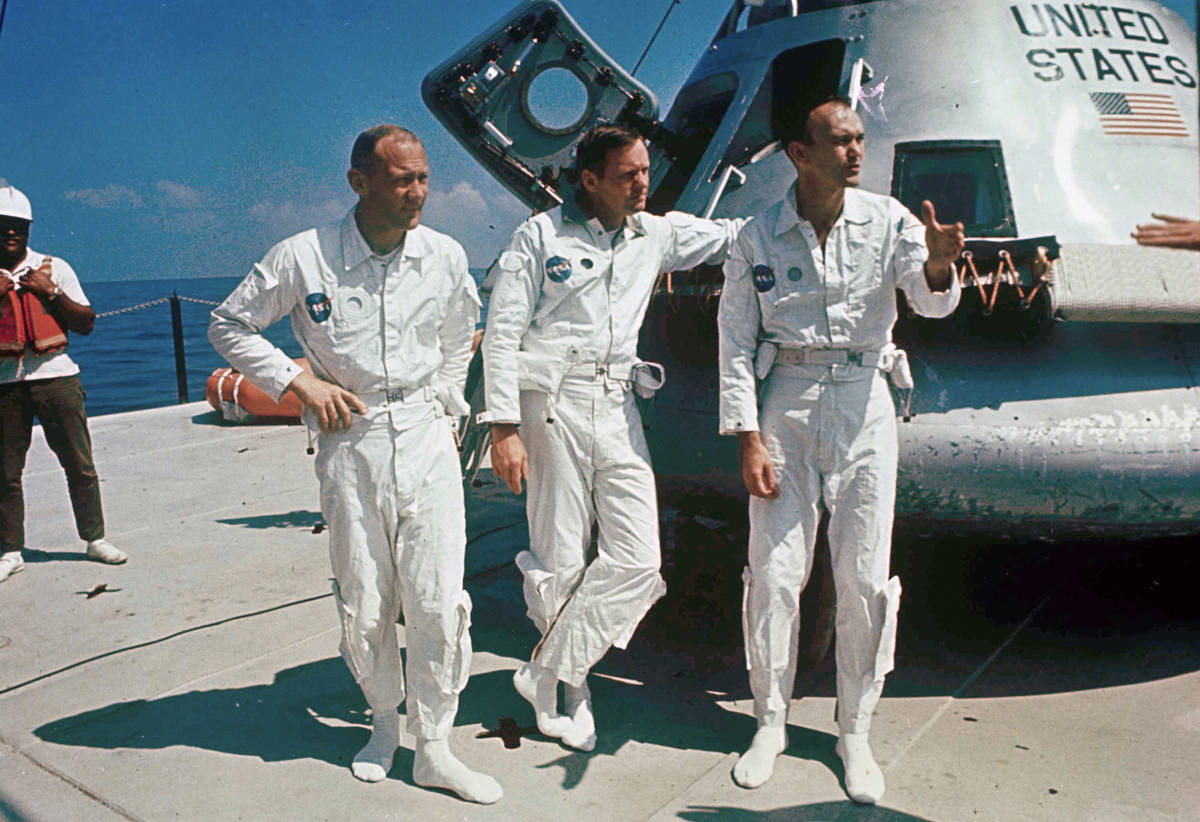
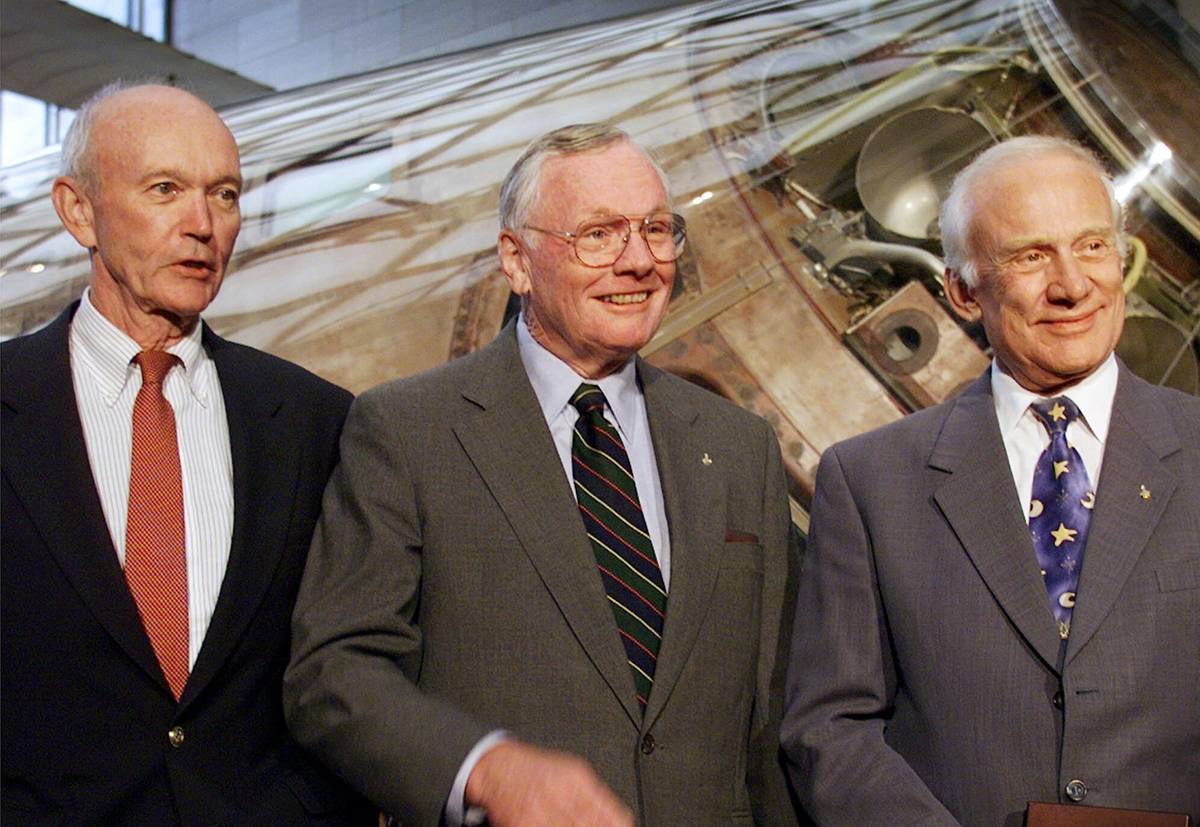
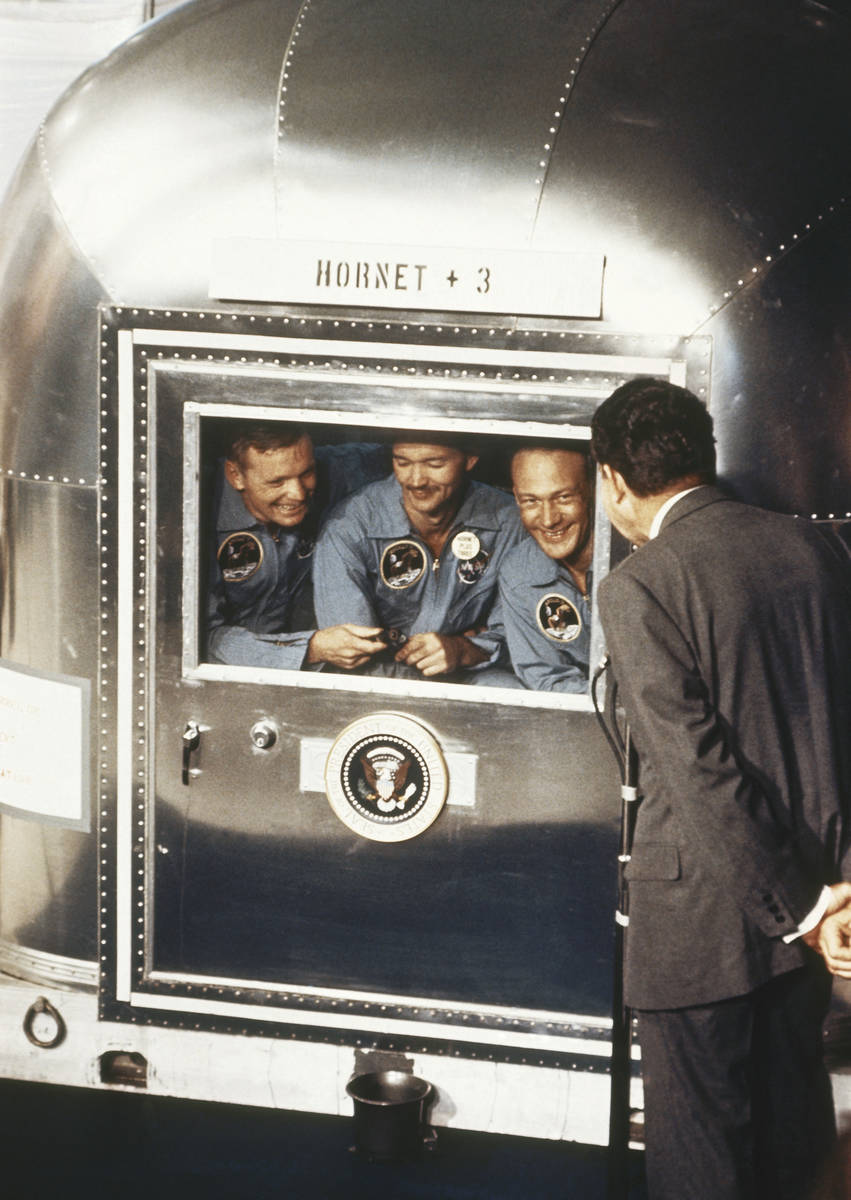




Apollo 11 astronaut Michael Collins, who piloted the ship from which Neil Armstrong and Buzz Aldrin left to make their historic first steps on the moon in 1969, died Wednesday of cancer, his family said. He was 90.
Collins was part of the three-man Apollo 11 crew that effectively ended the space race between the United States and Russia and fulfilled President John F. Kennedy’s challenge to reach the moon by the end of the 1960s.
Though he traveled some 238,000 miles to the moon and came within 69 miles, Collins never set foot on the lunar surface like his crewmates Aldrin and Armstrong, who died in 2012. None of the men flew in space after the Apollo 11 mission.
“It’s human nature to stretch, to go, to see, to understand,” Collins said on the 10th anniversary of the moon landing in 1979. “Exploration is not a choice really — it’s an imperative, and it’s simply a matter of timing as to when the option is exercised.”
Collins spent the eight-day mission piloting the command module. While Armstrong and Aldrin descended to the moon’s surface in the lunar lander, Eagle, Collins remained alone in the command module, Columbia.
“I guess you’re about the only person around that doesn’t have TV coverage of the scene,” Mission Control radioed Collins after the landing.
“That’s all right. I don’t mind a bit,” he responded.
Collins was alone for nearly 28 hours before Armstrong and Aldrin finished their tasks on the moon’s surface and lifted off in the lunar lander. Collins was responsible for re-docking the two spacecraft before the men could begin heading back to Earth. Had something gone wrong and Aldrin and Armstrong been stuck on the moon’s surface — a real fear — Collins would have returned to Earth alone.
Though he was frequently asked if he regretted not landing on the moon, that was never an option for Collins, at least not on Apollo 11. Collins’ specialty was as a command module pilot, a job he compared to being the base-camp operator on a mountain climbing expedition. As a result, it meant he wasn’t considered to take part in the July 20, 1969, landing.
“I know that I would be a liar or a fool if I said that I have the best of the three Apollo 11 seats, but I can say with truth and equanimity that I am perfectly satisfied with the one I have,” he wrote in his 1974 autobiography, “Carrying the Fire.” “This venture has been structured for three men, and I consider my third to be as necessary as either of the other two.”