



Seeking the whole truth about incomplete proteins


Reader Ann F. writes: “I remember learning a bit about incomplete proteins a long time ago and that if you combined, say, beans with corn, you had a complete protein, much as if you’d eaten eggs, or meat or cottage cheese. I always assumed that you should eat them at the same meal.
“But I’m wondering, suppose you had one incomplete for breakfast and the other for lunch — or for dinner — or maybe even the next day? I looked online but didn’t learn anything about timing.
“So I’d be interested in your take on this, and also on amounts — should the servings be of equal size or, for example, would a spoonful of corn with a big serving of beans, or vice versa, work just fine?
“And I wonder if some combinations are better than others. Is a peanut butter sandwich (whole wheat bread), for example, any better or worse than beans and corn? Or is it just a good idea to eat a big variety of foods?”
Great questions, Ann, because guidance on this issue has changed over the years. According to the most recent position paper on vegetarian diets by the Academy of Nutrition and Dietetics (eatright.org), proteins from a variety of plant foods eaten during the course of the day supply enough essential amino acids to meet your protein needs. (Amino acids are required to “build” more than 100,000 different proteins in the human body.)
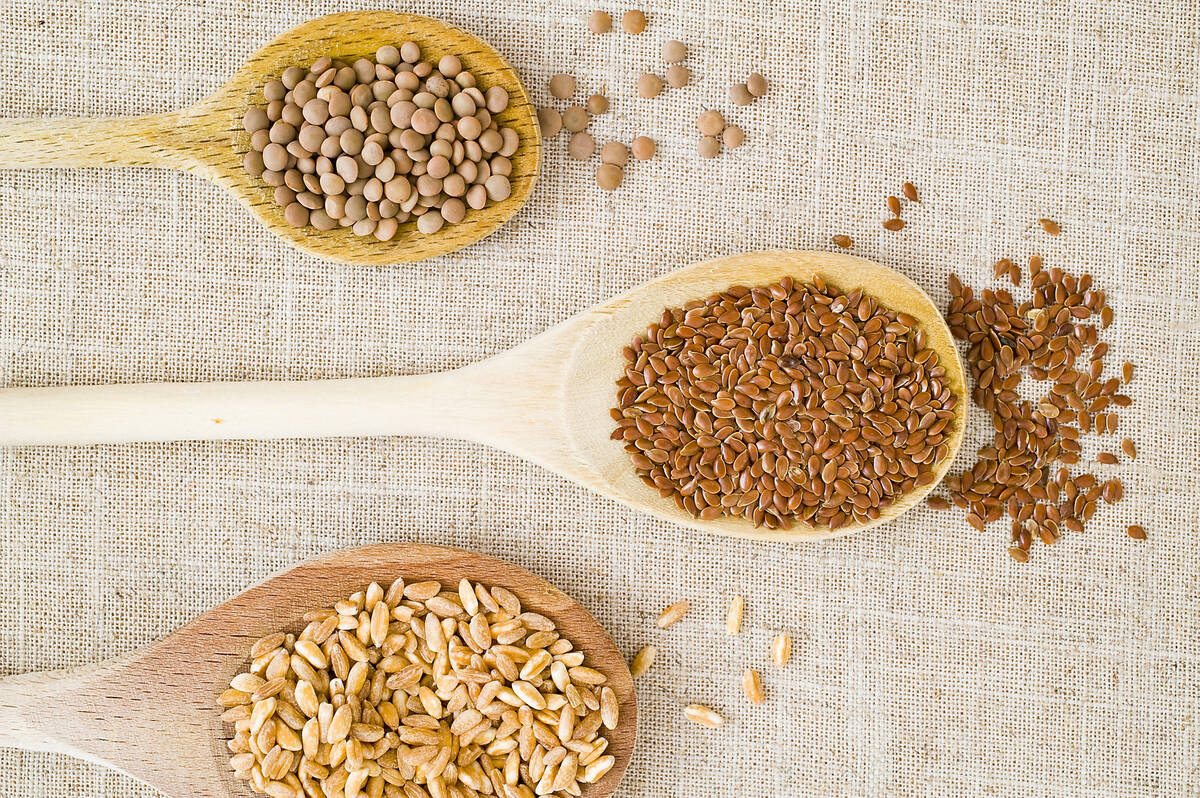
Experts say the best balance of plant-based proteins comes from eating grain foods (which are limited in the essential amino acid lysine but have a good amount of methionine and cysteine) as well as legumes (which have enough lysine but are lower in methionine and cysteine).
Thus, a diet that includes grains such as wheat, oats, rice and corn (corn is considered a grain as well as a vegetable) in addition to legumes like beans and peas can provide all the building blocks your body needs to make complete proteins.
Soybeans are also legumes, and here’s their claim to fame: Because they contain all the essential amino acids we need, they are considered a complete plant protein.
To use your examples, corn and beans in normal portions would fill each other’s protein “gaps” whether you ate them at the same time or not. Likewise, peanut butter (peanuts are legumes) and bread (grain) are also complementary.
And yes, the more variety of foods one eats on a vegetarian diet, the better, experts say. Besides legumes and grain combinations such as bean burritos or lentils and rice, don’t forget that most vegetables also contain small amounts of protein to contribute.
Choose these foods throughout the day to ensure your body gets all the ingredients it needs to be its best.
Barbara Intermill is a registered dietitian nutritionist and syndicated columnist. Email her at barbara@quinnessentialnutrition.com.


