



Southern Nevada food pantries saw need surge in 2025. This year could be worse










Even before he retired about four years ago, Allan Spaulding has relied on nonprofit food pantries to supplement his monthly grocery supply.
“I could pay the rent, I could pay the bills, but the food was always the problem,” the 65-year-old said about his Strip hotel salary. “And now, it is really going up and we feel it.”
Spaulding said his $1,300-a-month studio leaves little money to buy food or pay for transportation.
“I’m barely making it,” he said. “But I make ends meet by going out and every day being diligent with whatever jobs I can take, even though I’m retired.”
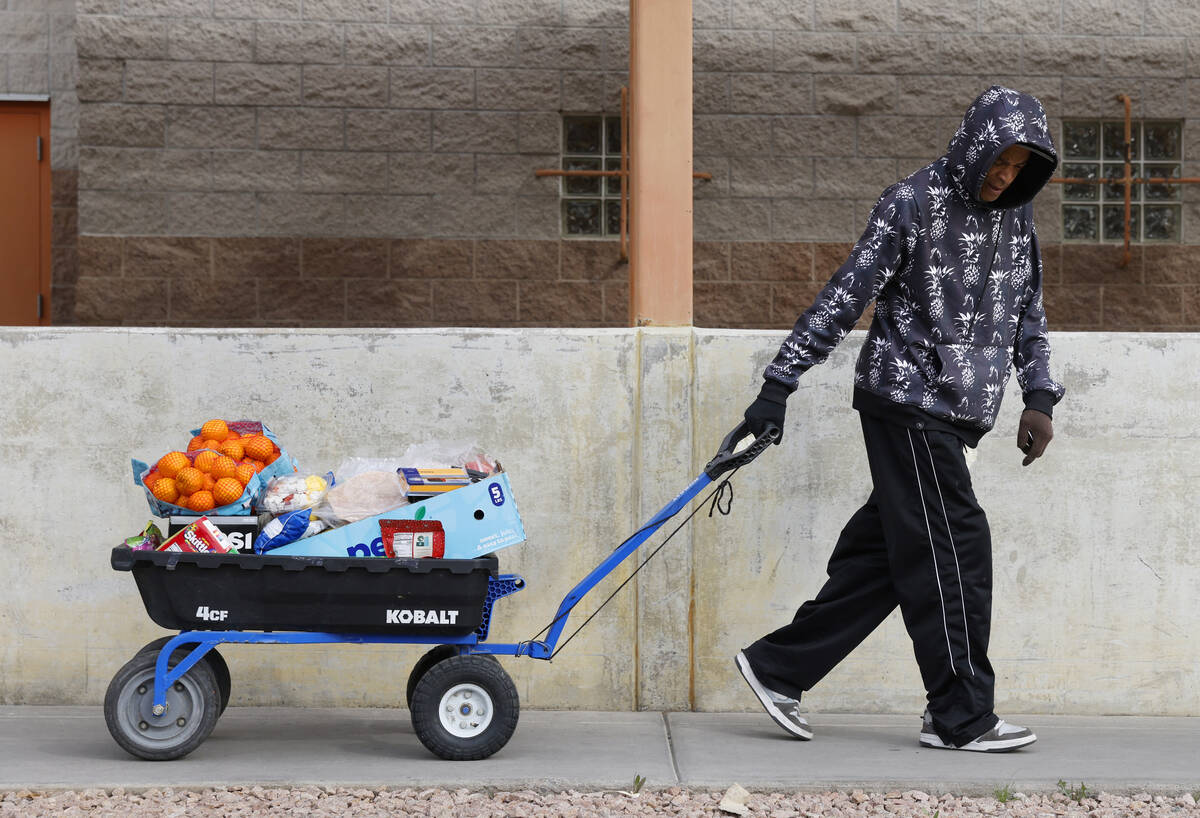
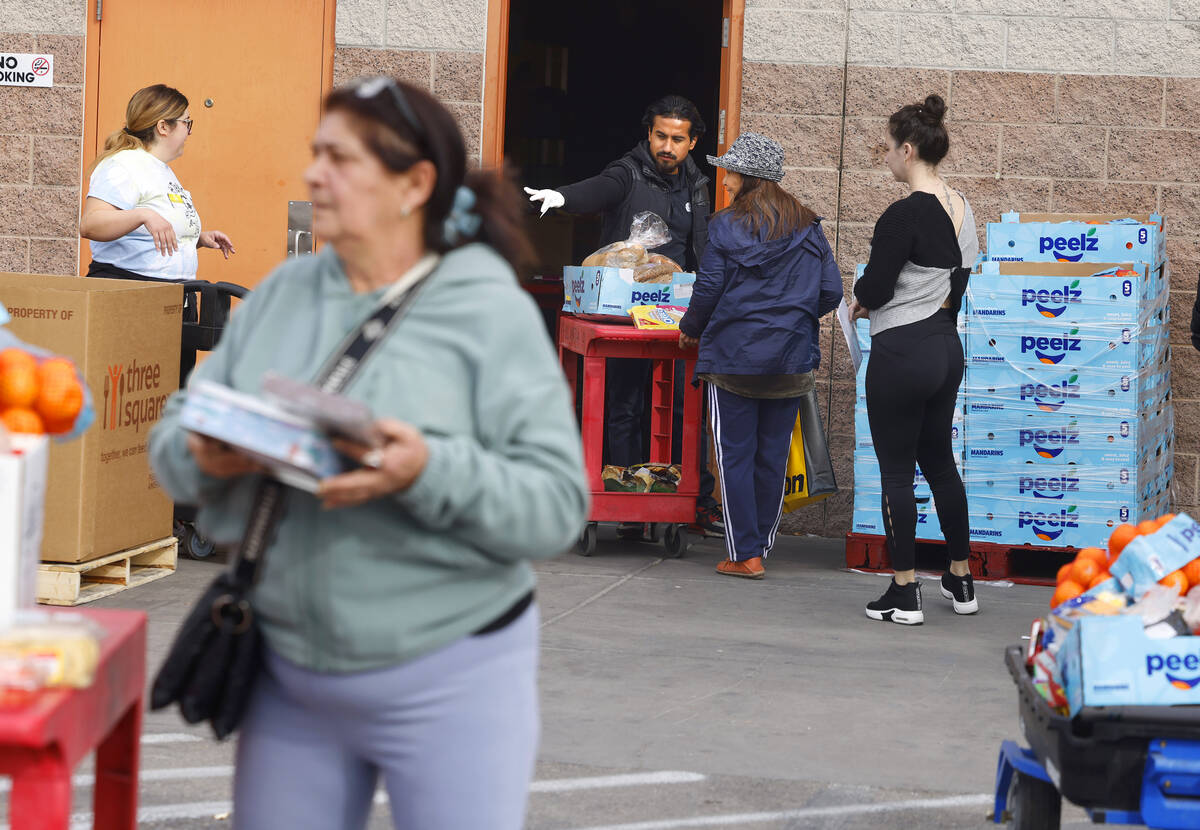
On Wednesday, he loaded free groceries collected from Catholic Charities of Southern Nevada’s pantry into a wagon he uses after he lost his car during the pandemic; he often can’t afford bus fares.
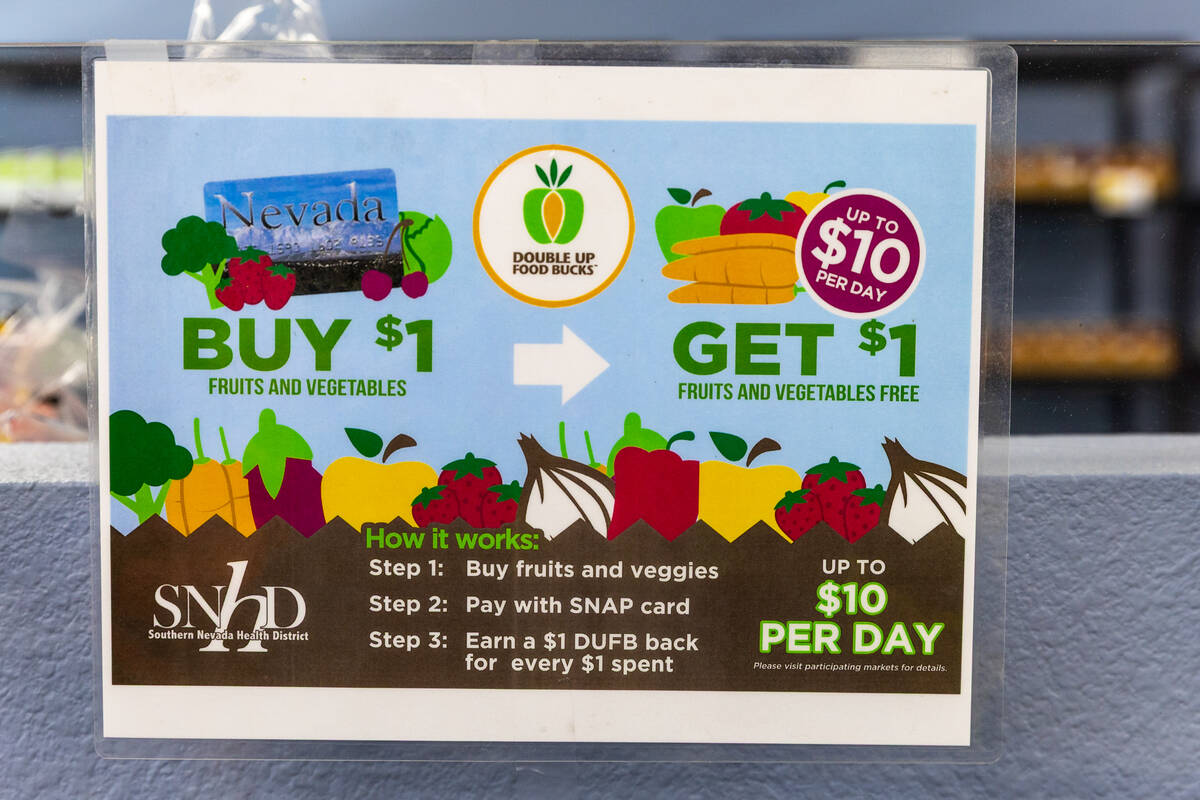
Spaulding said he appreciates any help he gets, but he said the $55 he gets a month in Supplemental Nutrition Assistance Program benefits don’t stretch far enough.
“It’s the Lord moving through them,” Spaulding said about nonprofits. “And I hope they always will be there.”
Spaulding is part of rising food insecurity in Southern Nevada. Regional hunger relief providers reported a spike in need during the height of the federal government shutdown last fall – amid a year of rising need.
As changes to federal food stamp benefits go into effect – potentially impacting eligibility for nearly 90,000 Nevada residents – pantry users and nonprofits worry that food insecurity will only get worse.
Food insecurity spikes during shutdown
Three Square President and CEO Beth Martino told state lawmakers in December that visitation to nonprofit food providers grew from about 77,000 in September to 100,000 in November — reflecting a surge in need during the 43-day government shutdown, when federal employees were not working and Supplemental Nutrition Assistance Program funding was suspended, then eventually released, during the political back-and-forth in Washington, D.C.
Federal SNAP benefits help about 500,000 Nevadans each month at a cost of $90 million, according to the state.
As funding was poised to expire on Nov. 1 during the shutdown, Gov. Joe Lombardo and state lawmakers moved to inject almost $40 million into food banks through the Legislature. A bill approved during a special legislative session later that month established a state program that would provide temporary financial assistance to eligible households, much like SNAP, should its funding lapse again.
“Even removing what were some extraordinary circumstances in October and November, the story of 2025 is more people needed food assistance, and more people needed it for the first time,” Martino said in a recent interview.
The regional food bank distributed more than 52 million pounds of food in the 2025 calendar year — the equivalent of about 44 million meals.
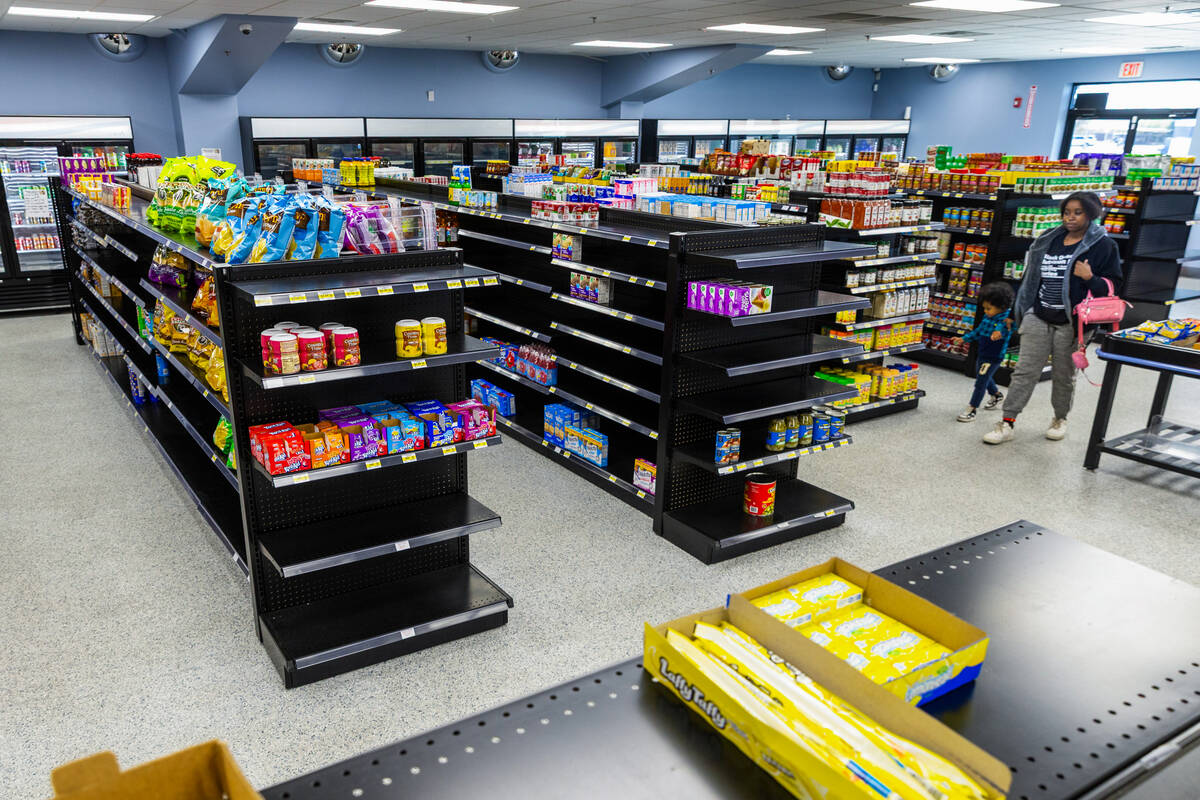
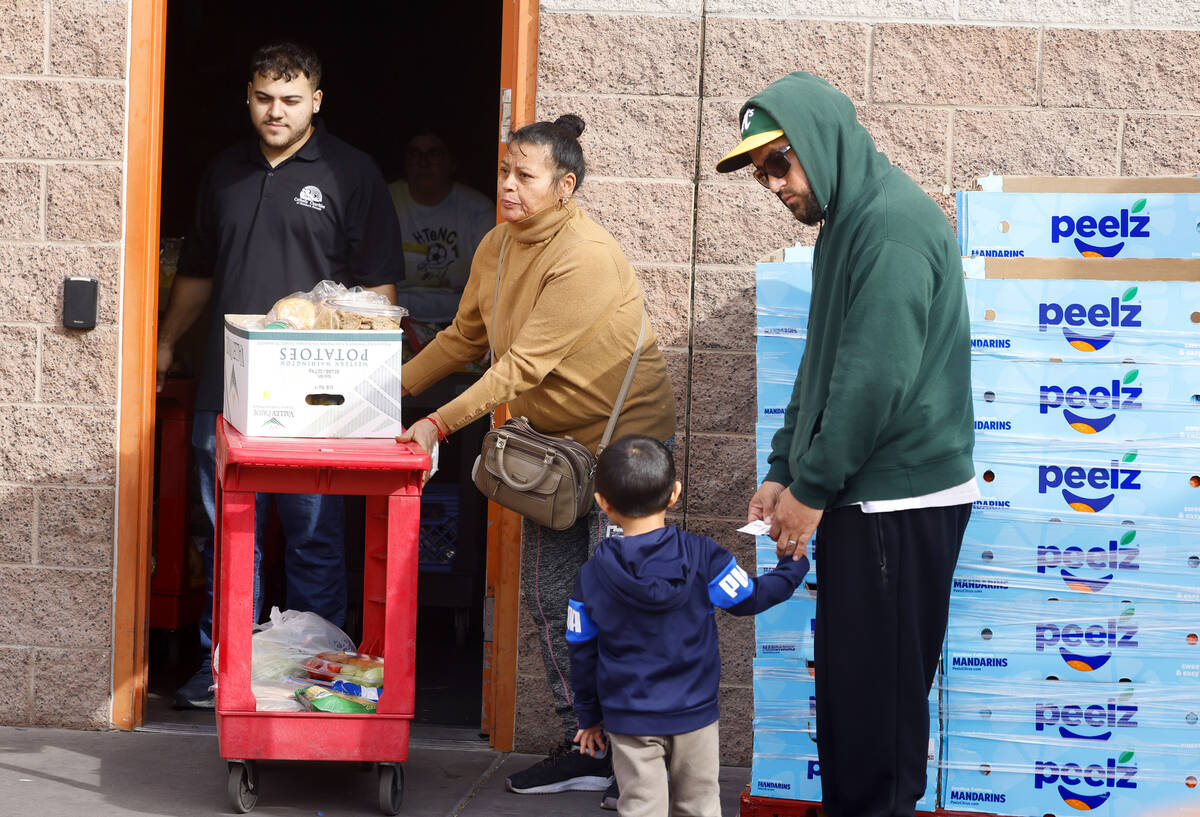
Catholic Charities, a Three Square partner, saw similar need in its feeding programs, including a daily meal offered to people experiencing homelessness, a public pantry modeled after a grocery store and the Meals on Wheels food program that serves home bound seniors.
The dining hall program served about 179,000 people in 2025, compared with about 166,000 in 2024 — a nearly 8 percent year-over-year increase, Catholic Charities President and CEO Sara Ramirez said. The nonprofit began experiencing an increase in new clients at the daily meal during the SNAP suspension, including families with young children; some continue to rely on it, she said.
Meals on Wheels delivers premade servings to 2,400 home bound seniors, with about another 1,000 on a wait list, according to Ramirez. Pauses to benefits result in an increase in seniors seeking help who hadn’t sought the program before.
Historically, the food pantry program provided groceries to no more than 150 people a day, on average. That figure has increased to about 280, she said.
“Across the board, food insecurity is not a temporary issue,” Ramirez said. “With the government shutdown…when it comes back online, it’s not like food security just comes back.”
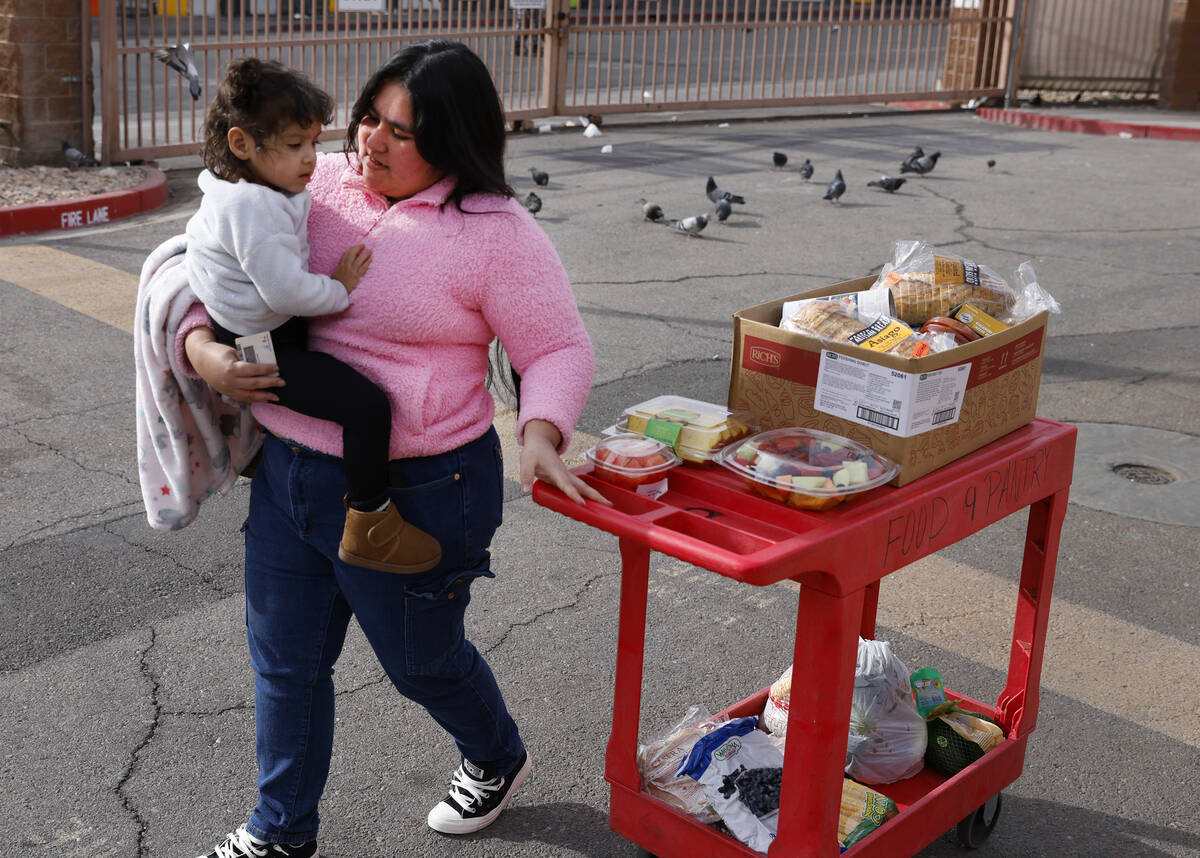
Johana Santos visits the pantry once a week. On Wednesday, the stay-at-home mom showed up with her young daughter to pick up protein, greens and fruits.
She said the program keeps her low-income family afloat. “Thanks to them, I have help,” she said.
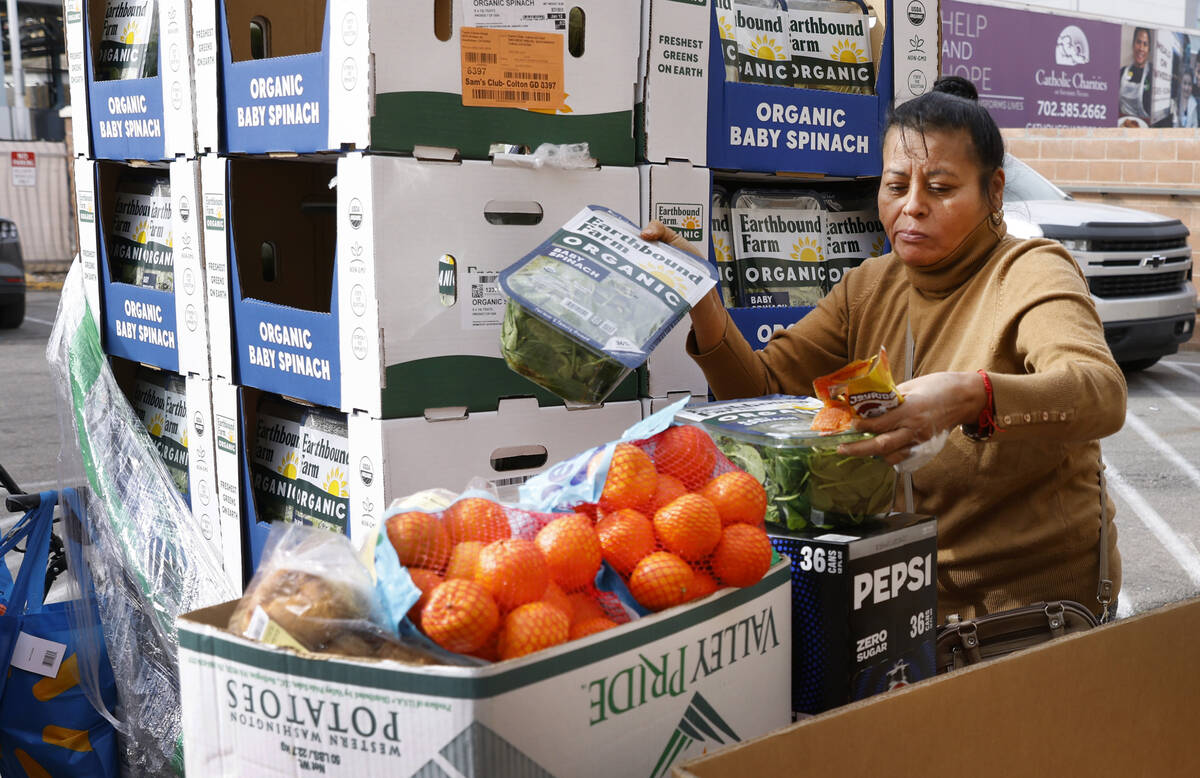
Regina Conway has relied on the pantry for about three months. The retired woman said that even though she has SNAP benefits, “it still runs out.”
“I couldn’t deal with it,” she said about November’s pause to SNAP. “It really helps out.”
Changing SNAP eligibility on food providers’ minds
SNAP’s return was not enough to alleviate stress for people worried about their next meal, said Vic Caruso, executive director of City Impact Center.
“It has caused such a high anxiety that has not gone away,” Caruso said.
About 85 percent of the nonprofit’s food recipients have jobs but still need help to make ends meet, he said. The pantry gave out 900 hams and turkeys for Thanksgiving and Christmas.
At The After Market in North Las Vegas, a hybrid grocery store/food pantry, saw about a 30 percent increase in visitors to the pantry in October and November before activity dropped by the end of the year, CEO and founder Rev. DeWayne McCoy said.
McCoy said he’s focused on rules changing eligibility for SNAP benefits that began in recent weeks.
Work requirements were increased as part of the One Big Beautiful Bill act, the omnibus legislation passed in July 2025 that included broad priorities of the Trump administration. New eligibility requires able-bodied adults to work at least 20 hours per week in work-approved activities for benefits. Able-bodied adults are classified as people ages 18 to 64 who do not have a dependent child under the age of 14.
The legislation also removed a number of exemptions to the work requirements. People experiencing homelessness, veterans and those who have aged out of the foster care system are now also expected to work or participate in another approved activity, like volunteering, school or workforce training.
McCoy said he’s exploring volunteer hours to give some community members experience that can help them maintain their benefits.
“We’ll figure it out. The main thing is to give the people who need it in the community access, because this is a walking community,” he said. “The last thing I want to do is send them miles away to another nonprofit.”
Those changes would affect about 88,500 Nevadans, according to data provided by the Nevada Division of Social Services. SNAP recipients who do not meet the new working requirements will lose their benefits on Feb. 1. In December, there were 78,000 people who wouldn’t meet the new work requirements, according to the agency.
An additional 10,500 refugees, parolees and asylum-seekers will also lose benefits in Nevada because SNAP eligibility was reduced to legal permanent residents only, a division spokesperson said.
Affordability concerns continue
Las Vegas resident Maricco Allen said the state of the economy is what led him to City Impact Urban Food Bank on a recent Tuesday morning. Allen said he pays $400 to stay at a weekly hotel and is looking for steady work about eight months after losing his job. His partner makes minimum wage.
“(We’re) barely, barely, barely getting by after we pay our bills,” he said.
That’s where nonprofit leaders suspect the increase in need is coming from. Groups interviewed said they lack data on what drove new visitors to food pantries. But they said signs suggest that the rising cost of housing and car insurance tightens budgets for low-income earners and those looking for full-time employment.
“When I would talk with our folks answering calls (at Three Square), they would tell me people would be calling and talking about how they put in hundreds of applications for jobs, and we’re not able to find anything,” Martino said.
Spaulding regrets not having a retirement fund, although he said he likely wouldn’t have been able to fund much of it with the $12 an hour he was paid at his last job.
“I didn’t know the battle was going to get this hard from inflation,” he added.
Spaulding said he worked for nearly a half century jobs before retiring.
“We gotta think about the blue-collar workers,” he said. “I hear ‘middle class’ a lot from both Democrats and Republicans, but what about the working poor?”
Contact McKenna Ross at mross@reviewjournal.com. Follow @mckenna_ross_ on X. Contact Ricardo Torres-Cortez at rtorres@reviewjournal.com.


