CHOOSING TO CHANGE – Slippery Slope
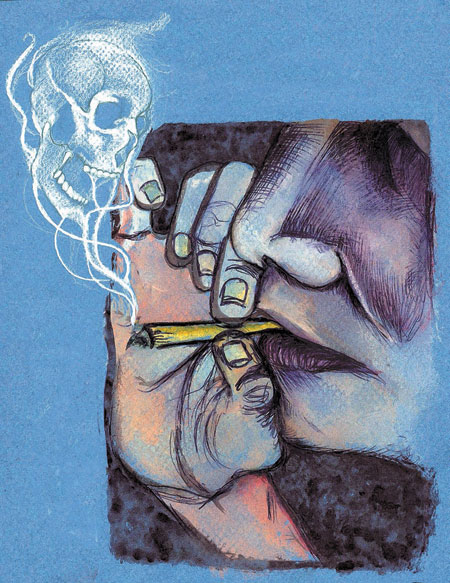



At the age of 13, former Green Valley High School student Christian Clemens would ditch school with his friends to smoke marijuana.
Two years later, he had succumbed to even more serious habits.
"Everyone told me marijuana is the gateway drug and I didn't believe them," says Clemens, now 18, whose name has been changed to protect his privacy. "By the time I turned 15, I had tried cocaine and had become addicted to crystal meth until last year."
According to the Office of National Drug Control Policy, an estimated 10.4 million Americans age 12 or older have used methamphetamines at least once in their lifetime.
The drug had a drastic effect on Clemens.
"I wouldn't eat, and I felt like I was losing weight," he recalls. "I would sniff meth in the bathroom at work before my shift, at home after I got off work, anywhere I could."
Clemens says that he began using drugs because he didn't feel good about himself.
"I had a low self-esteem and wanted to make myself feel better," he explains. "I started getting addicted with meth for a year and a half before I decided I couldn't do it anymore and needed to do something about it."
According to the Centers for Disease Control and Prevention, as few as 3 percent to 5 percent of drug addicts actually get the treatment they need in the form of a rehab program.
Clemens was an exception, getting professional help from WestCare Nevada, a local rehabilitation center.
"Rehab can be effective for people who want to make a change in their life," says Heather Shoop, program coordinator at WestCare. "They have to want to make that change for anything to be effective."
At WestCare, Clemens says that the counselors focused on helping teens understand the detriments of drug use and how it can affect their lives in a negative way.
"We participated in a lot of focus groups to figure out why we started doing drugs in the first place and to understand why we depended on them," he says.
And it wasn't always easy.
"Meth addicts tend to be sleep deprived, and when they come down from it, all they do is sleep," Shoop says. "They have rotten teeth and don't regain full brain capacity until at least six months after rehab."
Clemens says that during his three-month stay at WestCare, alternative activities such as sports were incorporated into the patients' daily schedule so they could interact with other teens.
"We went kayaking in Lake Mead, did indoor rock climbing and fun, healthy activities instead of doing drugs," he says.
WestCare Nevada is a nonprofit organization and is willing to help anyone with drug problems.
"You don't have to pay, but they send you a bill every month," Clemens explains. "It doesn't matter if you pay or not, but it helps them fund more people to go to rehab, so I decided to pay."
Still, the day after he initially got out of rehab, Clemens was using again.
"I relapsed the first day, and I went back to rehab for three more weeks after that," he says. "I didn't know what I was supposed to do."
Now clean, Clemens regrets doing drugs and hopes to go back to school.
"I was a sophomore when I dropped out, and I regret it now because it would have been easier if I stayed in school," he says. "I would be graduating this school year."
UNLV student Alensia Ma, a close friend of Clemens, was glad to see him get the help he needed.
"I'm proud because it is a huge step to admit you have a problem and actually want to change it," she says. "Eventually you're stuck with that lifestyle because you haven't reached the breaking point when you want to change."
According to Clemens, going through rehab was one of the biggest accomplishments of his life.
"In the beginning, I wasn't really proud of going to rehab, but now that I'm done with it, I'm happy that I did it," he says. "It's just so much easier to live a daily life where you don't have to worry about where you are going to get your drugs."
R-Jeneration